

Filmtools
Filmmakers go-to destination for pre-production, production & post production equipment!
Shop NowSome manufacturers and software developers are guilty of Framerate Malpractice. Let’s shame them into compliance, for everyone’s benefit.

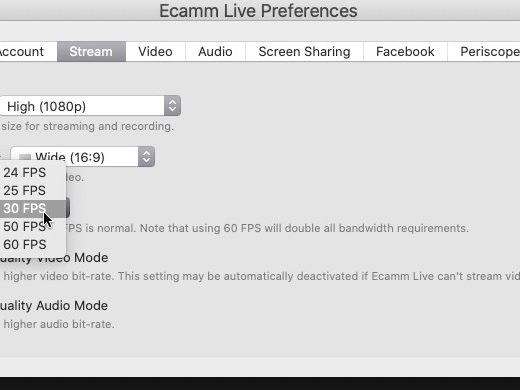
Many readers will recall when back in 2021, I introduced the 48 kHz Alliance Warning label. As a direct result of that shaming process, several manufacturers, software developers and online services got the message, and switched to our standard 48 kHz audio sampling. Among several cases where they corrected their prior error are the Zoom PodTrak P4next multitrack recorder, Ecamm Live and Streamyard. Today, I am introducing the new term Framerate Malpractice for use with certain cameras, video devices (including monitors), software & services which cause terrible confusion and damage in the video production community by rounding inappropriately. Whether we like it or not, there are different framerate standards, some integer and some non-integer. The non-integer rates like 23.976 (aka 23.98), 29.97, 59.94 and 119.88 (for slow motion) are related to ex-NTSC traditional TV broadcast. Those non-integer rates are different from exact 24, 30, 60 and 120 fps which also exist for other (non-traditional TV broadcast) venues, together with 25, 50 and 100 (for slow motion) which represent the ex-PAL/SECAM traditional TV broadcast. All the rates listed in green are compatible with traditional TV broadcast regions. When a camera, device, software program (app) or service that supports only the non-integer rate and rounds it to the closest integer, it is committing Framerate Malpractice by confusing potential purchasers and users about its true capabilities, and causing havoc.
The term Malpractice
In the law of torts, Malpractice, also known as professional negligence, is an «instance of negligence or incompetence on the part of a professional».
Our humble requests of manufacturers, software developers and service providers
- If your camera, device, program or service specifically supports 23.976 (aka 23.98) only (not exact 24), please call it as it really is in your advertising, documentation and menus!
- If your camera, device or service specifically supports 29.97 only (not exact 30), please call it as it really is in your advertising, documentation and menus!
- If your camera, device, or service specifically supports 59.94 only (not exact 60), please call it as it really is in your advertising, documentation and menus!
Why this matters so much
- Unless you intentionally plan to retime (change the framerate), it matters to be sure that your editing timeline/project rate matches the target venue rate and (hopefully) the original camera framerate too, unless you shot at a multiple 2x or higher to get slow motion later. Too many people who believed and set a camera to «24» and really thought that they were shooting at that rate didn’t understand why —after placing that footage (which was actually 23.976) onto a 24 fps timeline/project— the system demanded rendering the timeline.
- If and when you really need to retime 23.976 fps to 24 fps or viceversa, different methods exist. Some are instantaneous, but change the overall duration and can affect audio pitch. Others maintain the original duration, but require a time-consuming render.
- Television broadcast still wants the framerate to be one of the several rates marked in green above. The specific one will depend upon the region.
- SMPTE DCP (Digital Cinema Package) for digital cinema theaters in 2026 support integer (whole-number) rates of 24, 25, 30, 48, 50, and 60 fps. Older Interop DCPs are limited to 24 and 48 fps with whole numbers. [An Interop DCP (Interoperable Digital Cinema Package) is an older, informal Digital Cinema Package format created around 2001 during the early rollout of digital cinema.] SMPTE DCP (Digital Cinema Package) does not support non-integer rates like 23.976 (aka 23.98), 29.97 or 59.94.
- Generally speaking, it is easiest and less cumbersome if all footage shot for a particular project from different cameras (excluding footage shot for slow motion) all match one another and the project/timeline rate.
Responsible camera manufacturers
Fortunately, this Framerate Malpractice frequently does not take place with recent cameras from Blackmagic Design, Panasonic and Sigma, since they offer both 23.976 (aka 23.98) with 24 and often other combinations of non-integer plus integer rates, even with cameras costing much less than US$5k.
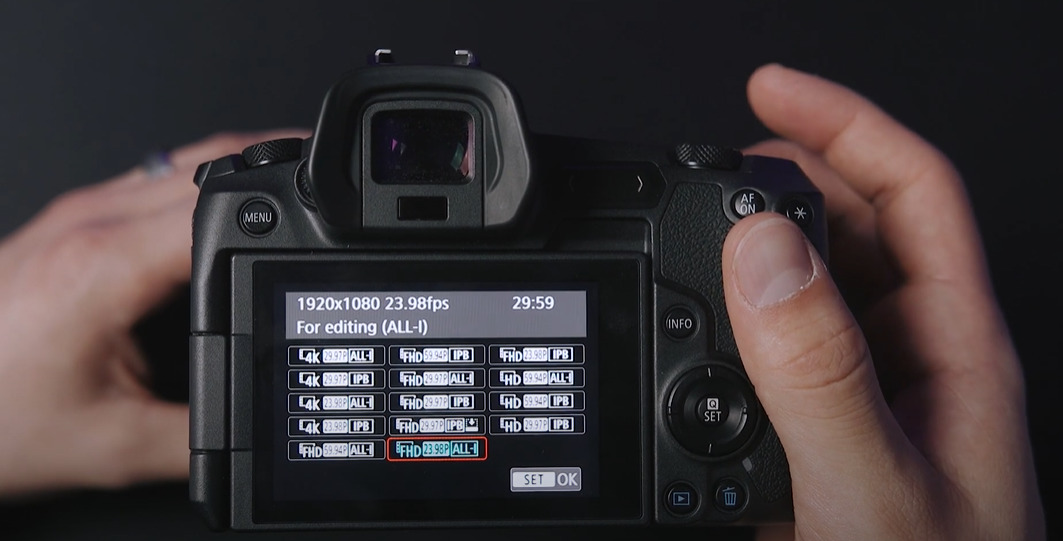
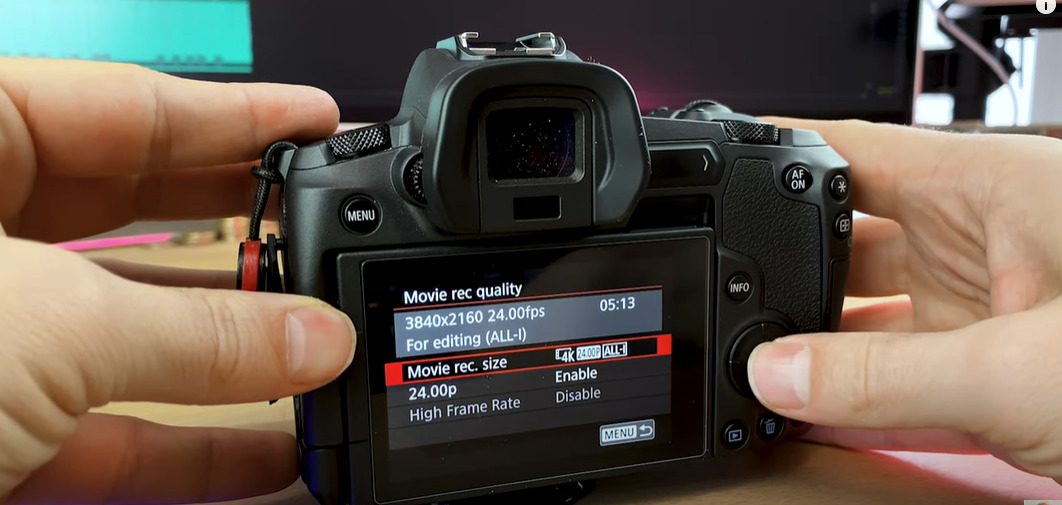
Above, you’ll see how the Canon EOS R shows 23.976 in the menu, rounded to 23.98 but fortunately not to «24». That frame grab is courtesy of Tyler Herrinton’s video here. On the other hand, below you will see that the same Canon EOS R offers exact 24, thanks to this screenshot courtesy of Chris Spiegl’s video here:
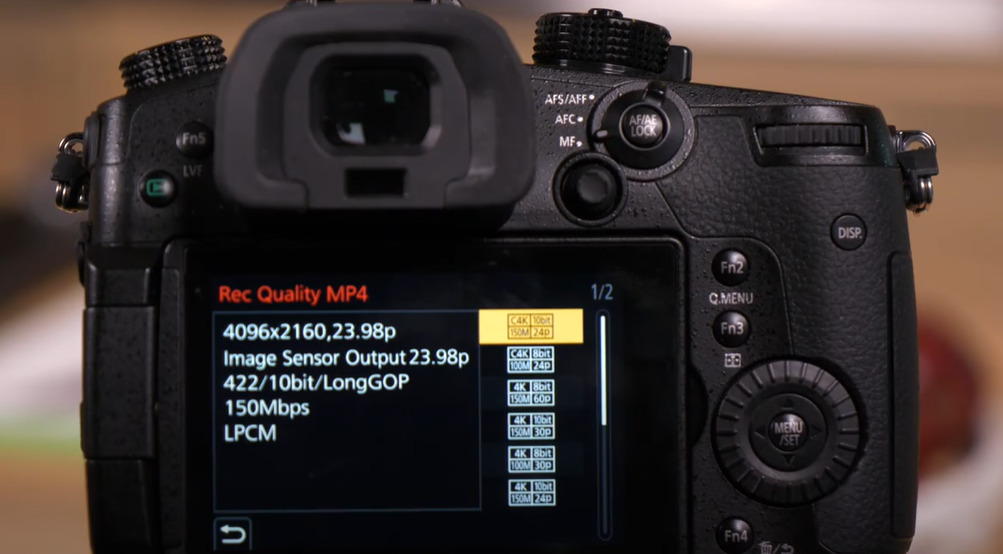
Above, you’ll see how the Panasonic Lumix shows 23.976 in the menu, rounded to 23.98 but fortunately not to «24». This screenshot is courtesy of Panasonic’s own video here.
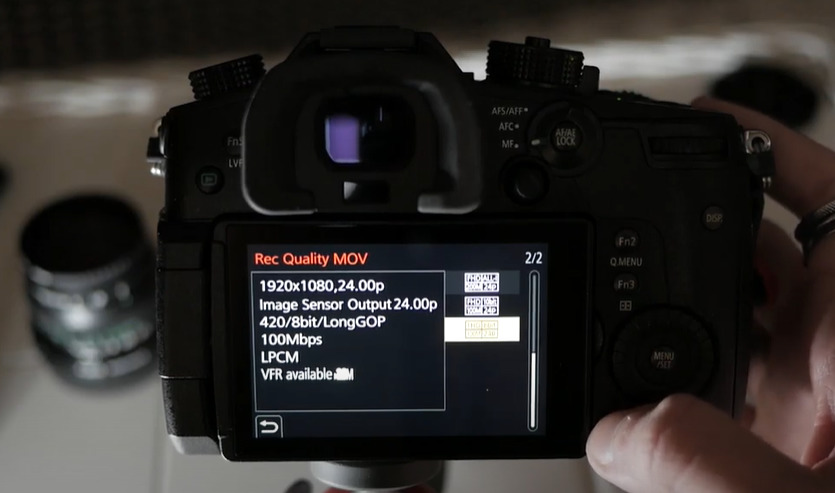
Sigma makes it even simpler:
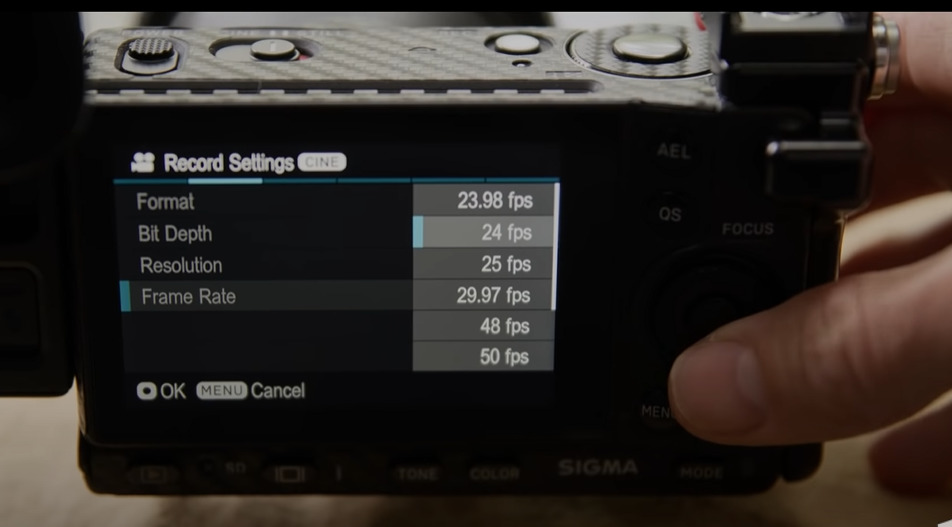
Unlike Canon, Panasonic Lumix or Sony, the Sigma FP can cover all the rates without having to switch the clock first, let alone reformat the memory card. This screenshot is courtesy of this video from Justin Philup.
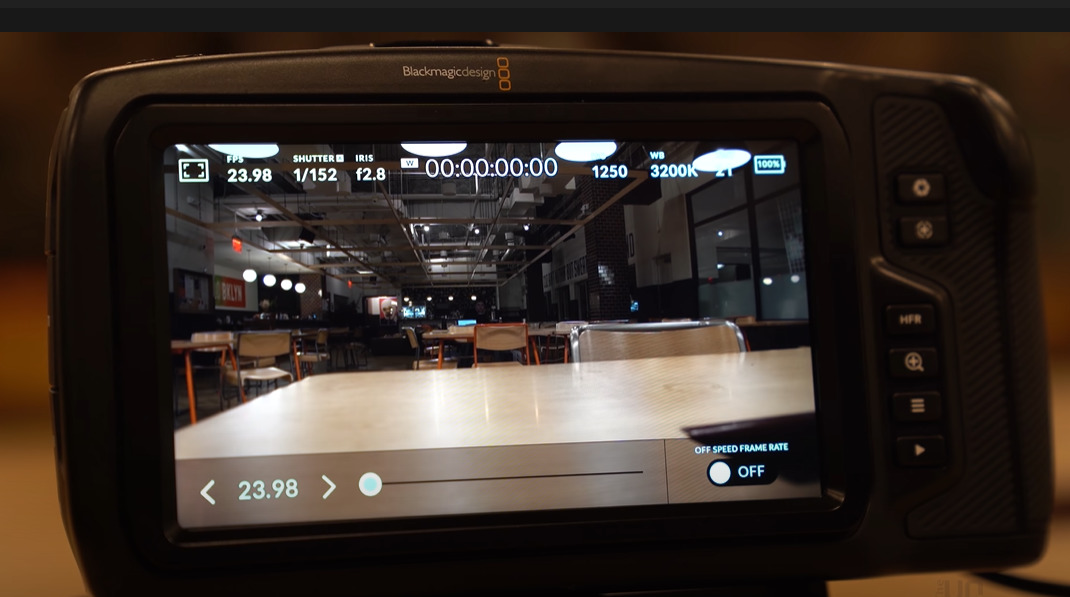
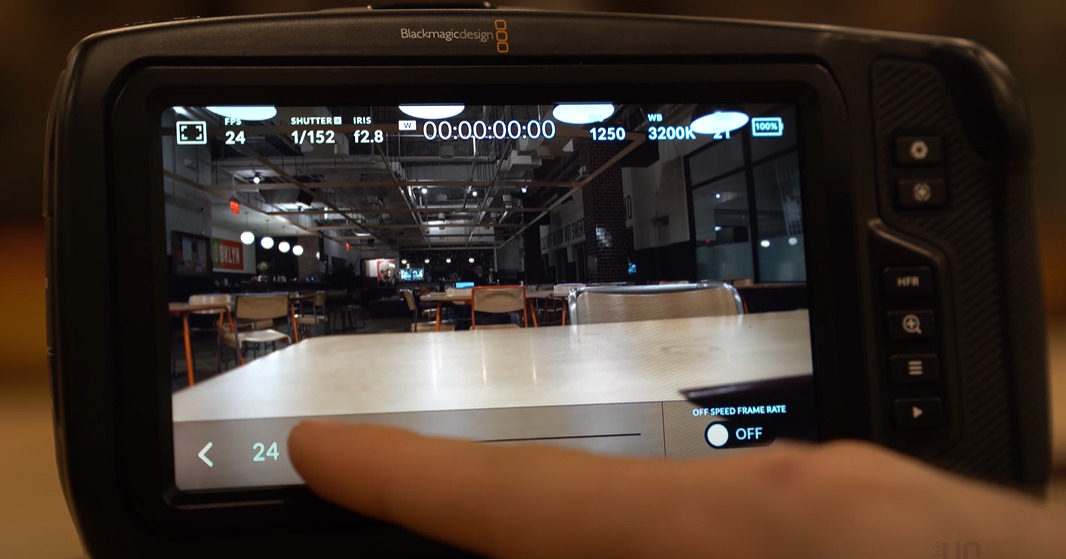
Above you’ll see Blackmagic show the 23.976 fps rate as 23.98 (but fortunately not rounded to «24»). Below, you’ll see Blackmagic at exact 24. Both screenshots are courtesy of this video from TheUnlockr. Like the Sigma FP, Blackmagic cameras are able to switch among all framerates without having to switch the system clock in a separate menu and without having to reboot.
Examples of Framerate Malpractice in the recent past, from Sony
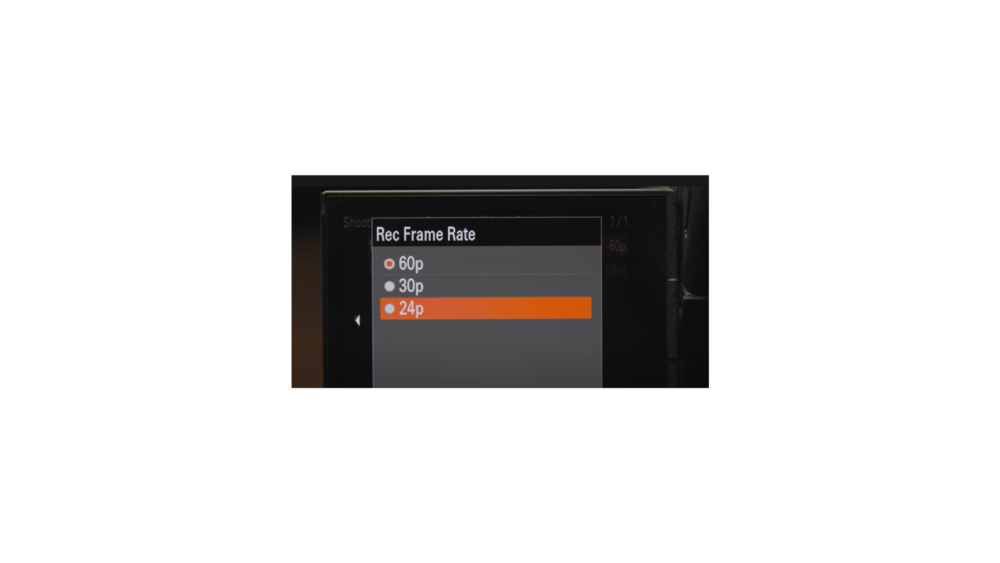
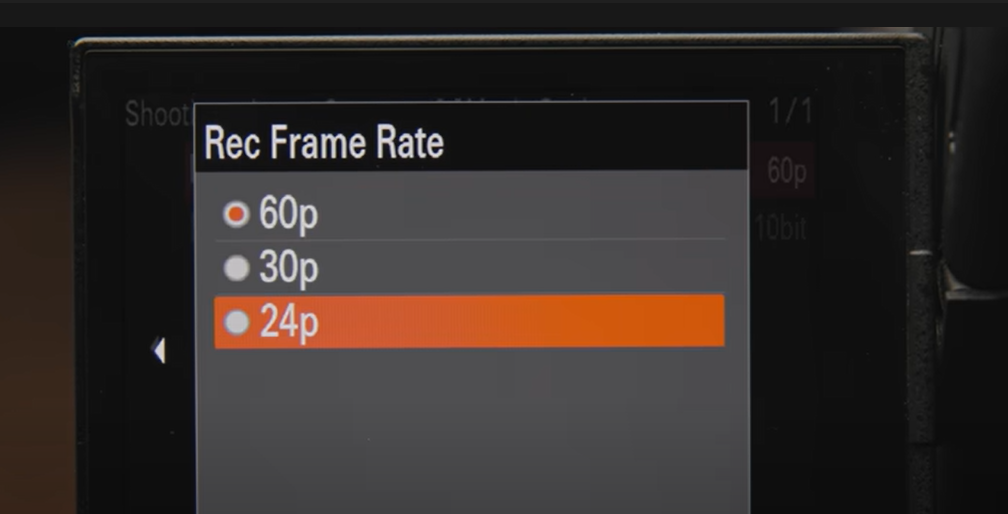
The above screenshot (courtesy of this video from Potato Jet) shows Sony framerate options for NTSC-derived regions with Sony cameras under US$5k. Remember, with these cameras, when Sony says «60», Sony really means 59.94. When Sony says «30», Sony really means 29.97. And when Sony says «24», Sony really means 23.976.
Please note that with some Sony camera models, changing from the NTSC-derived mode to the PAL-derived mode will require rebooting the camera and in some cases will also format (erase) the memory card. So if your Sony camera does this and you must switch among both, be sure to have memory cards reserved for each mode and remove the current memory card before shifting. After changing to the PAL-derived mode, the rates shown (25, 50) will be proper integers since PAL fortunately never had to resort to non-integer rates.
A user who suffers from Sony’s Framerate Malpractice
An individual named Ayawolf (whom I don’t know personally) posted the the following question on the DPreview forum:
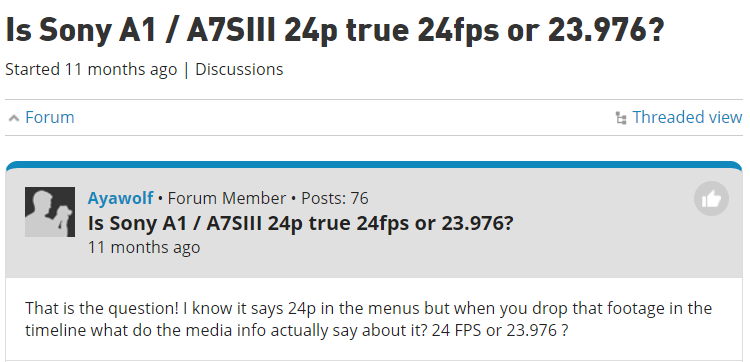
Is Sony A1 / A7SIII 24p true 24fps or 23.976?
Given the sad reality that the Internet is full of trolls and naysayers (in addition to many good people too), Ayawolf’s first response was nasty and attempted to belittle his important question:
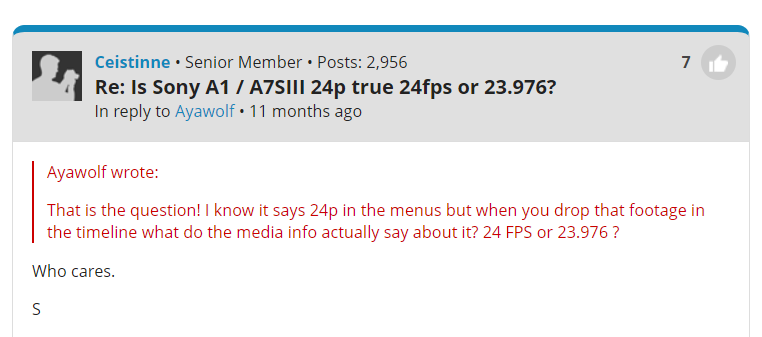
Who cares?
Of course, if you have read the rest of this article up until now, you already know the answer. In fact, later in that thread, someone informs Ayawolf that the supposed «24» in this camera is actually 23.976 as read in the metadata in a professional software app, and Ayawolf really needed the exact 24 fps for her/his particular situation.
Conclusions
Stand by for my upcoming articles where I’ll use with the term Framerate Malpractice when describing certain cameras, devices, programs and services, with a link back to this article.
Lee este artículo en buen castellano
Negligencia profesional con la tasa de fotogramas en cámaras, aparatos y programas
(Re-)Subscribe for upcoming articles, reviews, radio shows, books and seminars/webinars
Stand by for upcoming articles, reviews, books and courses by subscribing to my bulletins.
In English:
- Email bulletins, bulletins.AllanTepper.com
- In Telegram, t.me/TecnoTurBulletins
- Twitter (bilingual), AllanLTepper
En castellano:
- Boletines por correo electrónico, boletines.AllanTepper.com
- En Telegram, t.me/boletinesdeAllan
- Twitter (bilingüe), AllanLTepper
Most of my current books are at books.AllanTepper.com, and also visit AllanTepper.com and radio.AllanTepper.com.
FTC disclosure
None of the listed individuals or companies mentioned above has paid for this article. Some of the manufacturers listed above have contracted Tépper and/or TecnoTur LLC to carry out consulting and/or translations/localizations/transcreations. So far, none of the manufacturers listed above is/are sponsors of the TecnoTur, BeyondPodcasting, CapicúaFM or TuSaludSecreta programs, although they are welcome to do so, and some are, may be (or may have been) sponsors of ProVideo Coalition magazine. Some links to third parties listed in this article and/or on this web page may indirectly benefit TecnoTur LLC via affiliate programs. Allan Tépper’s opinions are his own. Allan Tépper is not liable for misuse or misunderstanding of information he shares.