Filmtools
Filmmakers go-to destination for pre-production, production & post production equipment!
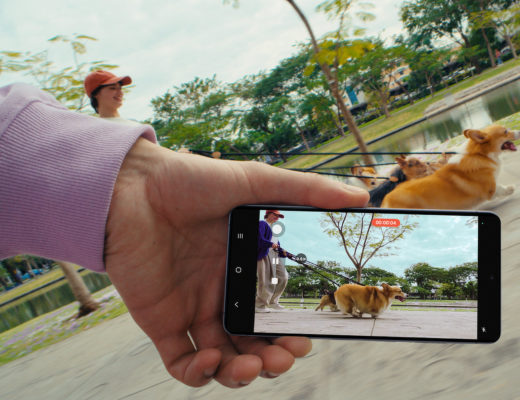
Shop NowSmartphone camera technology evolved from the Galaxy S’s 5-megapixel rear camera in 2010 to the Galaxy S25 Ultra’s 200 MP ultra-high-resolution camera and moves now towards extensive use of AI.

 Samsung released an infographic to share the groundbreaking journey of smartphone cameras, as the company claims that future cameras will only get smarter with AI, “helping users capture life’s moments”.
Today, anyone can capture, as Samsung claims, “professional-quality photos and videos” with a single smartphone. At the heart of this transformation lies Galaxy’s camera technology — enabling, Samsung continues, “users to cherish every moment without the need for a heavy camera.”
 Samsung Electronics has achieved numerous firsts in mobile camera performance and technology since the pre-smartphone era, which the company has now shared in an infographic titled “15 Years of Leading Smartphone Camera Technology: A History of Galaxy Camera Innovation”.
From the Galaxy S’s 5-megapixel (MP) rear camera in 2010 — at the dawn of the smartphone era — to the Galaxy S25 Ultra’s 200 MP ultra-high-resolution camera, 50 MP ultra-wide-angle camera, and suite of Galaxy AI editing features, Samsung has continuously redefined what a smartphone camera can do. “Always one step ahead” is the company’s mantra, supported by, the company says, the fact that “for the past 15 years, Samsung has always been one step ahead, pushing mobile photography to new heights and ushering in a new era of Galaxy camera technology.”
As the company shares the infographic published here, Samsung also announced that “Your Smartphone Camera Now Gets What You’re Looking At — and Responds” adding that “today’s mobile imaging goes beyond just a high-quality lens or advanced sensor — it demands seamless integration of hardware, software and AI. That’s why Samsung Electronics approaches camera innovation as a holistic system, where each advancement is supported by tightly integrated technologies. This unified vision allows Galaxy devices to continuously redefine mobile photography, empowering users to capture, create and communicate more meaningfully.”
AI will help users capture life’s moments
According to Samsung “as AI evolves from text-based prompts to multimodal understanding, Galaxy devices are becoming smarter — able to get what you’re looking at and respond to situations. The camera is at the heart of this transformation. More than just a tool for capturing images, coupled with enhanced AI-powered features, the Galaxy camera is now part of the intuitive interface that turns what users see into understanding and action.”
The marketing department from Samsung also claims that “when paired with the flexible, expansive screen of a foldable, this experience becomes even more powerful, dynamic and immersive” and tells users that they should “stay tuned” as “the camera will only get smarter — helping users capture life’s moments more vividly and make everyday experiences more seamless, personal and impactful.”
This is a statement that photographers and videographers should take with – lots – of salt. Photography and video are or should always be a creative process and while AI has its uses in the editing process of both stills and moving images, using it to “create images from scratch” is not just ethical wrong but a way to rob its “creator” from the experience of “making a photograph”. So, when Samsung suggests that AI can help “users capture life’s moments more vividly and make everyday experiences more seamless, personal and impactful” what the company is saying is that the human element will be removed from the equation. This clearly suggests that you may press the shutter, but all decisions will be made by AI.
Faking photos of the Moon
According to Samsung, “more than just a tool for capturing images, coupled with enhanced AI-powered features, the Galaxy camera is now part of the intuitive interface that turns what users see into understanding and action”, meaning, the company adds “Your Smartphone Camera Now Gets What You’re Looking At — and Responds”. You may think that’s coming but it’s already here and, as The Verge revealed in 2023, Samsung was “caught faking zoom photos of the Moon”.
The Verge – and many other publications – shared then that “a viral Reddit post has revealed just how much processing the company’s cameras apply to photos of the Moon, further blurring the line between real and fake imagery in the age of AI.” The backlash led Samsung to publish one article under the title “How Samsung phone camera uses AI for moon photos & pictures” – which helped to clarify what the tech does – but the fake images of the Moon continue to be an ongoing story, because companies are expanding the use of AI in their cameras, not just smartphones. So, now, when Samsung says AI will help “users capture life’s moments more vividly” their solution for the Moon comes to mind!
While AI may be helpful for snapshooters, as automatic modes where for cameras – who remembers “fuzzy logic” applied to cameras in the 1990s? – photographers who want to control their images from capture to editing are asking companies to give them effective ways to deactivate AI, which seems difficult to achieve in some models. Photographers in Samsung’s community online continue to search for solutions to a problem caused by technology. Here is one example: “I just got the S24 Ultra (switched from S22 Ultra) and I’m having issues with AI editing every picture I take. I’m an amateur photographer and it makes me sad when it ruins pictures that didn’t need editing. Is there a way to turn it off completely without using a 3rd party camera app? I’ve already minimized the settings on everything and it’s still doing it.”
One of the replies posted notes that the simplest solution to minimize AI enhancements in your photos is to use Pro Mode on your Samsung camera, which captures images in RAW format without heavy post-processing. For more customization, download Samsung’s Good Lock app and use the Camera Assistant extension to:
- Turn off Adaptive Pixel (prevents automatic resolution changes).
- Turn off Upscale Zoom (disables digital zoom enhancements).
- Increase Picture Softening (reduces in-the-moment AI effects).
This combination will give you more control over your photos while reducing unwanted AI enhancements, though some processing may still occur.
Still, the note clearly indicates, “some processing may still occur”, meaning that instead of giving you the freedom to choose how your photos – or videos – look – AI will add its own “touch” to your creations… Unfortunately!!!
 A podcast on Human Intelligence
Samsung his now updating its smartphones with the latest software, One UI 8, which brings a series of AI features to modern models, but the S22 Ultra, which I continue to use as my camera, does not receive the AI “updates”… and I am glad it doesn’t, as it is already difficult to keep it from being “intelligent” when all I want is to create my own photos… without any help from Artificial Intelligence…
The discussion about AI will, no doubt, continue, and we need some sound voices that do not follow the “wow” that appears to dominate the crowds. So let me end with a suggestion: Niall Benvie’s new podcast, which was launched recently. Its first edition, under the title “AI and photography” is a 10-minute “call to arms”. As AI technology seeps into more and more corners of our lives, Niall makes the case for nature photography to remain real – and describes hurdles AI just can’t cross.
Niall Benvie, whose work I’ve followed for a while now, continues to surprise me with his renewed experiences in photography and vision, all made, not with AI, but thanks to HI or Human Intelligence, a term he uses regularly. Sit down and listen to his podcast – The Thinking Photographer’s Podcast – about AI… you’ll probably want to keep following Niall Benvie as he shares his creative experience.