

Filmtools
Filmmakers go-to destination for pre-production, production & post production equipment!
Shop NowThe four astronauts aboard NASA’s Artemis II were the first to see the far side of the Moon with human eyes and are the first to travel behind the Moon.


During their lunar flyby, the astronauts used a variety of digital handheld cameras to capture imagery of the Moon, including features humans have never directly seen.
During the first crewed mission of NASA’s Artemis program, NASA astronauts Reid Wiseman, Victor Glover, and Christina Koch, and CSA (Canadian Space Agency) astronaut Jeremy Hansen continued collecting pictures of the Moon on their voyage away from Earth. The four astronauts aboard NASA’s Artemis II test flight around the Moon made history at 12:56 p.m. CDT on Monday, traveling 248,655 miles from Earth, surpassing the record for human spaceflight’s farthest distance previously set by the Apollo 13 mission in 1970. At its farthest point, crew inside the Orion spacecraft traveled about 252,756 miles, before looping back toward our home planet, setting the new record for human spaceflight.
The journey, which marks a return to the Moon in preparation for the construction of a Moon Base, already gave us a new view of the blue marble planet called Earth, as taken by humans from a spacecraft. Documenting, with images, both video and stills, the whole journey is a key part of the mission, but the Artemis II is providing astronauts an opportunity to gather data as one of the most powerful scientific tools for observation are the four pairs of eyes observing lunar features with varying illumination and texture.
According to information shared by NASA earlier, “during the lunar flyby the astronauts will take high resolution photographs and provide their own observations of the lunar surface, including areas of the far side of the Moon never seen directly by humans. Although the lunar far side will only be partially illuminated during the flyby, the conditions should create shadows that stretch across the surface, enhancing relief and revealing depth, ridges, slopes, and crater rims that are often difficult to detect under full illumination.”
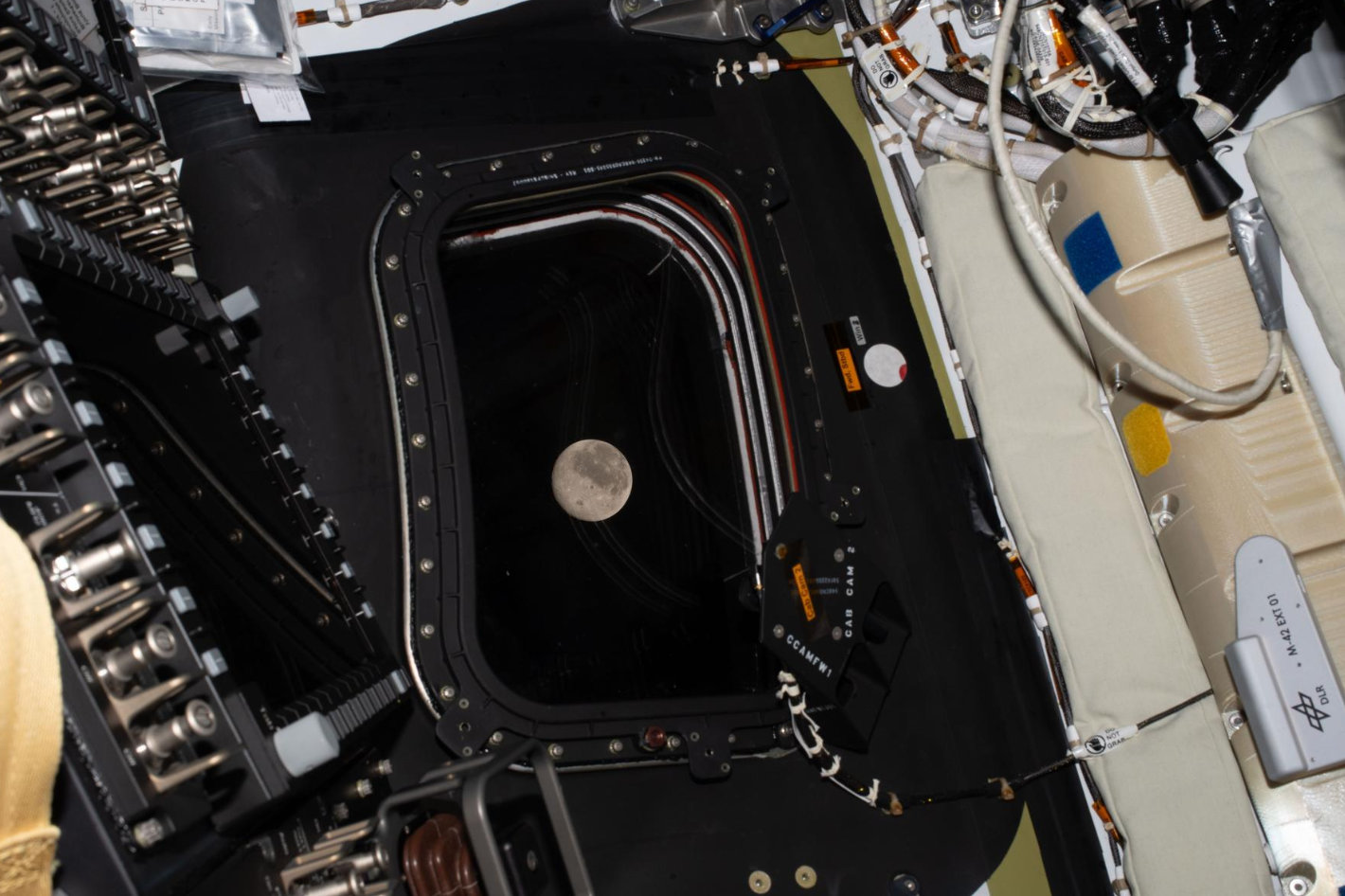 On Monday April 6, during a planned 40-minute loss of signal as Orion passed behind the Moon, the spacecraft and its crew made their closest approach at 7:00 p.m., flying at about 4,067 miles above the surface. Two minutes later, the crew reached the mission’s maximum distance from Earth at 252,756 miles, setting a new record for human spaceflight.
As they flew over the Moon’s far side, the crew photographed and described terrain features including impact craters, ancient lava flows, and surface cracks and ridges formed as the Moon slowly evolved over time. They also noted differences in color, brightness and texture, which provide clues that help scientists understand the composition and history of the lunar surface. The crew witnessed an “Earthset” — the moment Earth dropped below the lunar horizon — as Orion traveled behind the Moon and an “Earthrise” as the spacecraft emerged from the opposite edge of the Moon.
As the lunar observation period ended, the crew witnessed a nearly hour-long solar eclipse as the spacecraft, the Moon and the Sun aligned. With a view of a mostly darkened Moon, the crew analyzed the solar corona — the Sun’s outermost atmosphere — as it appeared around the Moon’s edge.
During the eclipse, the crew had an opportunity to look for some rarely seen phenomena that are only visible on an unlit portion of the Moon. They reported six light flashes created by meteoroids impacting the lunar surface while traveling many thousands of miles per hour.
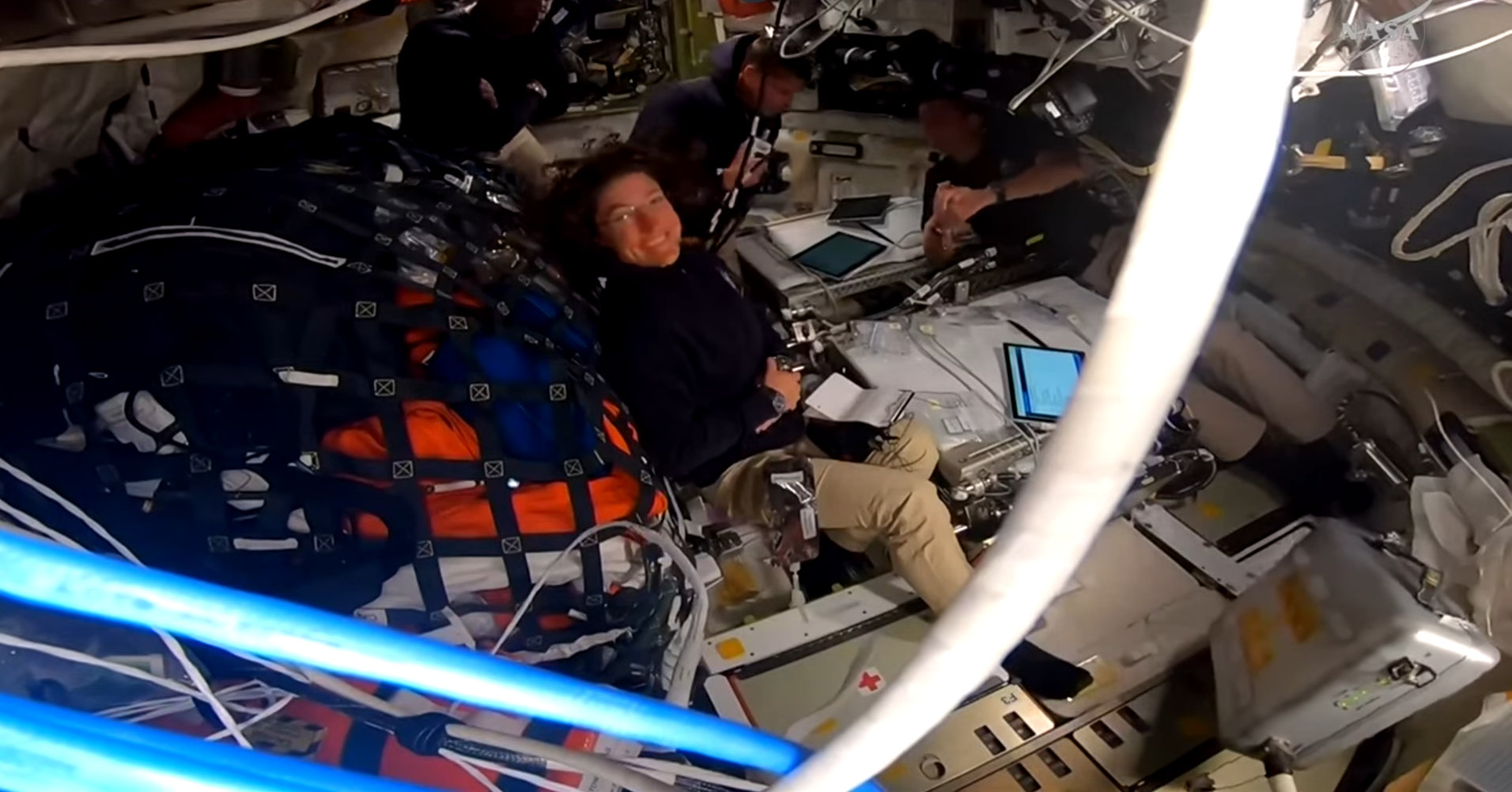 Scientists already are looking forward to the images, along with the many others taken during the flyby. After the lunar data is downlinked from the spacecraft overnight, scientists will look at images, audio, and other data to determine better times and locations of the flashes and seek input from amateurs who were observing the Moon at the same time. The crew will discuss their observations with the lunar science team on Tuesday, April 7, in a conversation that will broadcast in NASA’s live coverage.
The far side was first seen in a handful of grainy images returned by the Soviet Luna 3 probe, which swung around the Moon in October, 1959. NASA’s Lunar Reconnaissance Orbiter was launched fifty years later, and since then it has returned hundreds of terabytes of data, allowing LRO scientists to create extremely detailed and accurate maps of the far side, which can be seen online on NASA’s websites.
NASA’s Orion spacecraft began its journey to the Moon following a successful April 1 launch on an SLS (Space Launch System) rocket from the agency’s Kennedy Space Center in Florida. After conducting a series of burns to break free of Earth orbit the following day, the spacecraft set its path toward the Moon.
Photos, videos, mission telemetry, and communication information are all sources of data from the test flight, which will be used to inform future Artemis missions as the agency embarks on development of its Moon Base.
The Artemis II crew is scheduled to splash down off the coast of San Diego at approximately 8:07 p.m. EDT (5:07 p.m. PDT) on Friday, April 10. Following splashdown, recovery teams will retrieve the crew members using helicopters and deliver them to the USS John P. Murtha. Once aboard, the astronauts will undergo post-flight medical evaluations in the ship’s medical bay before traveling back to shore to meet with an aircraft bound for NASA Johnson.
Under the Artemis program, NASA will send Artemis astronauts on increasingly challenging missions to explore more of the Moon for scientific discovery, economic benefits, and to build on NASA’s foundation for the first crewed missions to Mars.