

Filmtools
Filmmakers go-to destination for pre-production, production & post production equipment!
Shop NowThis year’s festive TV output


“Holidays are coming,” chimes an almost Disneylike AI chorus in the famous soft drinks commercial. Well, yes, they are, although a lot of people in film and TV are already suffering an involuntary and unwelcome break from regular employment. That makes the traditional state-of-the-industry series we’d usually do at this time of year seem a bit redundant, given the state of the industry is probably best expressed by Edvard Munch’s finest hour.
Or – at least – the state of part of the industry. The streaming boom was never going to be eternal, but the thought of user-generated content as a poor relation was starting to look outdated long before Nielsen revealed, in February, that YouTube had become the “primary device” for TV viewing in the US. As anyone with recent experience of YouTube shorts will know, though, there is one factor which seems ready to affect YouTubers, Hollywood producers, and every other level of this and many other industries.
Yes, we’re going to talk about AI, and without taking sides.
Sleigh-centric sentimentality
It’s the time of the year when people who worked on seasonal commercials get to see the resulting overload of sleigh-centric sentimentality broadcast to the masses. Ideally, we should not notice that the wholesome, winterwear-clad family on screen was sweating off its collective makeup on the midsummer Burbank afternoon when this stuff was shot. In that context, Coca-Cola’s AI advertisement might seem like sweet relief: artificial people don’t suffer from heat stroke.
Still, it absolutely does look AI-generated, and there’s no small audacity in the lyric “it’s always the real thing.” In the long term, this probably isn’t what most people want. In fact, it seems that a lot of people are becoming a bit impatient about what a lot of modern movies look like even when they are shot for real, but that’s a subject we’ll address another day. Either way, pundits have been promising us AI nirvana for a while.
And, much as things have moved quickly, some of them promised it in less than a while. Venture capitalists have recently thrown so much money at AI that it accounted for a significant proportion of all growth in the entire United States economy. There is no shortage of people willing to predict that it will continue to accelerate just as quickly, some of whom don’t have a financial interest in that being true.
An objective measure
Technical reality, as so often, paints a more complicated picture. Any analysis of AI improvements relies on an objective measure of that improvement. There are benchmarks for language models, such as MMLU, which takes the form of a multiple-choice test of verbal reasoning. Others, such as Fréchet Video Motion Distance, try to compare generated footage to real footage, though they can struggle to detect certain issues at which humans would point and laugh.
That might mean counting people’s limbs, but it also means frame-to-frame temporal consistency, as well as the ability to show the same object from different angles (see the The Heist, shown at NAB this year, with consecutive cuts showing similar cars on streets that look somewhat alike).
Certainly, things have improved over the last few years, and even months. What matters is whether this pace of development can continue. AI has been described as developing at an exponential rate, which sounds encouraging until we realise how that’s measured. What’s expanding fastest is the amount of computer horsepower required to train AI models.
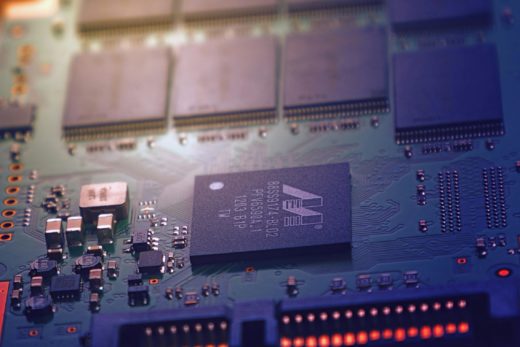
The process is expensive – hundreds of millions, even half a billion US dollars in machine time. Perhaps unsurprisingly, OpenAI is yet to make a profit, but Nvidia has discussed “a pledge” to put a hundred billion into the company. Whether that really means buying into a company in the currency of GPUs remains to be seen, but there’s certainly a shortage of hardware.

Probably soon high profit
That might be a symptom of wider tech trends, or of the industry diverting production toward high-profit (or probably-soon-high-profit) AI applications. Either way, it’ll make your next Resolve workstation a lot more expensive. It’s not clear the world can etch silicon fast enough to keep up with the demands of a genuine AI revolution. The workload associated with inference – that is, using the AI, rather than making new AIs – expands more linearly over time, but any prediction involving this stuff becoming profitable also involves much heavier use.
Perhaps surprisingly, video-generation AIs are actually simpler than language models, mostly because they don’t need or have any understanding of what they are drawing beyond the idea that it is visually plausible. On one hand, this is why it is so difficult to have them generate exactly the same objects twice. On the other hand, it’s not clear whether their improvement is bounded by hardware.
If all this merely persuades us that the future is uncertain, then that may be no bad thing. The world has seen enough claims that AI ascendancy is a done deal. In the meantime, Coke’s yuletide promo is probably more famous for the AI than the soft drink, making us ponder whether an AI-generated character in a snow scene could ever feel the cold. Probably the sloth should, being native to the tropical rainforests of Central and South America. Still, it’s hard to imagine actors in sweat-soaked, reindeer-print mittens shedding too many tears over shivering AI fauna.