

Filmtools
Filmmakers go-to destination for pre-production, production & post production equipment!
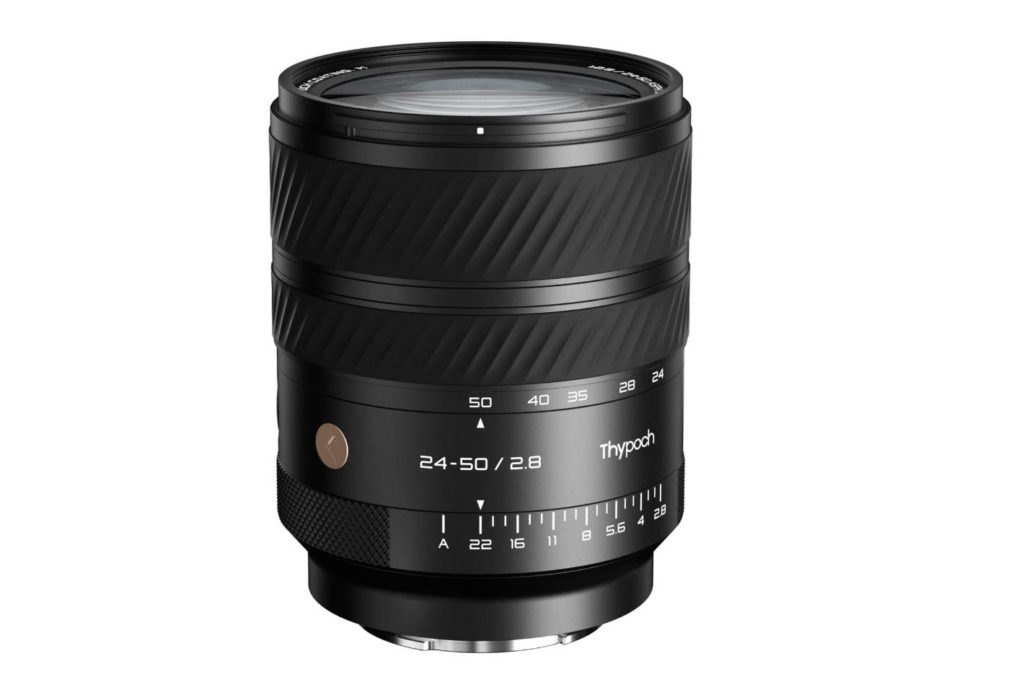
Shop NowThypoch announced the Voyager 24-50mm f/2.8, the first full-frame autofocus zoom developed by a Chinese optical brand and Thypoch’s first AF lens.

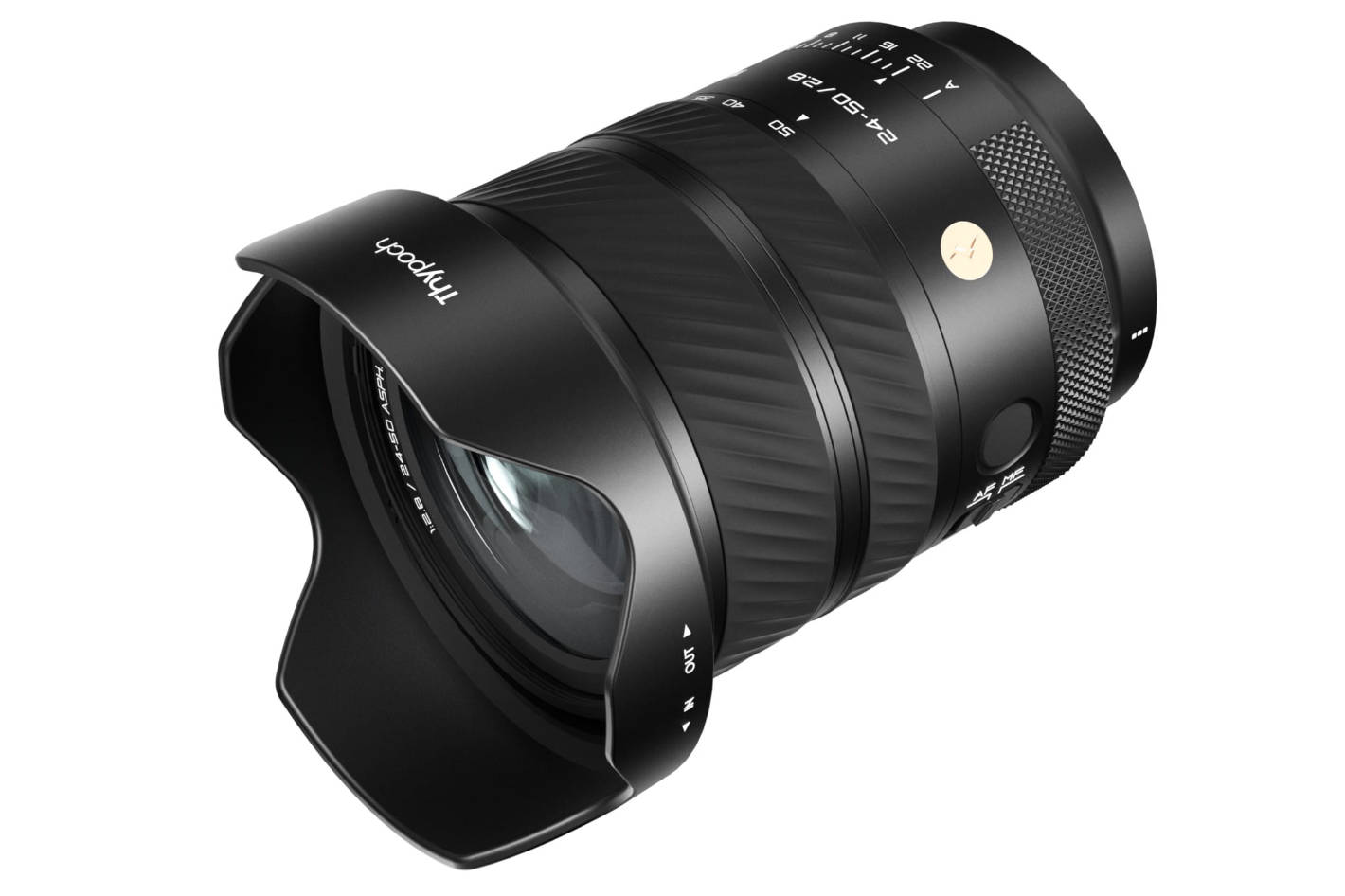 Designed for Sony E-mount cameras, the Voyager 24-50mm f/2.8 features a fast and constant aperture and an internal-zoom design, inspired by the cinema zooms from the company.
Thypoch’s first lens with autofocus is a lens that marks a milestone, according to the company, as the Voyager is the first full-frame autofocus zoom developed by a Chinese optical brand. Combining “autofocus, full-frame image coverage, and zoom architecture in a single lens requires coordinated development across optical design, mechanical engineering, AF systems, and electronics”, says Thypoch.
According to Thypock, the lens’ “zoom architecture draws on the parent group’s experience in cinema zoom lens engineering, which includes constant-aperture and internal-zoom designs across multiple cine lens families. Cinema zooms are the discipline in which constant aperture and fixed barrel length were first solved as engineering problems. The Voyager applies that discipline to a stills-format AF lens.”
The lens design aims to offer photographers three primes in a single lens. A photographer working with primes typically carries 24mm, 35mm, and 50mm. Those three focal lengths cover the working distances that define documentary, reportage, environmental portrait, street, and event photography. The 24mm captures a full scene when there isn’t room to step back. The 35mm sees roughly the way the eye sees, which is why it remains the working perspective of reportage and documentary photography. The 50mm isolates a subject without flattening the space around it.
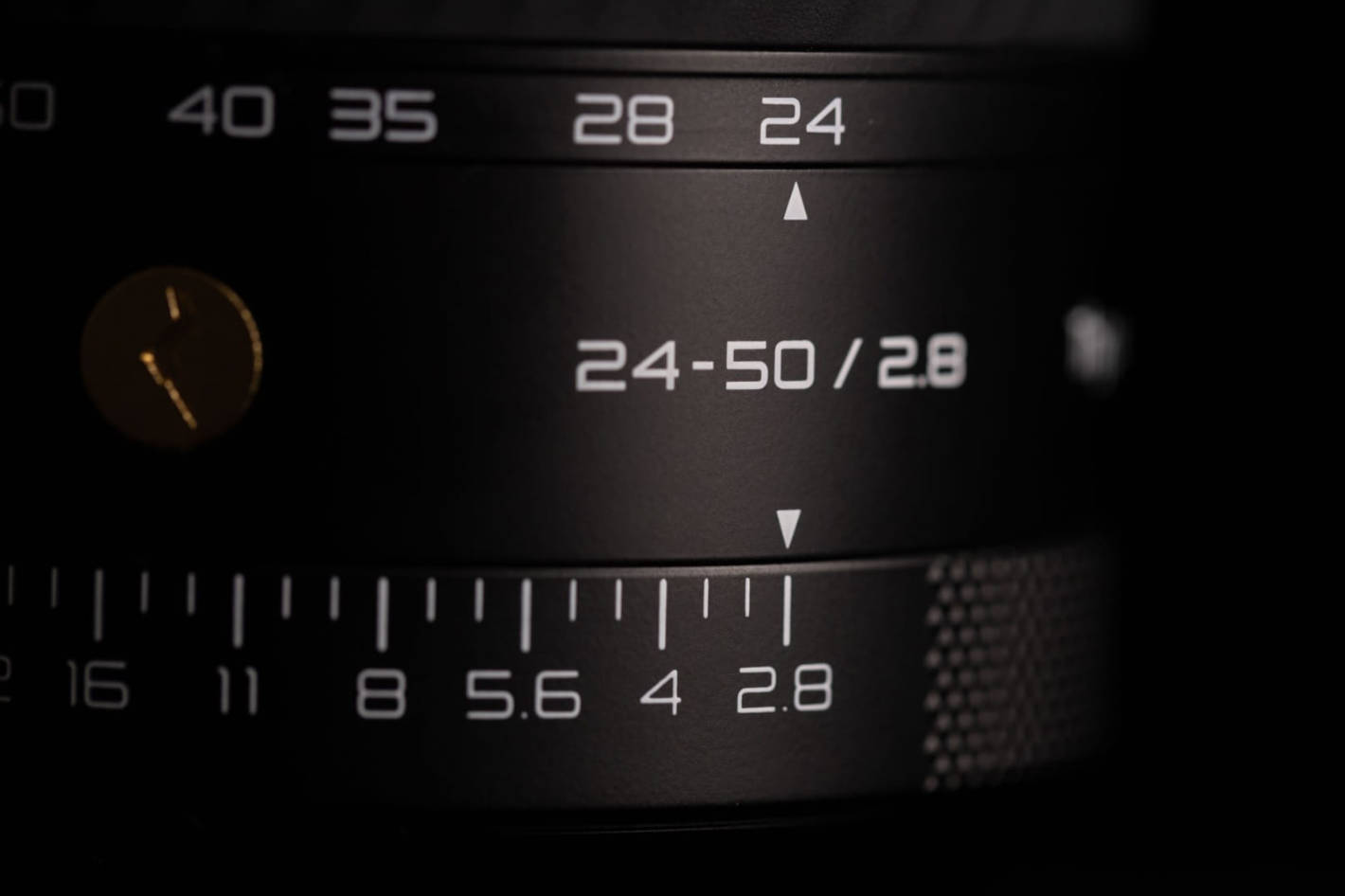 The 24-50mm range, Thypoch says, “was chosen as a balance of size, design, and price point. It covers the focal lengths working photographers reach for daily. The Voyager fits an internal zoom mechanism, holds f/2.8 across the range, and stays compact enough to live on the camera all day.”
The Voyager is designed to deliver image quality comparable to a dedicated prime across the zoom range, whether the working perspective is the breadth of 24mm, the reportage view of 35mm, or the subject isolation of 50mm. The result is one lens that does the work of three primes, in the size and weight of one.
The Voyager 24-50mm f/2.8 may be a lens for stills, but you can also use it for video capture. The design of the lens, with a fixed length and constant aperture – f/2.8 – across the range removes two of the most common interruptions in fast-paced shooting: rebalancing a gimbal between focal lengths, and recalculating exposure as the aperture shifts.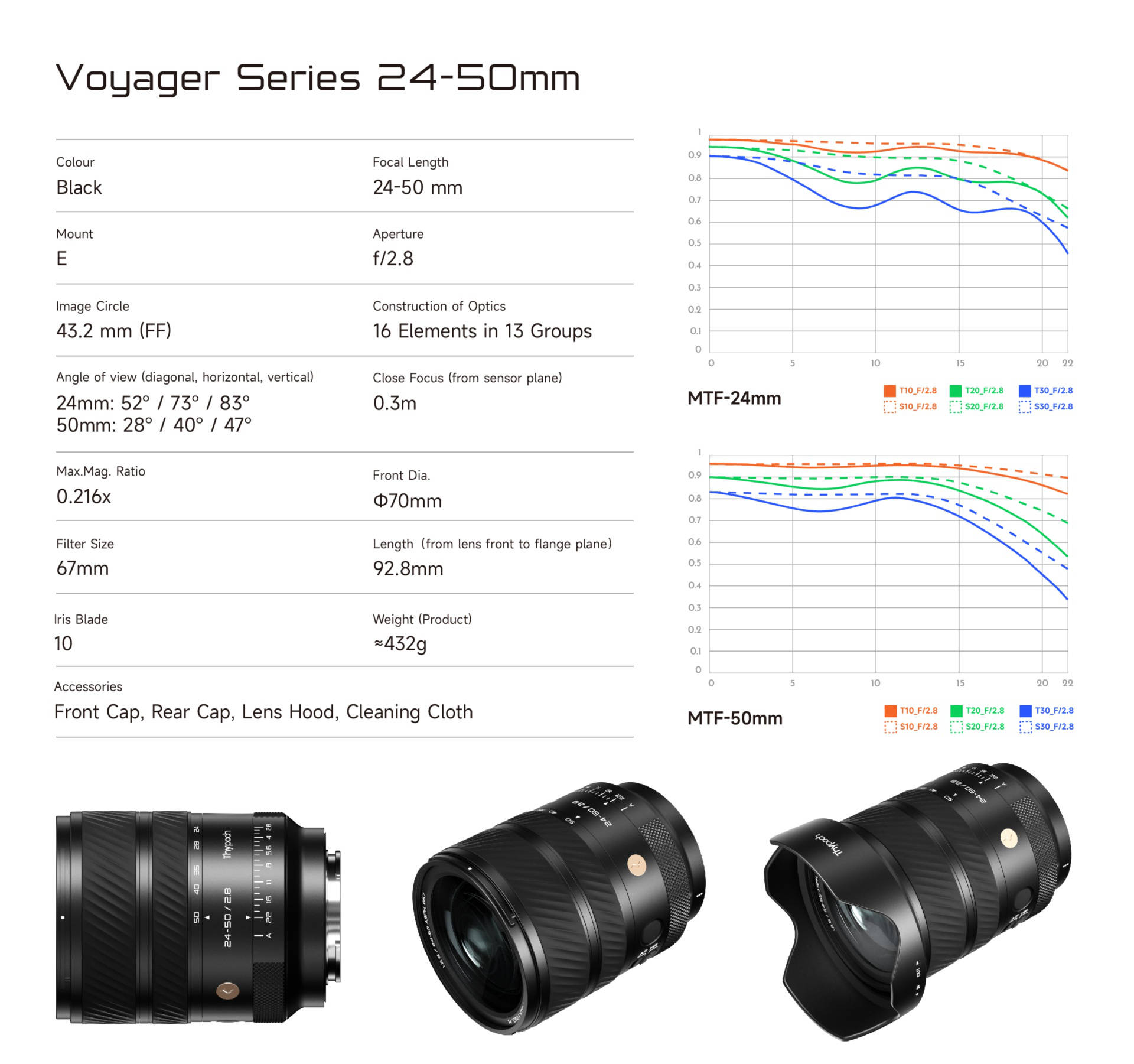 Here are some of the key features of the Voyager 24-50mm f/2.8:
- The Voyager’s internal zoom mechanism keeps the barrel length constant from 24mm to 50mm. The center of gravity stays in place during a take. The fixed barrel is also more mechanically stable in the hand than an extending zoom, which translates to a steadier grip during handheld work.
- The f/2.8 maximum aperture is held throughout the zoom range. From dim interiors and twilight streets to backlit portraits, f/2.8 delivers the brightness and subject separation that working photographers need when light is scarce. Exposure stays consistent across focal lengths. The lens stays out of the way of the shot.
- The fixed barrel also eliminates lens creep when the camera is stowed, and removes the extending external moving parts that complicate weather sealing on conventional zooms.
A first for Chinese optical engineering, according to Thypoch, the Voyager’s autofocus system is designed for fast and quiet operation. Thypoch built the AF unit to stay out of the way of the shot, with response speed intended to keep pace with documentary, street, and event shooting, and quiet operation suited to video work and sound-sensitive environments. The lens features native Sony E-mount autofocus, with support for eye AF, AF-C tracking, and in-camera and lens-side AF/MF switching.
The lens has been tested with current-generation Sony Alpha bodies including the ZV-E1, A7C2, A7CR, A7IV, A7V, A7RIV, A7RV, A7SIII, A9III, and FX3.
Thypoch says that the lens is “built for bokeh”, adding that “rendering character is where Thypoch has built its reputation, and the Voyager carries that priority into autofocus. The optical design uses 16 elements in 13 groups, including 2 ASPH (aspherical) elements, 3 ED (extra-low dispersion) elements, and 3 HRI (high refractive index) elements. The formula is designed to control aberrations across the frame at all focal lengths.
The 10-blade rounded aperture holds its circular shape across most of the working aperture range, producing rounded out-of-focus highlights at mid apertures and sunstar rendering at smaller apertures. The company also notes that “the Voyager’s out-of-focus rendering is built into the glass, not added in software. Optical bokeh behaves naturally at the edges of the frame, around specular highlights, and in the transition zones that digital blur tends to flatten. The result is depth that holds up at full resolution and on close inspection.
The transition from sharp focus to background blur happens gradually, the way a lens with character renders rather than the way a lens that’s merely sharp does. Subjects sit forward in the frame with weight and presence, separated from the background without the harsh cutoff that flattens an image.
The Voyager is built with sealed construction at the lens mount, focus ring, zoom ring, and front element. The internal zoom design contributes to sealing integrity by removing the extending external barrel that creates the most common point of moisture ingress on conventional zooms. Weather sealing is the difference between a lens that works in the conditions a photographer actually shoots in and a lens that has to be protected from them.
 The lens is developed for dust and moisture resistance. Whether the shooting environment is coastal mist or a sudden urban downpour, the Voyager is built to keep working. Paired with Sony’s own weather-sealed Alpha bodies, the lens completes a sealed shooting system rather than introducing a weak point in it.
Key specifications:
- Focal length: 24-50mm
- Maximum aperture: f/2.8 constant
- Optical formula: 16 elements in 13 groups (2 ASPH, 3 ED, 3 HRI)
- Aperture blades: 10 (rounded)
- Minimum focus distance: 0.3m across the zoom range
- Maximum magnification: 0.216x
- Filter thread: φ67mm
- Weight: 432g
- Length: 92.88mm
- Maximum diameter: φ73.6mm
- Mount: Sony E
- Weather rating: Dust and moisture resistance
The Thypoch Voyager 24-50mm f/2.8 will be available early June in Sony E-mount, with a launch price of USD $619 (until May 31, 2026). The suggested price afterwards is USD $649. The standard package includes lens body, front cap, rear cap, warranty card.