

Filmtools
Filmmakers go-to destination for pre-production, production & post production equipment!
Shop NowSam Mendes built a Day of the Dead parade for Spectre because Mexico City had no such parade, using 1,500 costumed extras and shutting down the city center for days.
The five productions point to a practical distinction: access to a real event supplies a crowd, but the crew works around the event’s schedule. Building a parade gives a production more say over what happens in front of the camera, while creating crowd-management and post-production work of its own. When access is denied, a production can move to a substitute location.
George Seaton at Macy’s
George Seaton placed actors in the real Macy’s parade on Thanksgiving Day, November 28, 1946. Edmund Gwenn rode the Santa float and climbed to the top of the Macy’s marquee. The crowds did not know he was the person waving to them.
The parade shoot took place in bitter cold. The Macy’s interiors were filmed at night, after customers and staff had gone home. For a producer, access to an event and access to the surrounding location can come with different working hours.
A float in Chicago
For Ferris Bueller’s Day Off, the production moved a float into a real parade, Chicago’s Von Steuben Day Parade. Ferris jumps aboard and lip-syncs “Danke Schoen” and “Twist and Shout”.
Kenny Ortega choreographed the scene and directed the second unit. He had 12 cameras for the sequence, and the crew got one take. Matthew Broderick had injured his knee a few weeks earlier and could not perform all the planned choreography.
When an event cannot be reset for the camera, multiple camera positions can give the editor choices from the same pass. They do not remove the need to adjust a performance to the conditions on the day.
A camera in the crowd
In The Fugitive, Richard Kimble puts on a green hat and slips into Chicago’s St. Patrick’s Day parade to escape his pursuers. Director Andrew Davis obtained the city’s permission to film inside the real event. The crew had the parade’s three-hour window to film the chase in real time alongside it.
A parade built for the camera still produces images that post has to fix.
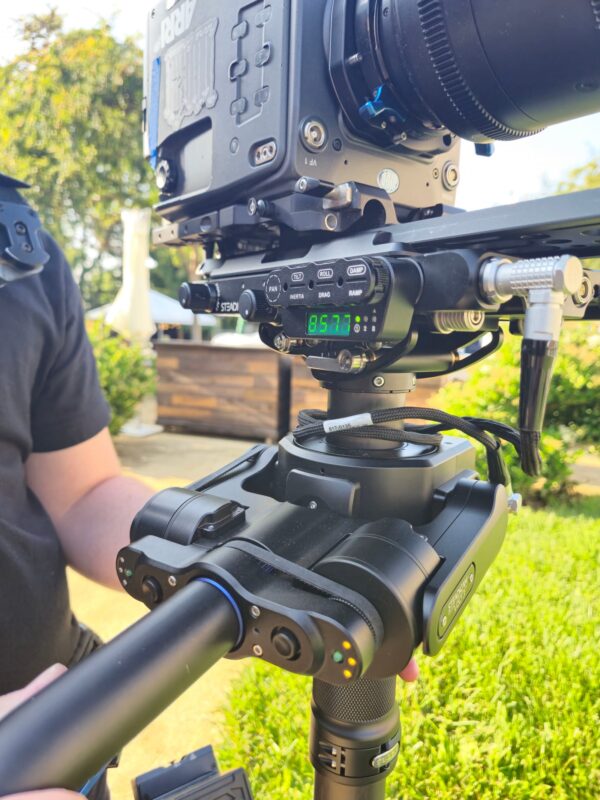
Steadicam operator Robert Ulland worked among the crowd with the film’s two stars. The inference is that a mobile, unobtrusive camera setup was suited to a scene in which the character needed to disappear into an existing crowd, rather than command its attention from a float.
Building a parade for Spectre
The Spectre production built floats and maquettes for its parade. Its apparently unbroken opening shot was assembled from four shots.
A parade built for the camera still produces images that post has to fix. Extras sometimes looked at the camera. The visual-effects work included stitching shots together and adding crowds, as well as fixing faces and adding masks and sunglasses to people.
The counterargument to filming a real event is control: a production that stages its own parade can plan the event around the shot. Spectre suggests that control shifts work rather than eliminating it. The shoot and the effects team still have to plan crowd behavior and continuity together.
Thanksgiving changes location
Thanksgiving parade organizers turned down Eli Roth’s production when it was scouting a downtown parade scene in Plymouth. Port Perry, Ontario, stood in for Plymouth.
Roth’s planned parade scene included a person in a turkey costume being decapitated and running around as if headless. For a parade kill, the crew laid a track that drove the Mayflower float’s bowsprit through a car’s rear window and into a fake head rigged to spray blood. The crew called the effect the “Pinocchio death”.
Plan for access, coverage and cleanup
For producers, the first decision is whether the required location and event are accessible at all. For cinematographers and editors, the next is how to obtain enough coverage inside the available window. A constructed event offers another way to arrange the action, but its crowd and visual-effects requirements belong in the plan from the start.
The choice between adapting a location and recreating one also comes up in this comparison of approaches to recreating 1970s San Francisco.