

Filmtools
Filmmakers go-to destination for pre-production, production & post production equipment!
Shop NowIBC2026 may have ended, but the show continues to make headlines, as some of the technologies shown there will influence the industry in the future.

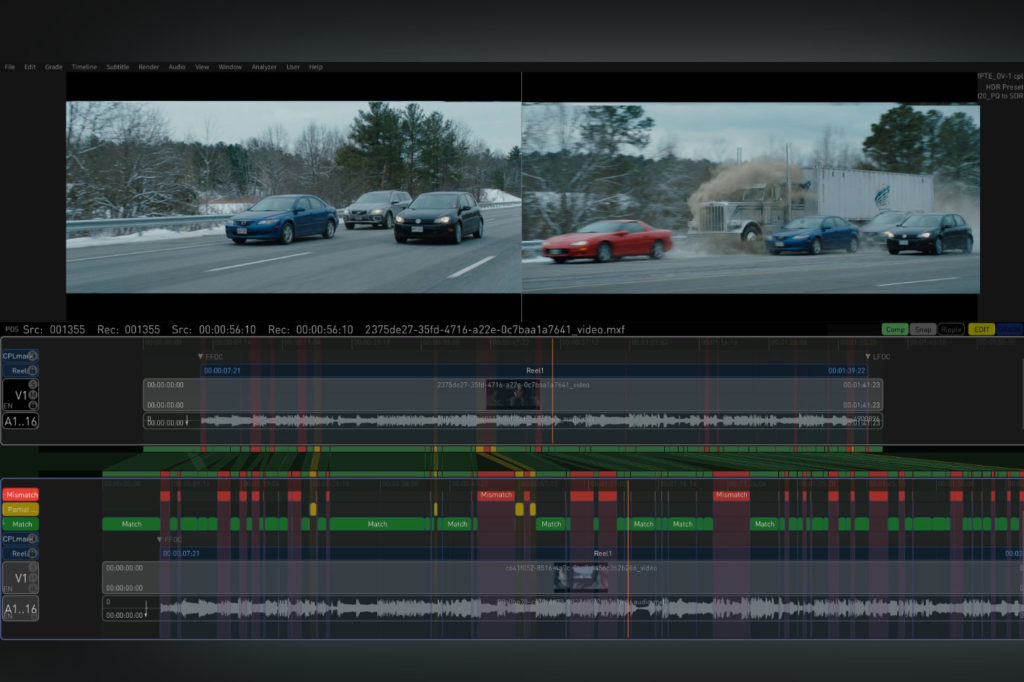
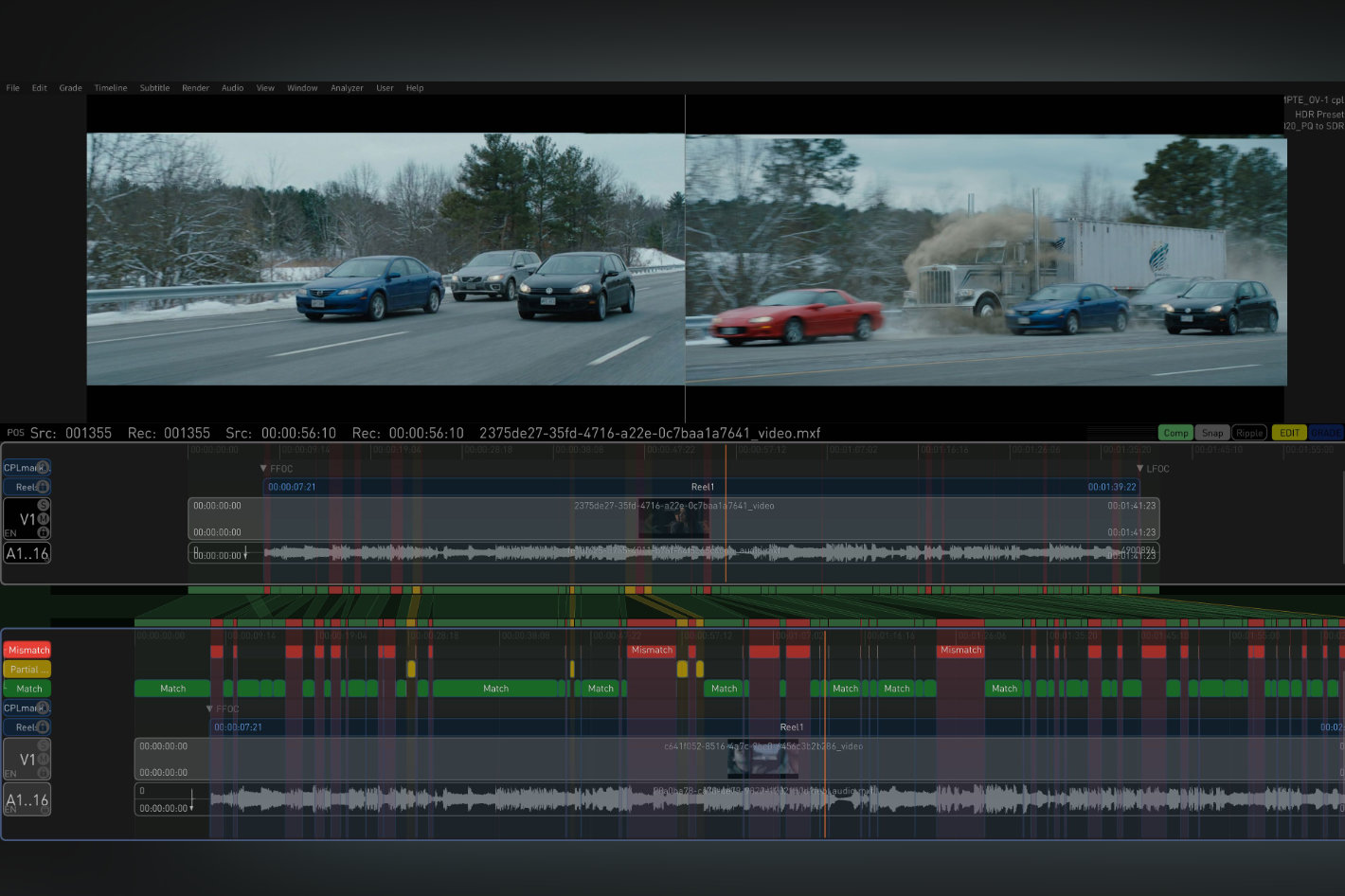 Every mastering facility knows the problem: a new version of a program arrives, and someone has to work out what changed. Colorfront’s new timeline comparison does this automatically!
The Academy and Emmy Award-winning developer of high-performance cinema mastering, transcoding and streaming technologies, Colorfront, demonstrated , during IBC2026, its latest workflow tools. The headline addition is automated timeline comparison, a time-saving feature which finds every change between two versions of a program in seconds. Colorfront also introduced mastering support for Dolby Vision 2, new AI-assisted QC tools, secure encrypted DCP workflows in the cloud, and a redesigned rendering architecture, all built on the company’s API-first architecture and usable at any operational level, from manual mastering to high-volume automation to AI-driven agents.
“Versatility is the new standard in media workflows,” said Mark Jaszberenyi, CEO, Colorfront. “The same Colorfront engine now powers an operator doing high-touch mastering, an automated QC pipeline running at scale, and an AI agent that configures analysis from a written spec. With modern AI coding assistants, building a custom pipeline no longer requires specialized engineering.”
 Here is everything Colorfont has shared about the new solutions:
SMARTER TIMELINE COMPARISON & VERSION MANAGEMENT
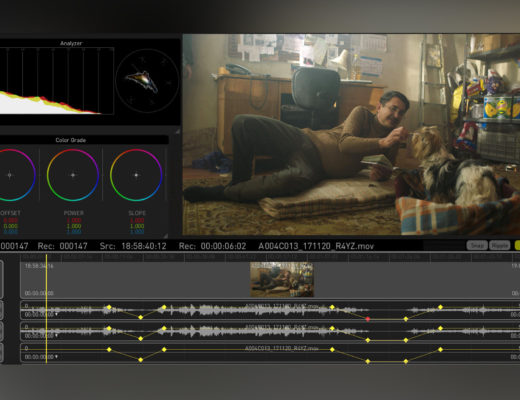
Every mastering facility knows the problem: a new version of a program arrives, and someone has to work out what changed. Colorfront’s new timeline comparison does this automatically, using content analysis, vector embeddings and fingerprinting to detect matching, new, modified and omitted elements between two timelines loaded side by side.
Results appear as markers on both timelines, with dual and three-way difference views, one-touch A/B between versions, and collapsible marker groups to keep long programs readable. The comparison can also run fully automated inside a pipeline, and the resulting metadata can be inspected in Transkoder, exported as a report, or passed to third-party systems for downstream processing.
AI-ASSISTED WORKFLOW AUTOMATION & ANALYSIS
Colorfront will preview agent-assisted workflow configuration: an operator hands the system a technical specification, such as a streamer’s audio QC requirements, and an AI agent reads it, configures the analysis, runs it and summarizes the results. Because probing, validation and processing are all exposed through the API, facilities can build conditional processing paths on standard automation platforms; AI coding assistants make these integrations far quicker to develop.
HDR MASTERING FOR DOLBY VISION 2
Colorfront is the first mastering platform to support Dolby Vision 2, Dolby’s next-generation HDR format, as it rolls out across displays and streaming services in 2026. A new Dolby mastering node lets operators load, validate and adjust Dolby Vision metadata, including Dolby Vision 2 parameters, before generating master’s with the latest XML output. Colorfront has also added support for Amazon’s new Dolby Vision IMF delivery specification and label-based audio mixdowns.
INTELLIGENT QC & TEXTLESS VALIDATION
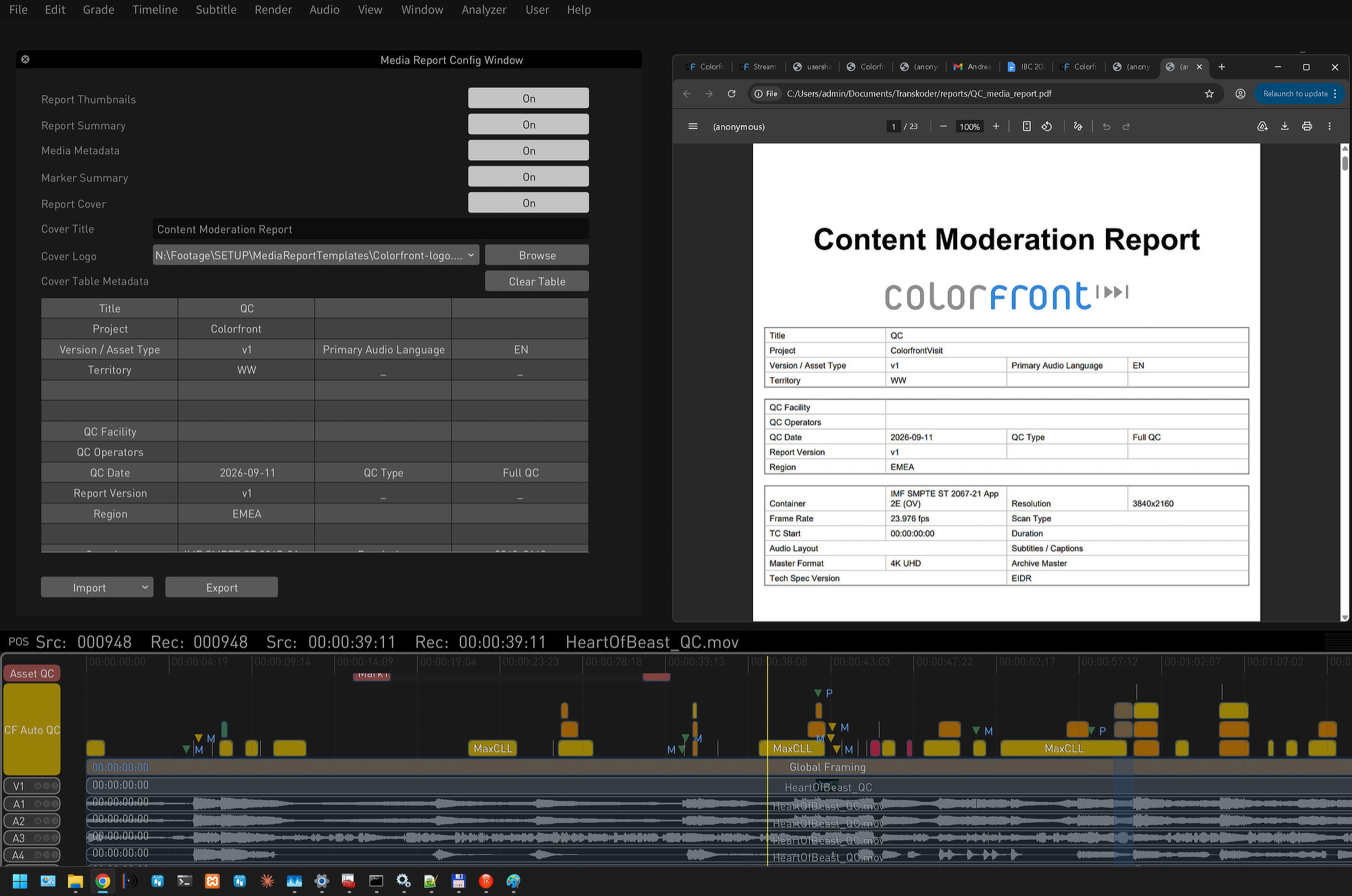
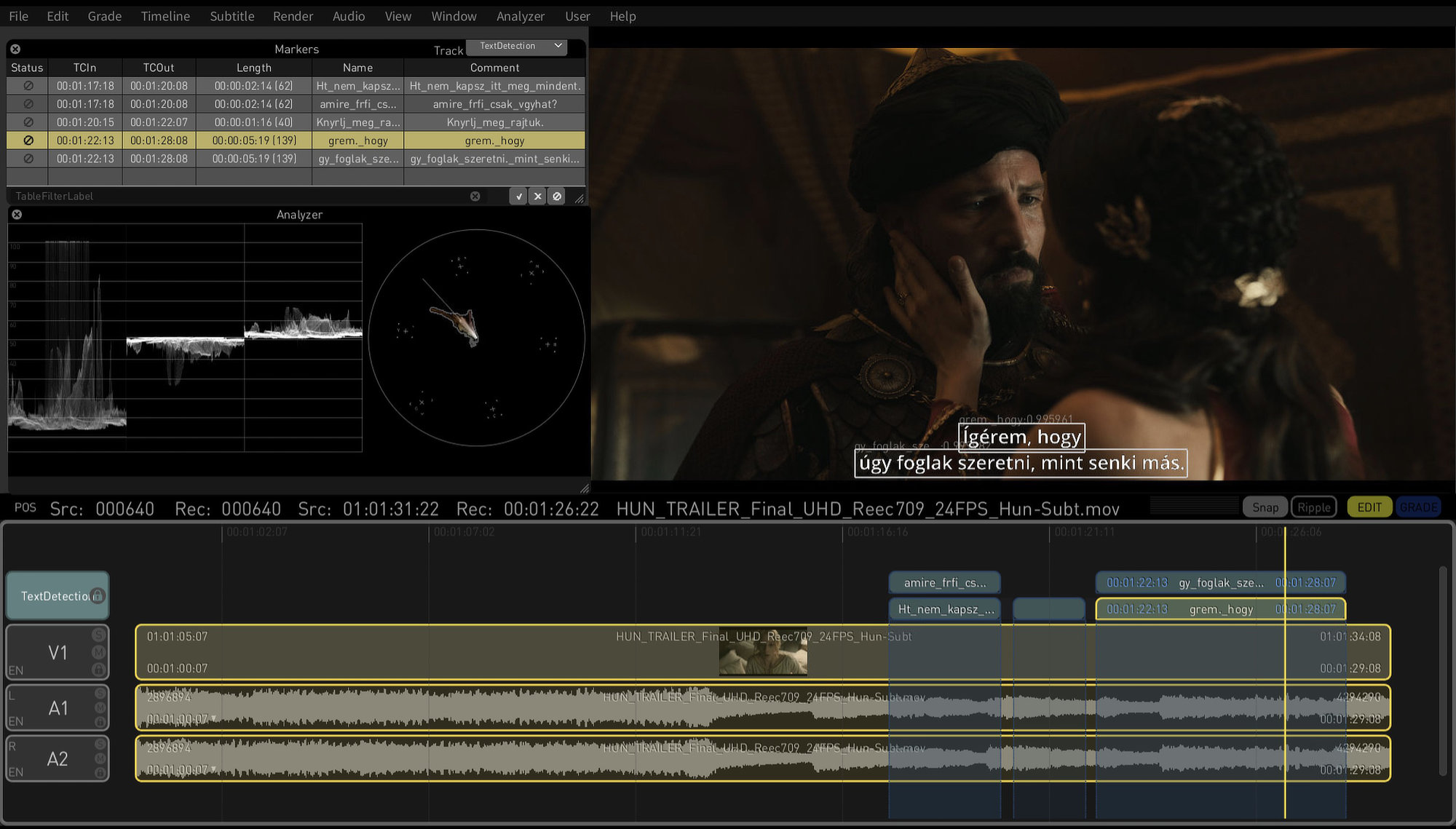
New burnt-in caption and text detection identifies texted sections of a master, pairs each with its corresponding textless element, and validates their alignment down to single-frame discrepancies. Loudness analysis now runs multiple measurement passes in parallel, so several delivery standards can be checked in one pass. Custom marker schemas let users define their own vocabularies and taxonomies, with fields such as severity, required action and assignee, so metadata matches each content owner’s standards. Third-party QC data can be imported for centralized review, and Media Reports support custom company branding, logos and metadata.
BRINGING LEGACY CONTENT INTO MODERN HDR WORKFLOWS
Cadence Detect automatically finds interlaced footage and retimed or duplicated frames anywhere in a timeline, and marks where each section starts and stops. The material can then be processed with Colorfront‘s high-quality de-interlacing, new NVIDIA-accelerated noise reduction and Super Resolution up-mapping and passed straight into the HDR mastering pipeline: a single path from legacy source material to a modern HDR master.
 SCALABLE RENDERING & EXPANDED FORMAT SUPPORT
Persistent rendering and Linux-based workers distribute processing across available infrastructure, with a redesigned encoding page and new WebUI Render Page for submitting and tracking multiple jobs at once. Format support expands with a new ProRes RAW processing node, the latest Sony and Canon camera formats, and ASC FDL improvements for dailies and VFX teams. DCP validation reports are now even more extensive and include bitrate graphs.
CLOUD DCI KEY MANAGEMENT
Transkoder 2026 introduces Cloud DCI Key Management, which brings secure encrypted DCP workflows to AWS. Instead of a machine-bound DCI certificate on every EC2 instance, Colorfront DataConnect manages access through DCI certificate groups whose private keys never leave AWS Key Management Service. Any number of Transkoder instances can open encrypted DCPs in a secure working group directly from Amazon S3 and deliver encrypted DCPs and KDMs at cloud scale.
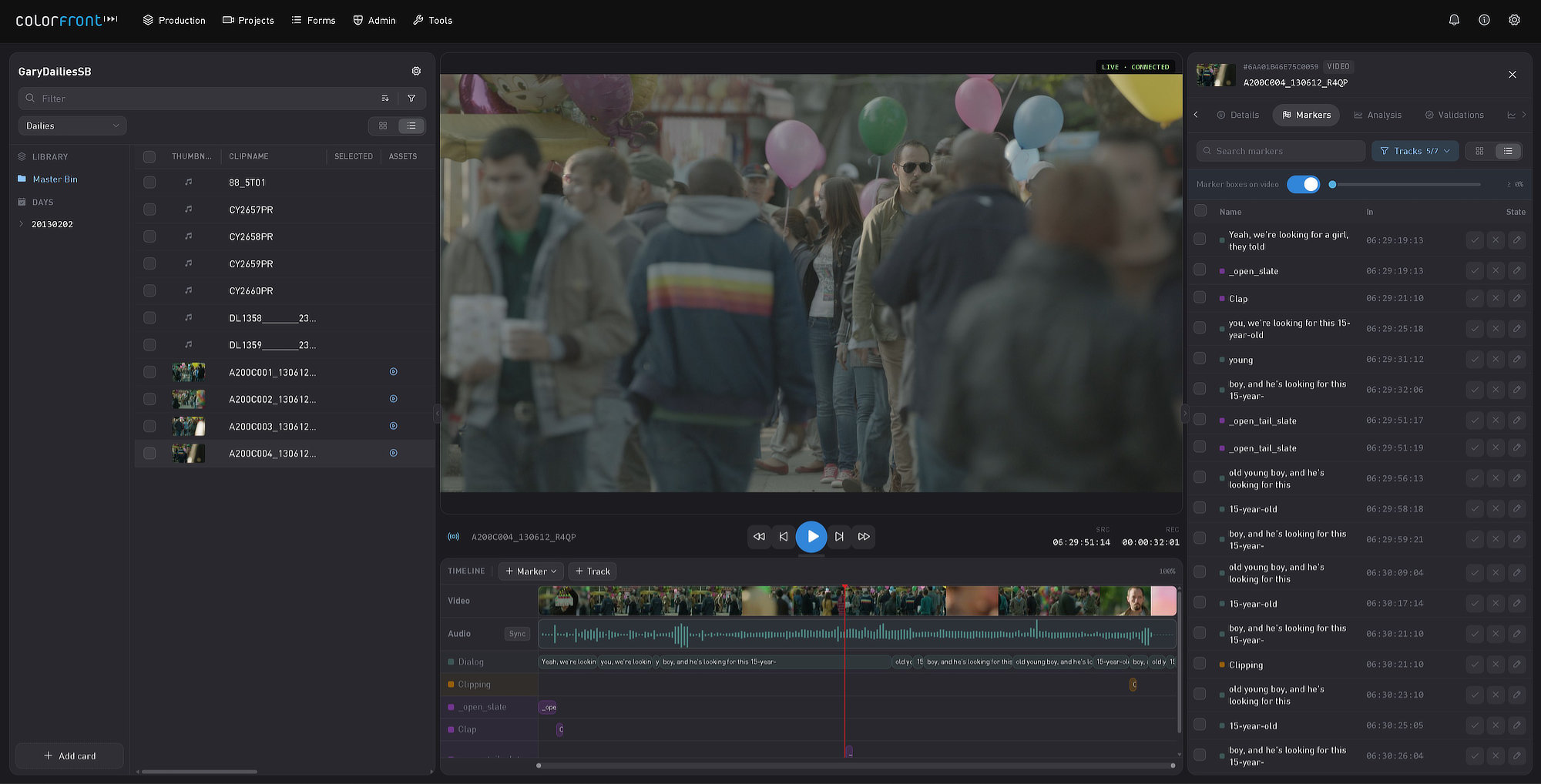 UPDATED WEB-BASED ENTERPRISE MANAGEMENT PLATFORM
Bushido, Colorfront‘s web-based enterprise platform now in closed beta, centralizes the management of complex media environments: workflow automations, metadata review and editing, and verification of automated AI analysis. Operators can recall and override pipeline presets with a visual overview of LUTs, IDTs, framing and color-space conversions, and take live control of On-Set Dailies and Transkoder processing pipelines with streaming output for remote review.