Filmtools
Filmmakers go-to destination for pre-production, production & post production equipment!
Shop NowFilmmaker, Director and Visual Technologist Randy Scott Slavin shares his experience working with Generative AI in his production workflows.


I recently had the pleasure of meeting up with another long-time colleague in my production path, Randy Scott Slavin. I first met Randy through our mutual interests in the early drone video production industry and he launched the NYC Drone Film Festival.
I knew he was a filmmaker before the drone craze hit over a decade ago. And more recently I’ve seen his videos pop up on LinkedIn and asked if he wanted to share his insights working with AI tools from a producer, Director and Editor’s standpoint.
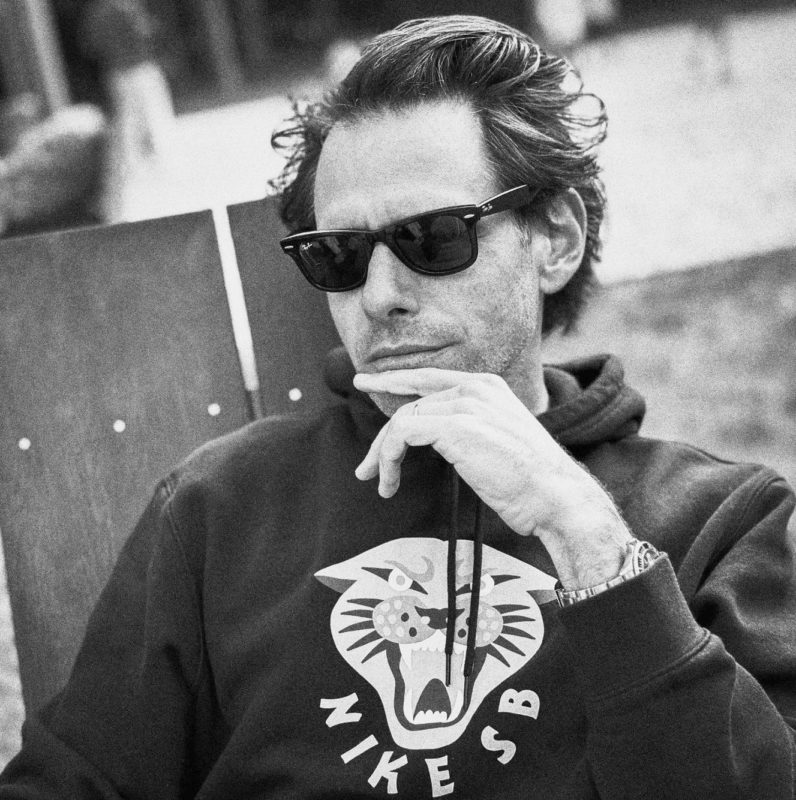 An Interview with Randy:

Q: Hi Randy—thanks for taking part in this artist’s spotlight series. Tell us a bit about yourself personally.
I have an 11-year-old daughter and my wife, professionally known as DJ Hesta Prynn, is a DJ and licensed therapist. We’ve got a teacup Yorkie and a Russian Blue cat that are constantly trying to kill each other. My house is like a cartoon… I’d say it’s 1/2 Ren & Stimpy and 1/2 Bugs Bunny.
At my core, I’m a creative and have always been open to a wide variety of ways to express that. My primary focus has always been audio-visual storytelling… I’ve always felt most natural with a camera in my hand. I spent years playing drums in a band. I love photography. I love building and flying drones (especially FPV). I love films and filmmaking. I love being outside, especially when I can coerce my family to join me. Connection to family and nature is everything. To relax, I ride my motorcycle, meditate, and work out.
One of my biggest challenges has been learning how to remove things from my life. I’ve had so many interests over the years, and I genuinely enjoy all of them. Even though most are tangential to my goals as a filmmaker, they take too much time from my real passion, which is long-form fiction. The final frontier.
To focus on writing and directing, I’ve had to become extremely intentional, almost reductive, with how I spend my time. I’m naturally drawn to new ideas and new tools, and I love exploring them, but I’ve made a conscious decision to prioritize the bigger picture.
 Even drones, which have been incredibly valuable for me professionally, have at times felt like a tangent from what I really want to be doing. I still direct constantly, but I’m always evaluating where my creative energy is going.
Right now, I feel like I’m standing on the edge of the biggest career shift I’ve ever made. The industry is going through a massive transformation: social media, AI, streaming, theatrical… it’s all shifting at once. So I’m trying to simplify and focus everything I have on creating epic fiction.
Q: What has your career path been like?
I’ve wanted to be a director since I was young. The movies of Steven Spielberg, John Hughes, Stanley Kubrick, Robert Zemeckis, Ivan Reitman and so many others just floored me. I was always experimenting with cameras, at first shooting with my dad’s VHS camera, then Hi8, then Mini DV, and in my late teens I’d shoot anything I could get my hands on. Early on, that meant filming friends in bands and anything else I could point a camera at: fitness videos, fashion, comedy sketches, kids’ shows… I’ve always loved shooting people that are excellent at what they do.
I started my education at University of Colorado at Boulder but after a couple of years realized that my future wouldn’t be found there. I was watching MTV’s Total Request Live and realized that I needed to be back in New York. I got an internship at MTV, dropped out of school, moved to NYC and found myself in the cultural epicenter of the tv world. It was an amazing time and after a year I decided that I needed to finish up school.
After graduating from NYU, I became a reality TV editor in Manhattan in the early 2000s, when that world was really taking off. It was a great way to make money, but more importantly, it gave me a deep understanding of storytelling.
They say that projects are directed three times: in writing, directing, and editing… which is very true. Editing really teaches you how a piece works structurally. Even though that period was intense and torturous in many ways, the lessons where foundational for me. To this day I need to have my hands “on the film” because so much of the end product is in the process of assembly.
Early in my career, I became an associate producer on Potluck, a High Times-backed film. That experience was chaotic: big personalities, big energy, and while it was valuable, it also clarified what kinds of environments I didn’t necessarily want to be in.
From there, I kept directing: short films, music videos, anything I could. I was also playing drums in a band called Group Sounds, and a video I directed for us won a Special Jury Award at SXSW in 2008. The concept was totally insane, something no label would have approved, buy it was for my band so I had total creative freedom.
In 2010, I met my wife while directing a music video for her, and that’s when I transitioned into directing full-time, mostly commercials and branded content.
In 2013 I saw a skateboard video called Pretty Sweet by Ty Evans, Spike Jonze, and Rick Howard. That film changed everything for me. The opening is an epic one-shot that I just couldn’t figure out. After a month of sleuthing I found out it was a homemade “FPV drone” built and flown by FPV legend Robert McIntosh (he went on to create Reelsteady that’s the basis of GoPro’s image stabilization). Drones hadn’t entered the lexicon yet but I saw the possibilities immediately.
Bridgestone Commercial:
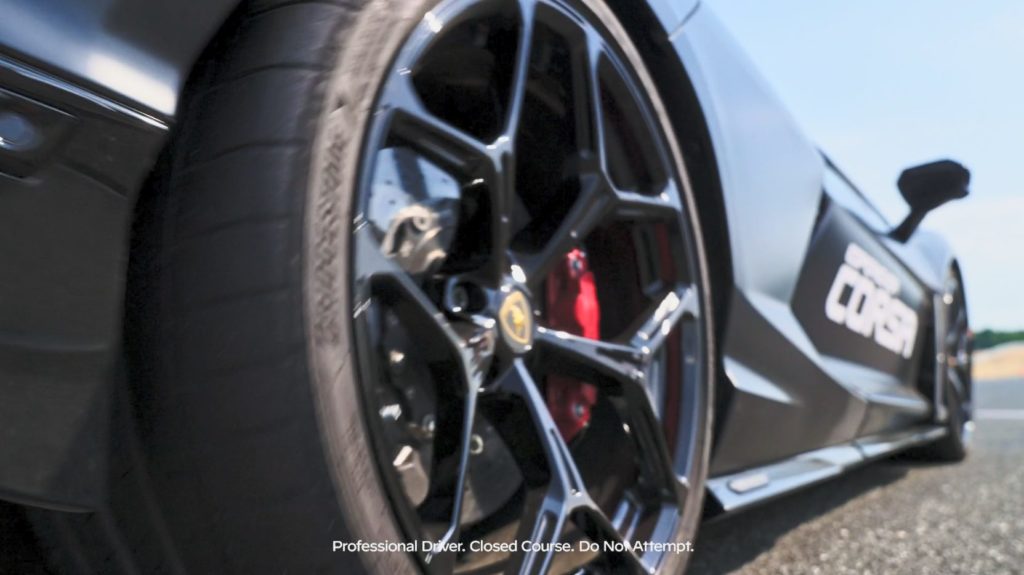
I’ve directed campaigns for Bank of America, American Express, Porsche, Billboard, Google, Microsoft, Infiniti, LG, and AT&T. I’ve also created content for Mark Manson and a wide range of other clients. I shot a piece for Meow Mix that went massively viral, hundreds of millions of views across multiple uploads and versions.
That project kind of took on a life of its own. There are versions of it floating around with huge view counts, even long-form loops people use for studying. It’s a perfect example of how insane the internet can be.
Meow Mix Video:
That project kind of took on a life of its own. There are versions of it floating around with huge view counts, even long-form loops people use for studying. It’s a perfect example of how unpredictable the internet can be.
Over the years I’ve always made personal projects outside of my professional work. These projects have landed me in some bizarre places… I was a contestant on On the Lot, a massive reality show produced by Mark Burnett and Steven Spielberg, I won a FUSE contest and made a music video for the Foo Fighters, and most recently I was a finalist in Robert Rodriguez’s Brass Knuckle Films logline competition.
Foo Fighters – “White Limo”:
Q: How long have you been working with generative AI tools?
Since they came out. Just like with drones, I jumped in immediately. I’m always looking to explore new tools, understand what they’re capable of, and see how they can be applied creatively.
As soon as I started using generative AI, I could see both the possibilities and the limitations pretty quickly. It’s incredibly powerful, but it’s also unpredictable.
Early on, I created teaser concepts for projects I had written, like The Drone Assassin and Force Majeure.
The Drone Assassin:
Force Majeure:
I worked on a project for Google where I used generative AI in a hybrid way—interacting with a character I created, almost like a Who Framed Roger Rabbit-style approach.
I also directed a short film called Crawl Space, where I experimented with using AI to create a monster, while shooting the rest of the film traditionally. That was an early test of how AI could integrate into a more conventional production pipeline.
Crawl Space:
More recently, I created two hours of generative AI visuals that played during my wife’s DJ set at Nvidia’s GTC conference. That was a really interesting challenge, building a consistent visual system that could run continuously in a live performance environment.
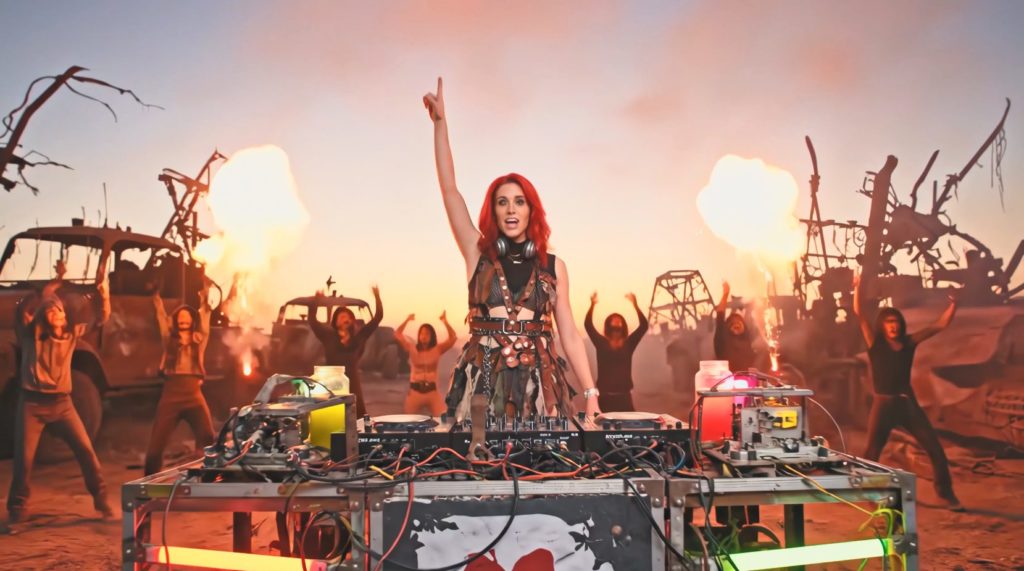
Q: Do you have a specific production approach when working with AI?
It really depends on the project, but the biggest thing is workflow. With AI, if you don’t set things up properly at the beginning, everything becomes exponentially harder later.
I start by researching tools and staying current, following updates, testing capabilities, understanding what’s changed. Then I do early-stage testing to figure out which tools and formats are actually going to work for what I’m trying to achieve.
From there, I “pre-comp” as much as possible. That means building structured assets upfront, especially character sheets. I’ll create consistent references for faces, bodies, angles, everything. That way, when you’re generating content, you’re not fighting against the randomness of the system as much.
I do this for everything: characters, environments, objects, because otherwise you’re constantly dealing with inconsistencies and hallucinations.
Then I generate still frames first. I want to lock the look before I even think about motion. Once I have all the frames working, different angles, variations, start and end points, only then do I move into generating video.
From there, it becomes a lot of testing. Different models are good at different things: camera movement, physics, rendering, so I’ll often switch tools depending on the shot.

It’s a very labor-intensive process. There’s a lot of trial and error, a lot of iteration, and honestly, a lot of burning credits. But that’s what it takes to get something usable.
On the collaboration side, I’m very structured. I set up shared drives, organized folders, clear naming systems, because otherwise things fall apart quickly.
And then there’s the prompt side. I spend a lot of time refining prompts and systems upfront so that once production starts, everything becomes more efficient.
Q: What’s your take on generative AI tools?
The biggest challenge is translation, taking what’s in your head and getting the tools to understand it. As a director, you’re used to thinking visually and spatially. You’re walking through a scene, placing cameras, blocking movement. That’s very different from typing out a prompt and hoping it interprets it correctly.
If you don’t have a clear vision, AI is amazing. You can generate endless variations and explore ideas very quickly. But if you do have a clear vision, something specific you’re trying to achieve, it can actually be harder to get there.
Creating a single image is one thing. Creating a cohesive scene is harder. Creating multiple scenes that all work together consistently, that’s where things really break down.
We’re definitely getting closer. The tools are improving quickly. But they’re still not designed in a way that aligns with how directors actually work… and think.
One tool I’ve been using is Previs Pro on iPad. It allows you to build scenes in a 3D environment, place cameras, position characters, create compositions. That feels much more natural.
To me, the future is a hybrid approach, where you build something spatially in 3D, then feed that into AI to re-skin and refine.
Maybe the current system works great for some people out there… for me, I want to reach into the computer and change the camera angles…. I want to place the characters and sets and lights with my hands. When there’s an interface that can translate that, we’ll really be cooking.
Randy’s Links:
Website: https://www.teamslavin.com/
IMDb: Randy Scott Slavin
LinkedIn: https://www.linkedin.com/in/rslavin/