Filmtools
Filmmakers go-to destination for pre-production, production & post production equipment!
Shop Now
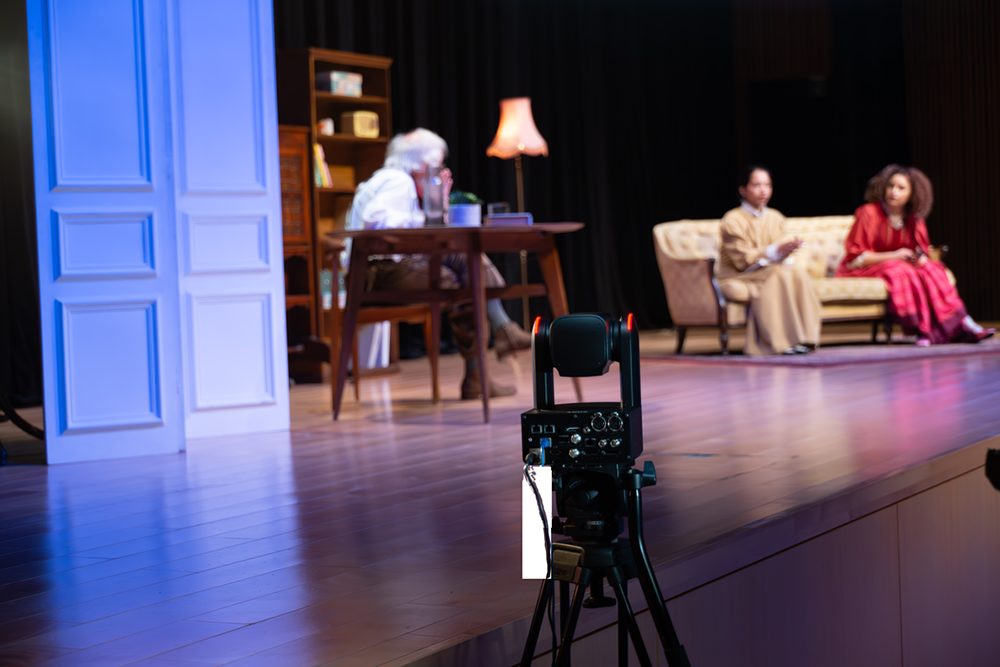
The cross-industry implementation of equipment and technology is now just as important as the hardware itself. A studio-caliber camera initially designed for broadcast television is also used in concert venues, churches, and other places looking to capture high-definition images. Nowadays, productions require their crew to be flexible and multidisciplinary, demonstrating the ability to step out of their initial niche. If you are a prospective camera operator or DP, you are expected to adapt on the fly, especially if you are moving from project to project: different productions have different requirements and whims, and the tools you rely on need to be able to catch up.
If you’re on the producer’s side of broadcasting, coordinating talent and organizing workflows, you encounter a different hurdle: increasingly shrinking crew sizes and budgets, while still being expected to deliver a variety of dynamic camera angles and smoother coverage, all while also maintaining high image quality. A tall order, to say the least, but that is the current state of video broadcast. Expectations rise as resources thin.
The Sony BRC-AM7 PTZ camera, with its autonomous subject tracking, and the HXC-FZ90 portable studio camera, offering affordable 4K, face these challenges head-on when combined, exemplifying the flexibility required to navigate a difficult industry. Both have proven their multidisciplinary value as a unified powerhouse by supporting a wide variety of production demands, reinforcing how adaptability is now central to equipment selection.
The HXC-FZ90, for instance, bridges the gap between the classroom and the newsroom with its affordability. It keeps the budget in mind while delivering studio-quality visuals that amaze viewers.
The Big Ten Network (BTN) – a channel broadcasting live sports from eighteen of the biggest universities in the United States – aims to provide hands-on experience to students aspiring to have a career in media through its StudentU program by putting them in actual broadcast roles. In October 2025, BTN recently introduced more than twenty HXC-FZ90 cameras to its pipeline. With the camera’s inherent accessibility and intuitive ease of use, it lowers the barriers to education in broadcast media. Students are offered real-world training on production-grade equipment, all the while BTN sees vast improvements in the quality of their video streaming with the camera’s 2000 TVL resolution.
In a press release published by Sony highlighting the camera acquisitions, Rob Coons, Senior Director of StudentU, reflects on how far the program has come. “When it first started, a single-camera stream with a score bug was the norm… Now, we’re producing four- and five-camera shows with replay, graphics, and all the broadcast-quality production elements you’d expect on television.”
Pulling back to the greater sports world, the BRC-AM7’s auto-tracking capabilities are also put to great use, with its advanced motors allowing for quick and snappy pan and tilt speeds. With an estimated angular velocity of up to 180 degrees per second, Sony’s newest PTZ is more than capable of keeping the action in frame, from following a football player sprinting down the field to capturing a figure skating routine unobstructed.
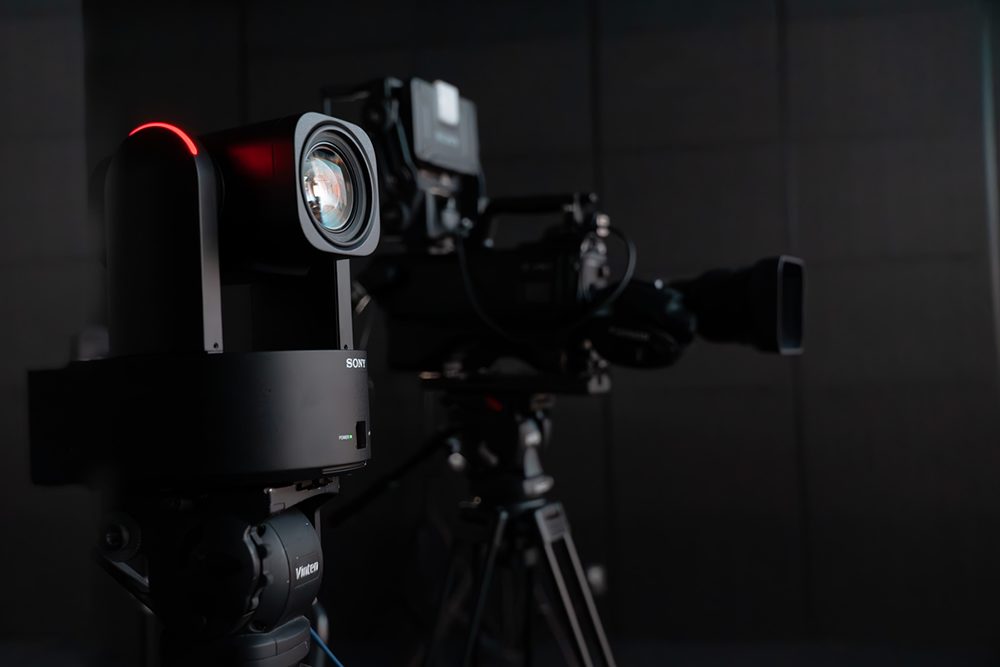
Both cameras open up possibilities: the HXC-FZ90 makes HD and 4K production accessible through its low entry price, and the BRC-AM7’s AI-powered PTZ capabilities ensure an efficient broadcast that allows crews to focus on the up-close and personal highlights of their subjects.
Sony’s greatest strength as a manufacturer lies in the flexibility and adaptability of its camera hardware, which can be deployed in nearly any environment that demands high-definition broadcasting, from sports arenas to even places of worship: from competition to congregation.
Sony has over 30 years of experience in providing A/V support for faith institutions, including assisting with the implementation of in-room solutions, multi-site broadcast and streaming technology, and digital signage. The HXC-FZ90 and BRC-AM7 join in to bolster Sony’s 4K offerings for religious spaces. Once again, the advantages of the two cameras come into play. The HXC-FZ90 is a budget-friendly option for churches looking to record and broadcast their services and sermons in studio-quality high definition and 4K, regardless of congregation size. And the BRC-AM7 is ideal for following more than one speaker, especially at larger campuses. Despite being the smallest PTZ on the market, its compact frame holds no bearing on its image quality, capturing 4K 60p footage from angles normally inaccessible to human operators. It respects the space as it delivers studio-quality visuals.
Like the HXC-FZ90, the BRC-AM7 delivers exceptional 4K capability at an accessible price point. In practice, this pairing transforms worship capture: a volunteer operator moves through the congregation with the HXC-FZ90, framing speakers with cinematic intentionality, while the BRC-AM7 autonomously covers more angles. No additional crew required. Both cameras support ITU709, 709tone, and S-Log3 color profiles, enabling A/V technicians to intercut footage seamlessly while maintaining visual consistency across every shot. The system offers a professional, integrated workflow that minimizes technical barriers, making it accessible for volunteer teams and in high-stakes production environments. In an industry where production happens anywhere and on any budget, this level of versatility is a necessity, not a luxury.
The benefits offered by the combined workflow of these cameras also apply to other forms of live video streaming in more public settings, such as trade show panels, concerts, and press conferences. And none of that is to mention traditional television broadcasting. With the HXC-FZ90, it’s easier than ever to upgrade a newscast to a multi-cam 4K production, and the BRC-AM7 is capable of more dynamic camera movements without the assistance of an operator. Combined with their built-in compatibility with each other and other Sony broadcast gear, these cameras are an obvious addition to any production toolkit. The future of broadcast is multidisciplinary implementation; experience and knowledge in how to push a piece of equipment far beyond its limit is paramount, and Sony has more than met the demand with their gear.