

Filmtools
Filmmakers go-to destination for pre-production, production & post production equipment!
Shop NowA look at the Ferrari Challenge NA race at Weathertech Raceway Laguna Seca in the grain

“You’re making things harder for yourself, aren’t you?”
I could hear that question echo in my head while looking through the waist level finder on the Hasselblad. It rattled around as I struggled to track the race cars barreling by me at over 140 miles per hour with their engines screaming through the hills of Monterey.
I had asked myself this same question many times. I’d always come back with the same answer.
Yes. Yes, I was. But why? Why use slower, heavier, antiquated gear?
The answer to that question matters to photographers and creative professionals in ways that resonate on multiple levels.
The power of film
Today’s technology is especially well suited for sports photography. The latest generation of professional cameras have dedicated autofocus settings for tracking vehicles that can land focus better than your own eyes. Not to mention continuous shooting speeds that easily surpass what’s needed for even video capture. In a technical comparison today’s cameras excel in every way.
But something’s been lost in the digital age. Anyone who’s used an analog medium knows it. When shooting analog, each frame becomes more meaningful, the camera has more presence and the methodical attention required to create a successful exposure demands focus.
I’ve always loved capturing a moment. I’ve had a camera in my hand for about as long as I can remember. What really launched that passion was receiving my first SLR, a 35mm Minolta XG-A from my grandmother. This was my first experience with an interchangeable lens full frame camera. I was hooked. I learned photography on film and made almost every mistake. It wasn’t until later that cars came into the mix, racing became a huge passion. When I found out you could get paid to photograph the coolest cars and stand in the best seat in the house at races I knew I wanted to do that. I’ve taken my film cameras out on track before but never as my main cameras for capturing a weekend at the racetrack.
But it wasn’t just any weekend. And it’s not just any racetrack, further underscoring the importance of approaching these sorts of projects with tools and gear that enable them to resonate long after they wrap.
Capturing Ferrari Challenge NA
The event was the Ferrari Challenge NA(North America) race at Weathertech Raceway Laguna Seca in Salinas, California. Ferrari Challenge is a spec series meaning that all the cars are the same. Unlike Formula 1 or NASCAR where teams build their cars within a specific set of rules in a spec series teams race identical cars often all from the same manufacturer. This consistently provides close exciting racing and rarely does a driver run away from the field to victory. It’s not uncommon to see a lap for lap battle for position across the field.
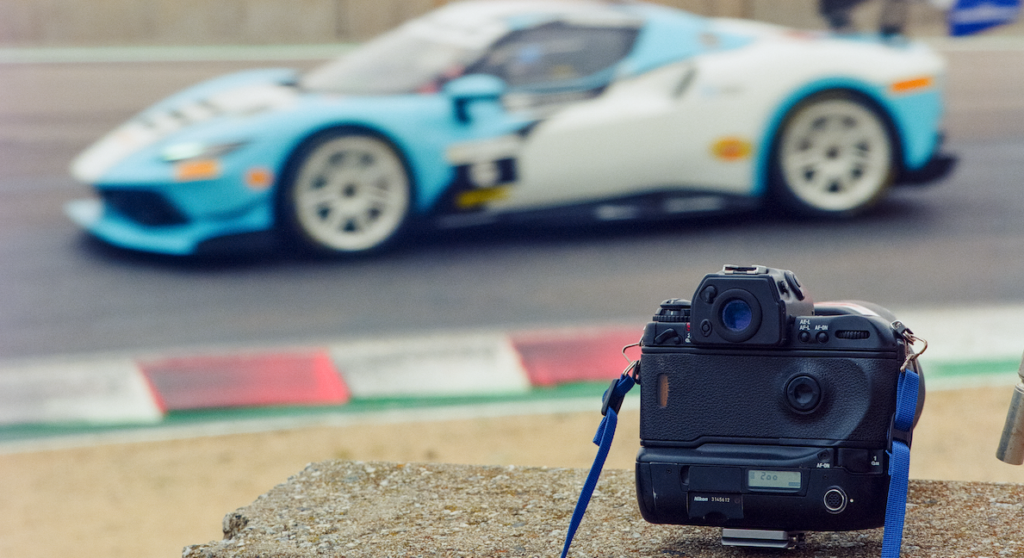
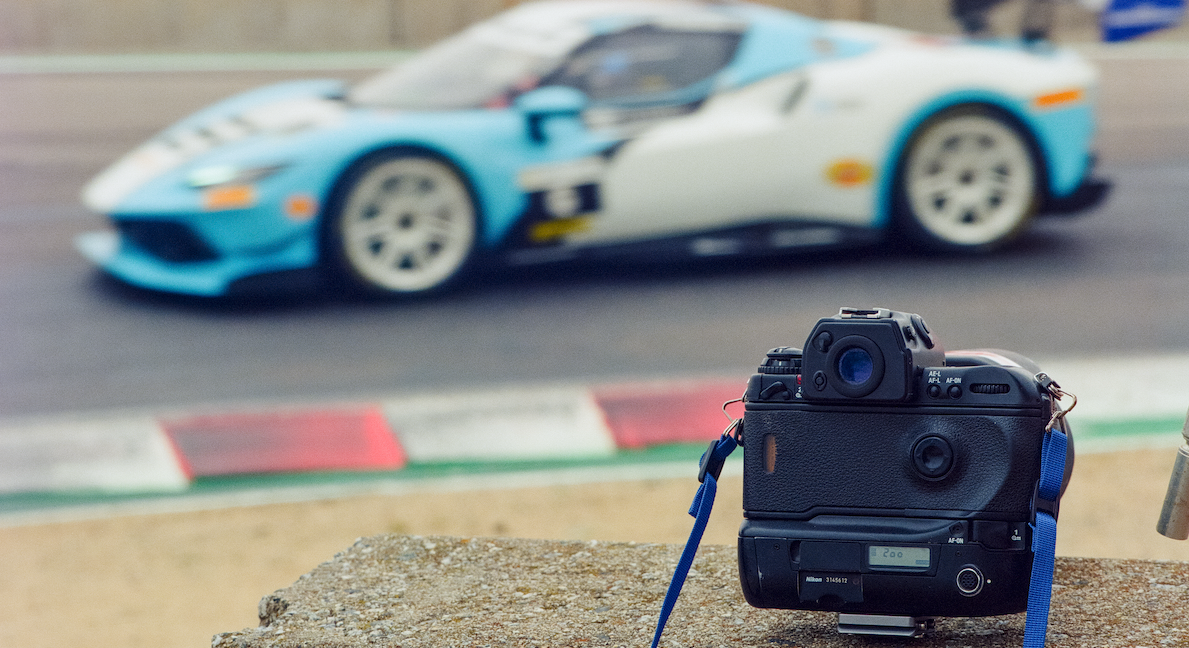
As for the gear, I was photographing on a Nikon F5 with 28-70mm f/2.8 and a Hasselblad 500CM with 50mm f/4, 80mm f/2.8, and 150mm f/4 as well as Canon A2E paired with a 100-400mm f/4.5-5.6. The filmstocks were Kodak Portra 400, Portra 800, ColorPlus 200, ProImage 100, Ektachrome 100 and Ilford Delta 100, Delta 400 and HP5+.
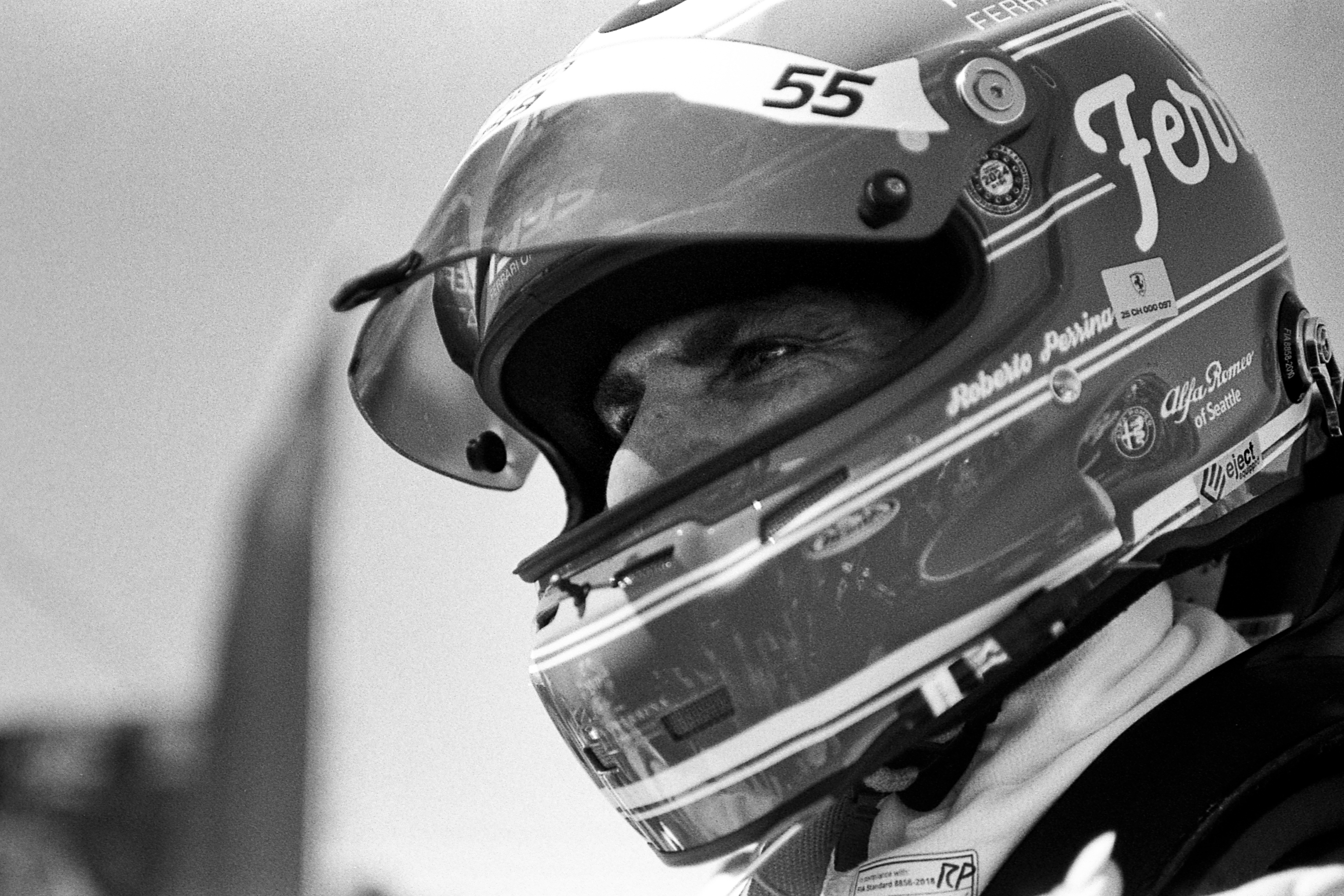
I started off in the paddock. What I found was that shooting analog brought me closer to the lesser seen, but no less interesting, moments of a race weekend. The calm moments in the paddock and garages stood out. Drivers inspecting their cars, going over session notes with their engineers, or dawning their helmets and gloves before their time in the seat. As you can see, these moments lent themselves perfectly to photographing analog.
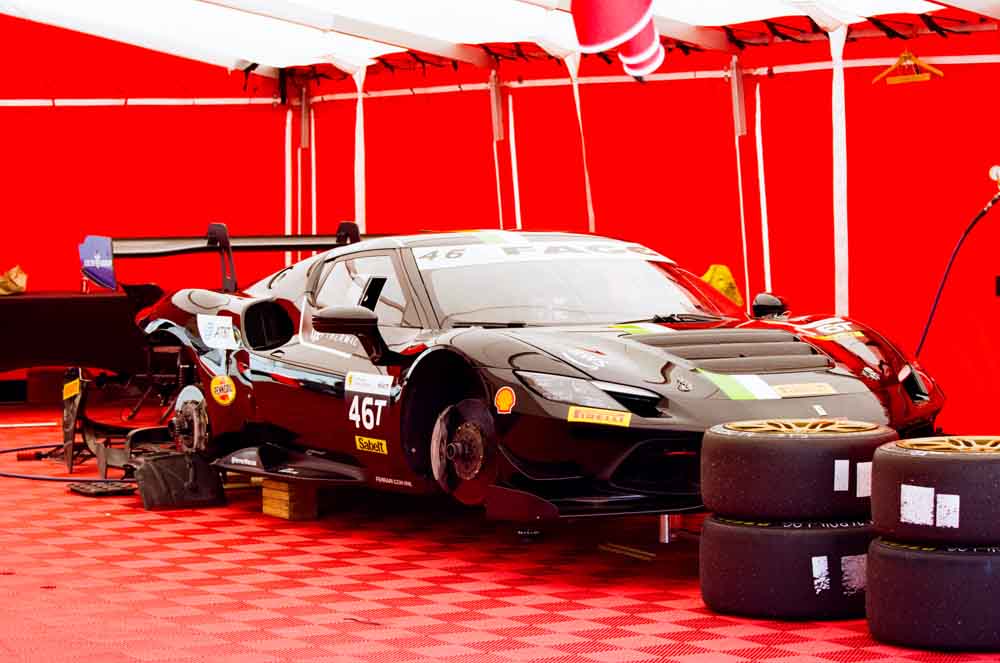
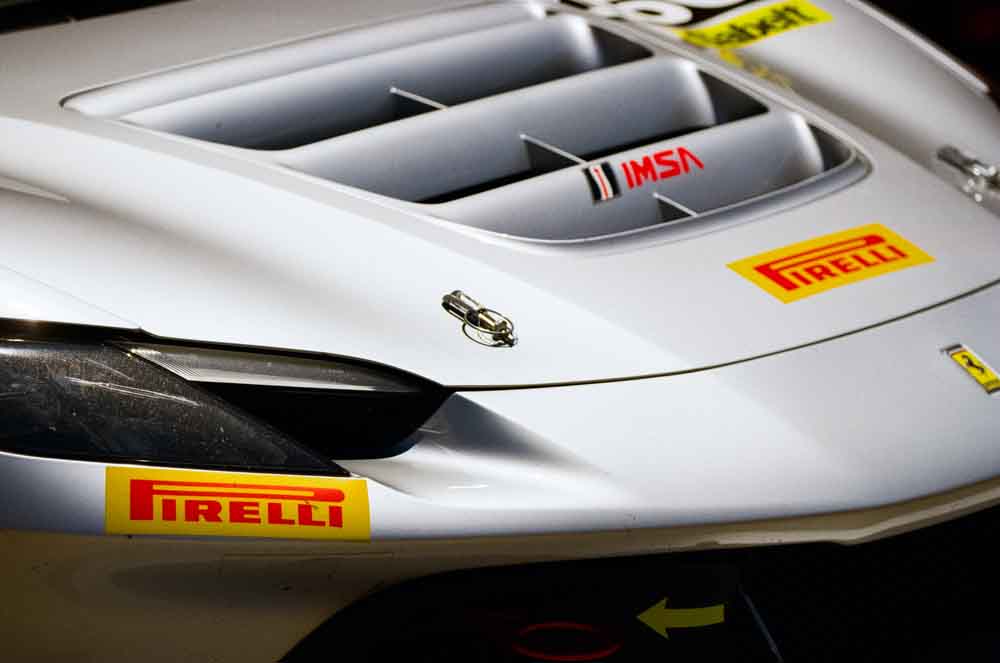
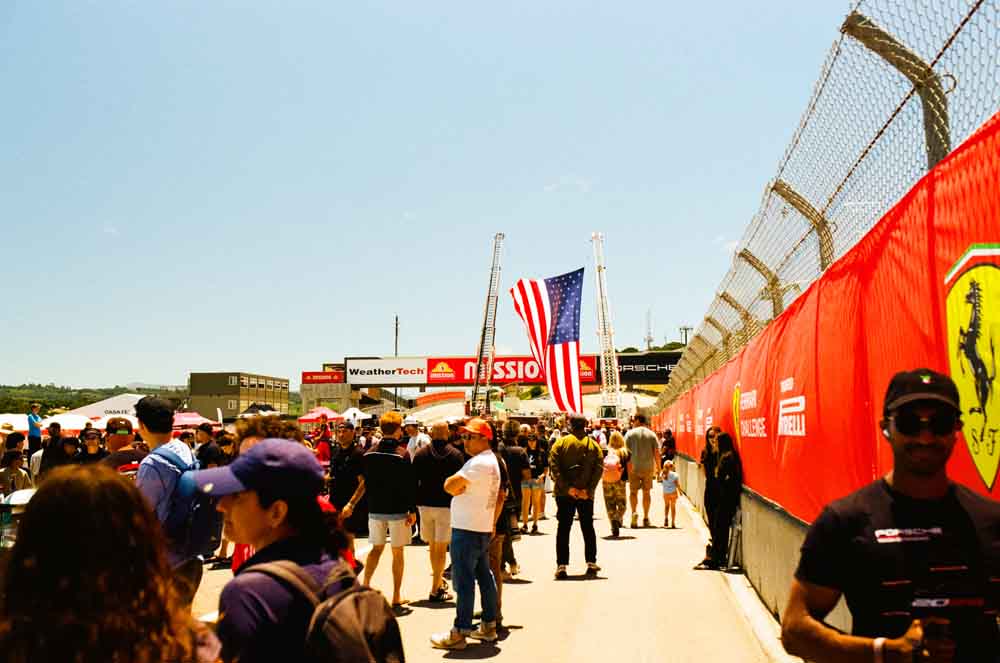
I always look for paddock moments like this when shooting on digital but they can feel more like quick snapshots between sessions or changing locations. However, looking and waiting for them with a film camera in hand felt different. The slower process extended and helped more fully portray the juxtaposed stillness of these images to the typical ‘racing photo’ where the action is in your face.
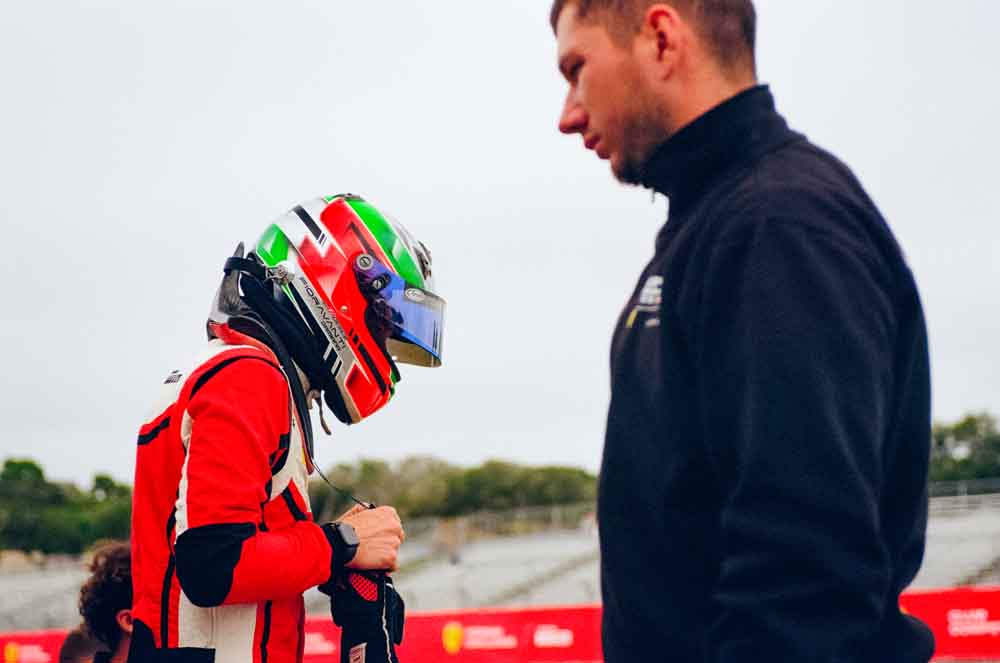
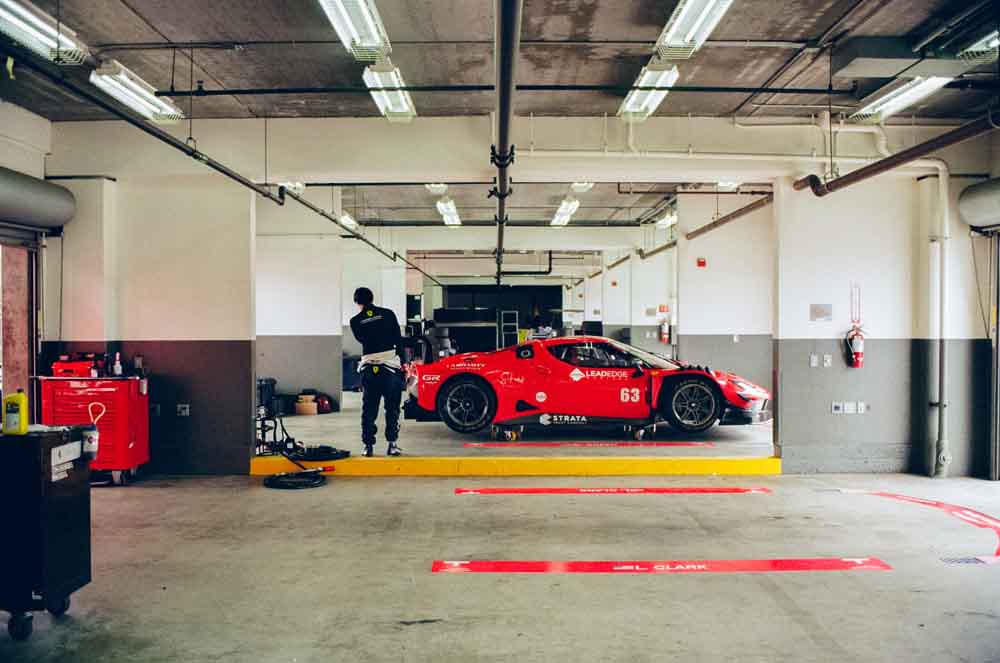
When I got out on track the slowness of the cameras became a little more noticeable. Thankfully the F5 has a blistering eight frames per second continuous shooting speed. This helped greatly to capture those nice action shots to pair with the paddock images, which is especially important for ones that are totally unique to this place and this race.
Capturing “The Corkscrew” and a sense of timelessness
Laguna Seca is known for its turn 8 and 8a, dubbed “The Corkscrew”, and it’s one of the most famous turns in all of motorsport. It’s a hard left to right hand turn that drops a staggering 59 feet in just 450 feet of track. From a photographer’s perspective, it provides opportunities to capture just about every angle imaginable.
At the turn 8 apex you can stand only a few feet from cars entering the famed corner. The hard braking after cresting the hill on the run from turn 6 leaves the cars poised and ready to attack the complex drop. From below the view to the top of the hill gives perspective to the severity of the change in elevation. The speed carried at the racing line leaves the cars looking like the road is falling away from them. In the next few seconds as they hug the inside of turn 8a they are at an almost 18% decline and race down with angles that cannot be found anywhere else.
The images from the F5 and A2E highlight the action on track but don’t feel all too different from an image captured digitally. Apart from the colors, tones, and grain.
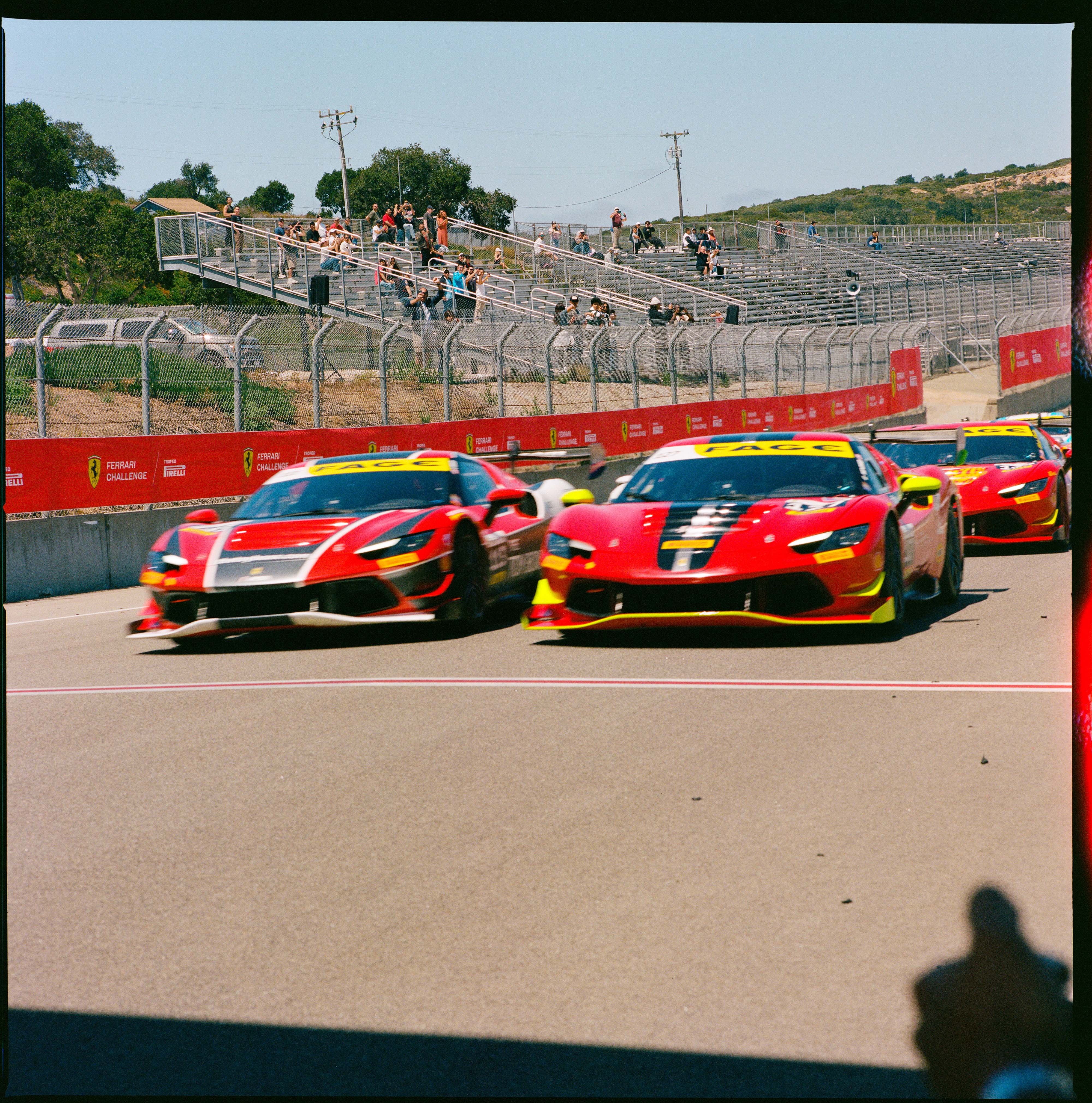
However, the images from the Hasselblad feel much more methodical and help show this fast versus slow relationship. Having eight frames a second with fast autofocus is great but manual focus and one frame every three seconds with cars topping out at 140 mph really slows you down, in a good way. The image from the front straight and inside of the turn two hairpin are some of the most successful on track photos from the weekend.
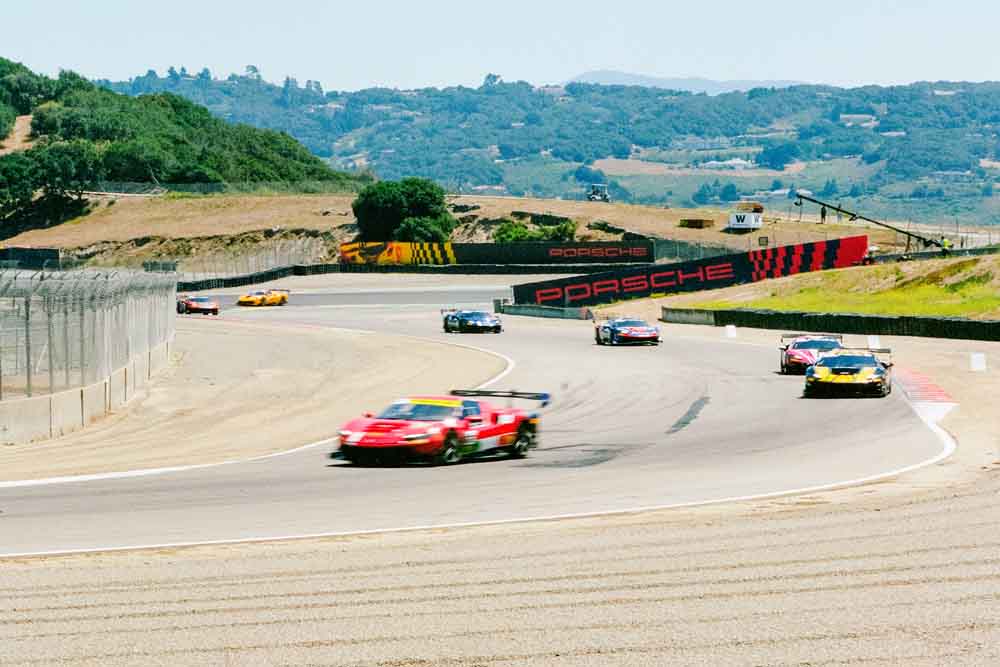
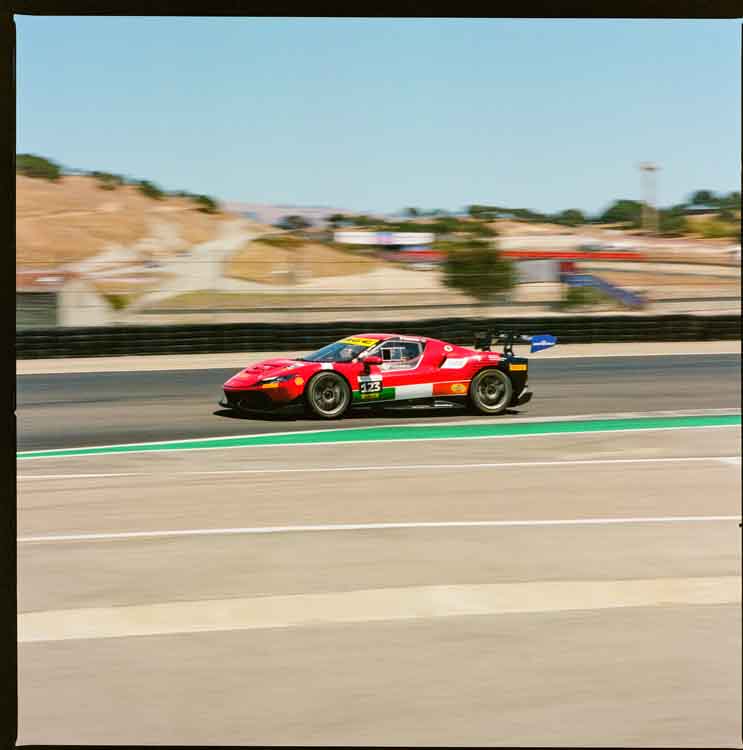
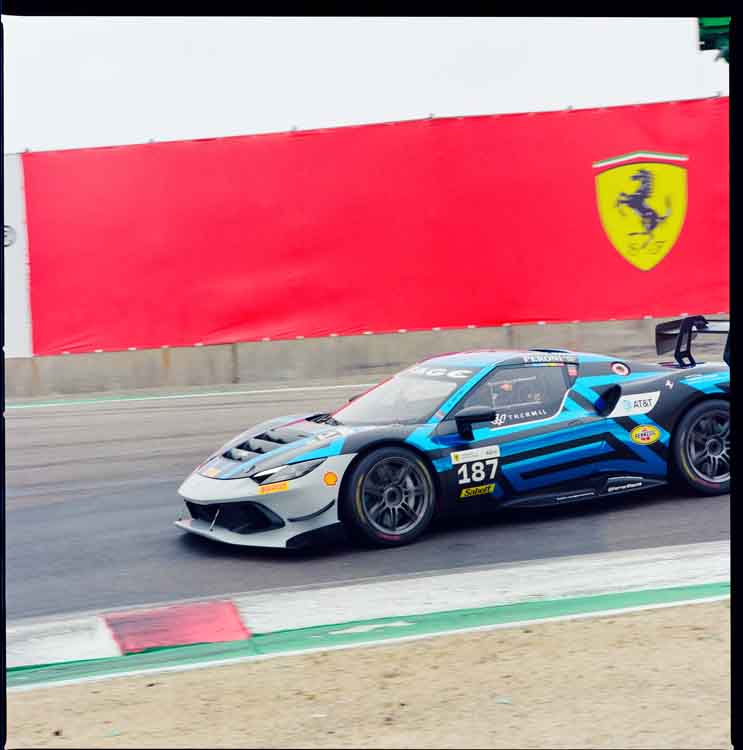
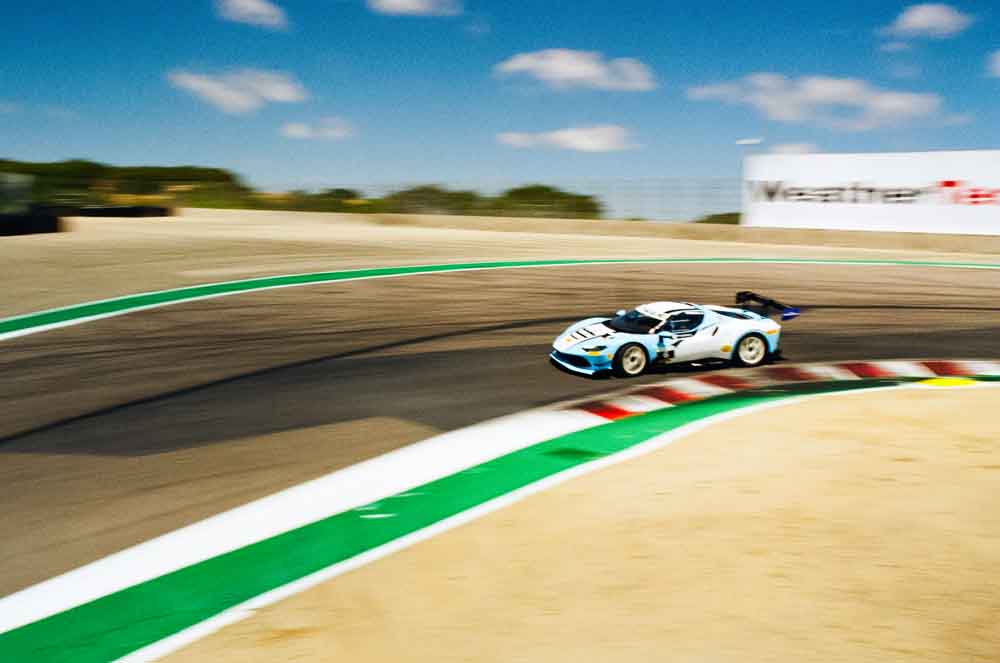
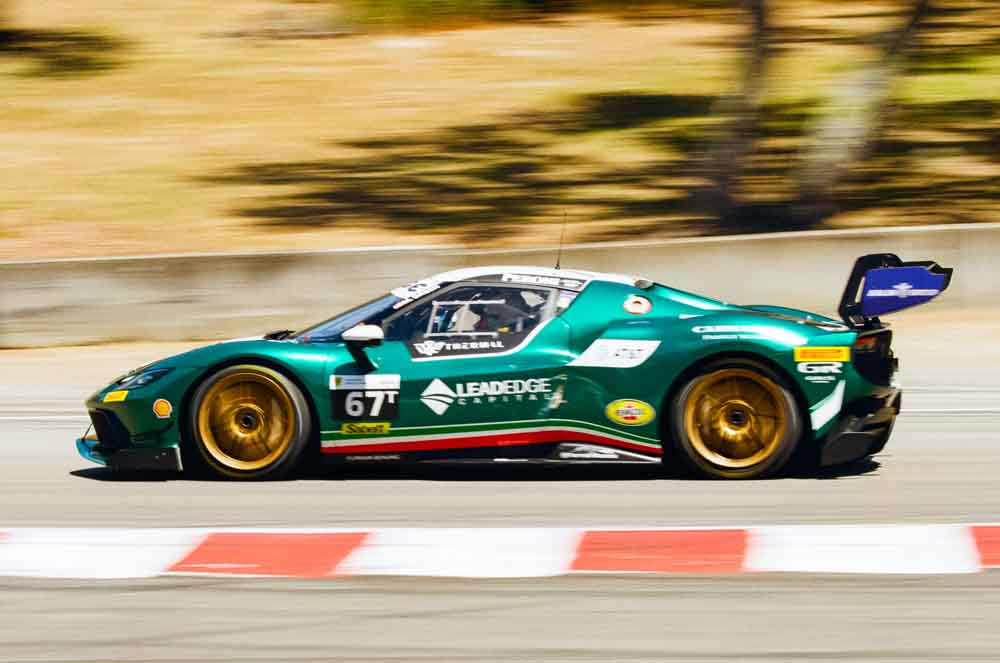
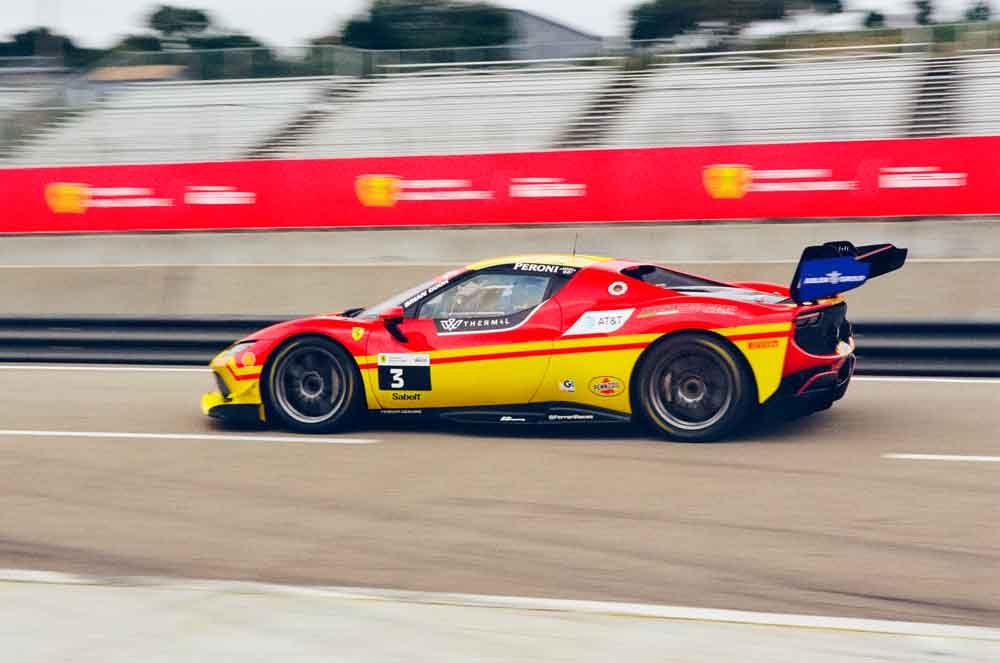
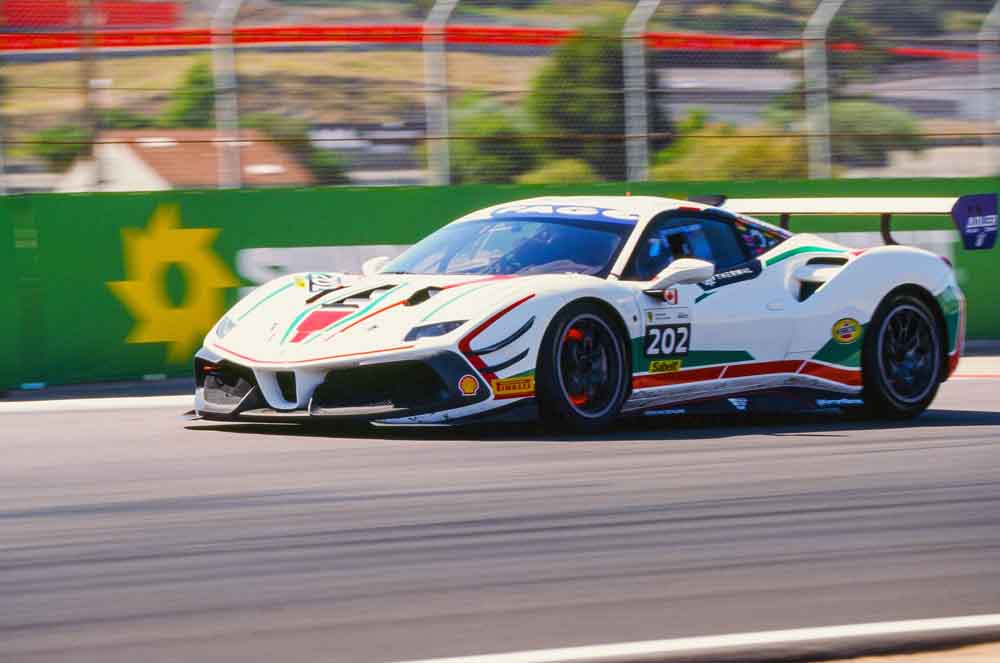
This brings us to the end of the weekend marked by the checkered flag on the final race. I thought with the waving of the black and white this was the time to bring out the black and white stocks. This set of images may be some of the strongest from the weekend. They feel timeless. The celebrations frozen in the grain. The images capture that feeling only film can give you.
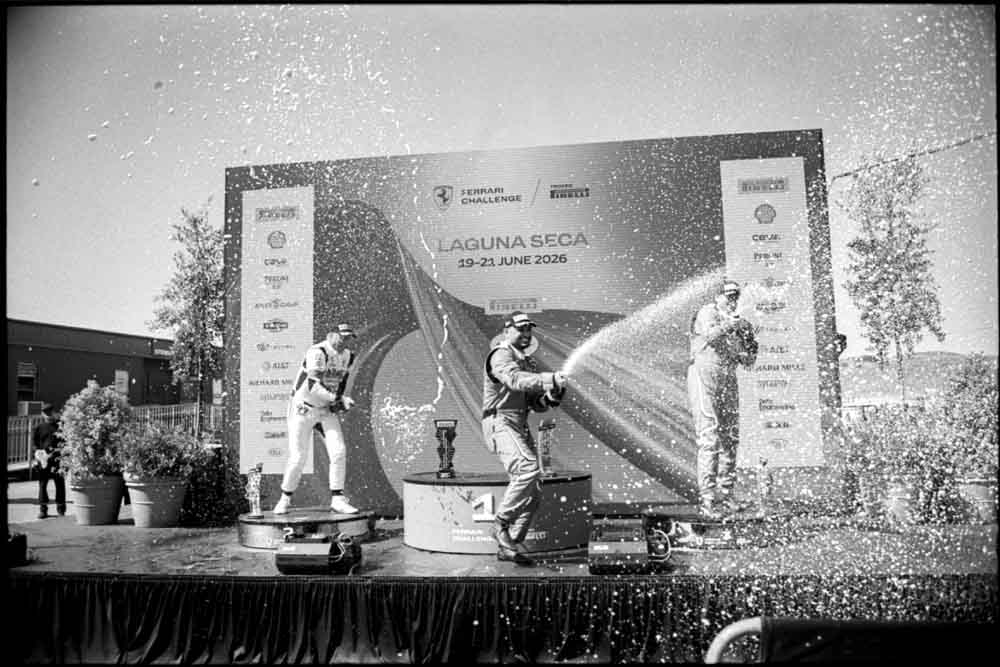
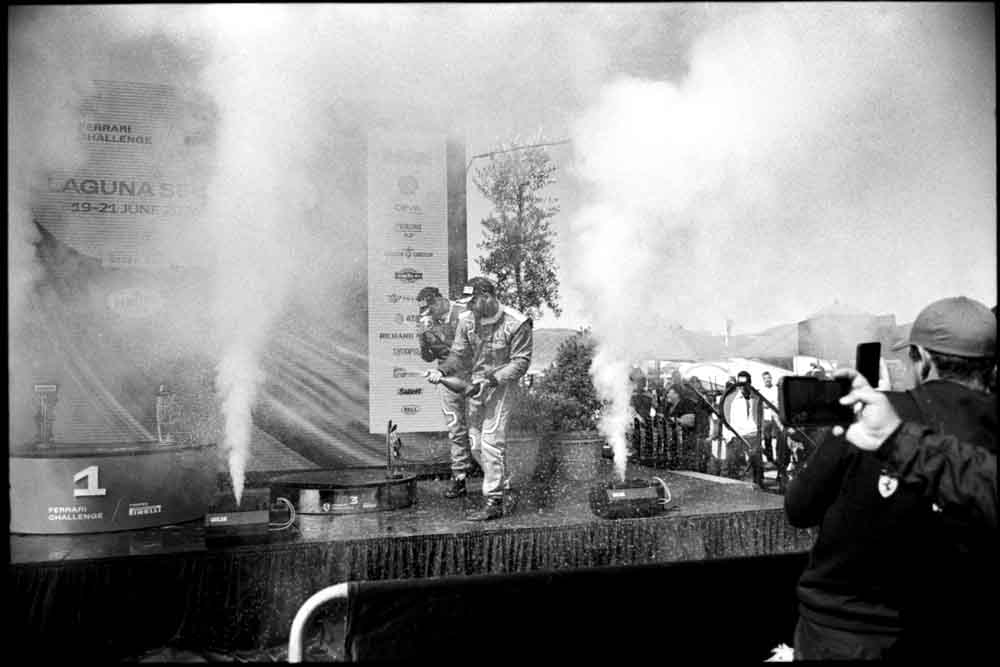
From the drivers celebrating with their teams, the champagne sprays on the podium, or that quiet moment during the national anthem where the cheers and hollers are held in the crowds throats. The action is a boisterous celebration but the property of the medium quiets the frame. The audience can truly take in all aspects of these images and feel the happiness of a first place finish, the exhaustion of a lap after lap battle to the end, or the spray of champagne as it flies off the podium. The same feeling would not be portrayed the same if captured digitally. The look and qualities of film absolutely heightens them.
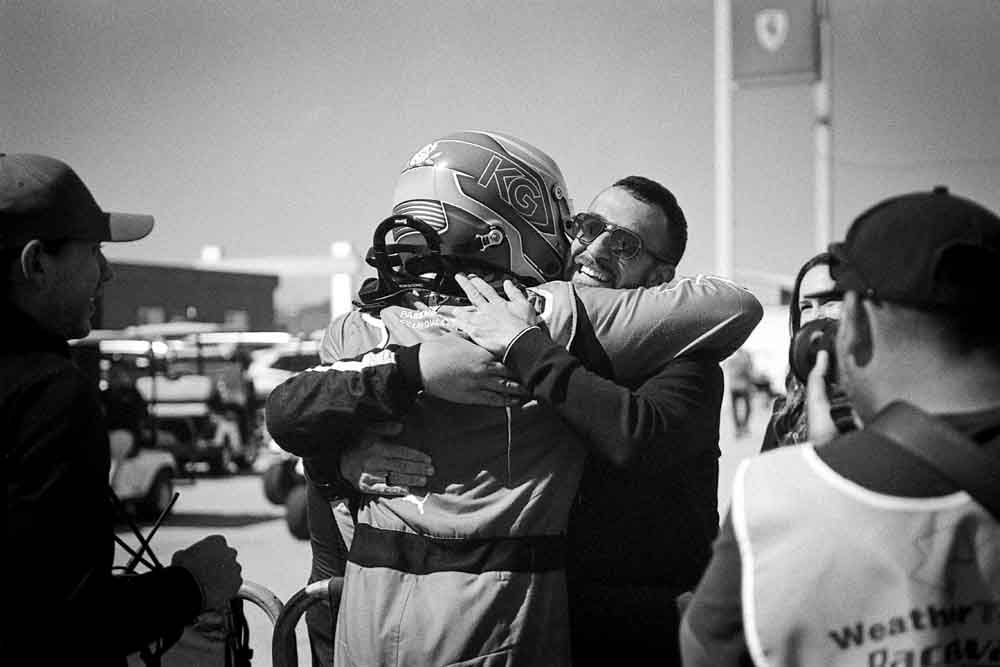
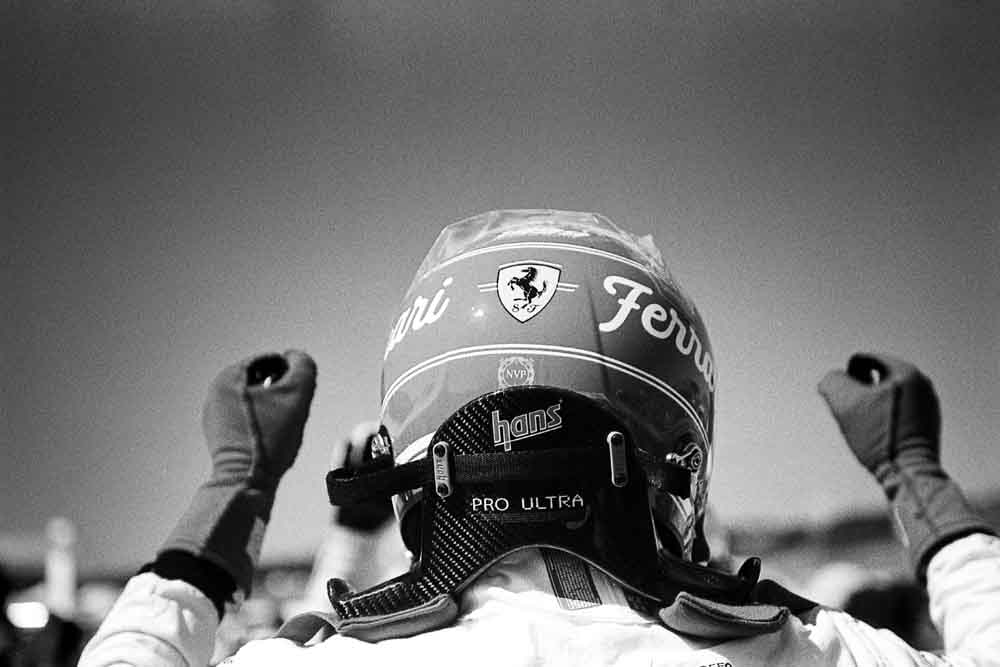
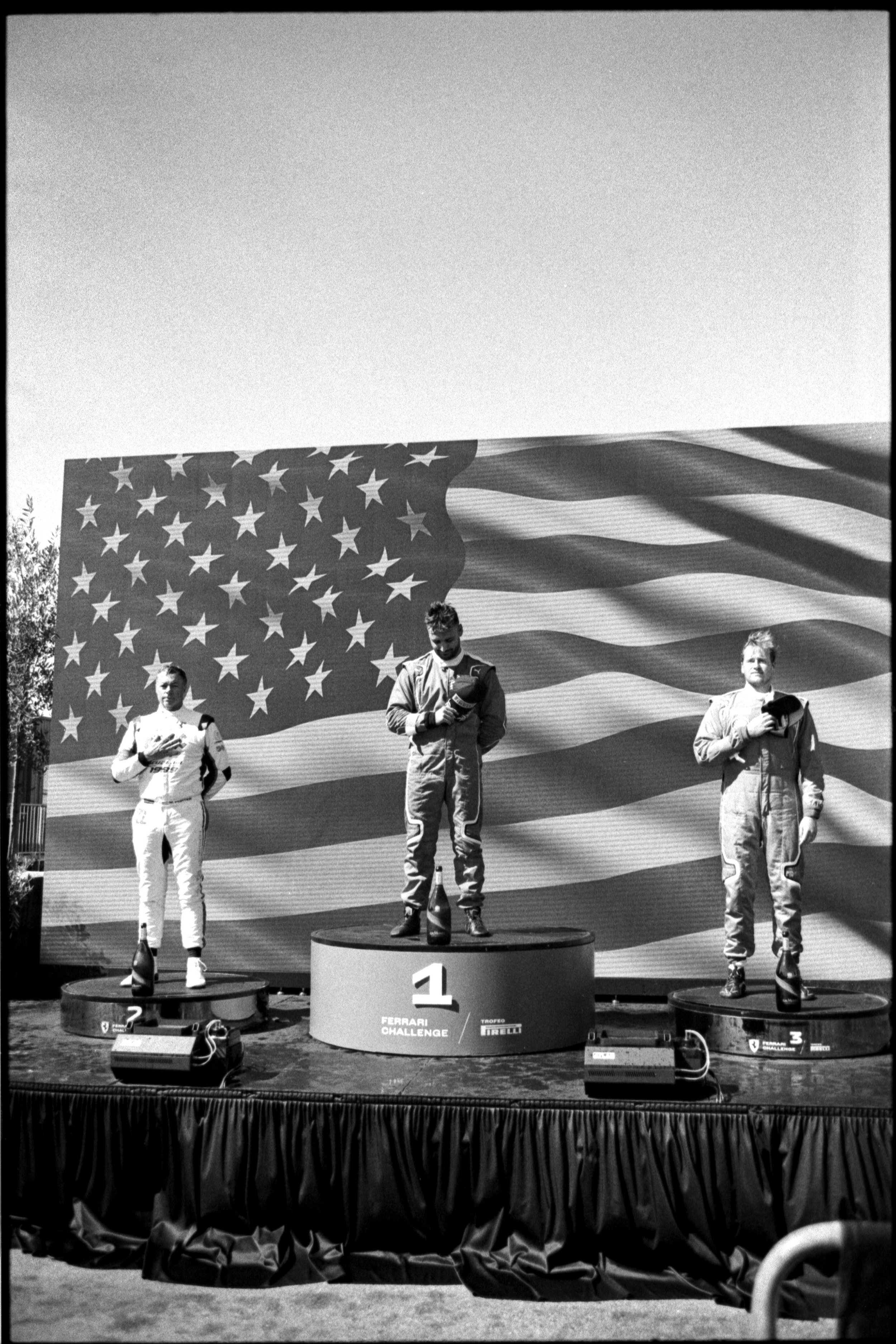
The photos from the weekend absolutely show the relationship that slow paced analog photography can have with faced paced subjects like racecars. The methodical use of the camera highlights those calm moments that feel tailored for an analog medium and change the headspace when capturing on track speeding action. All while forcing you to pick and choose the frame much more carefully.
Film is unforgiving but ultimately fulfilling
I had a few other photographers ask me throughout the weekend the same question I was asking myself at the beginning, about whether or not I was making things harder on myself. It took me a bit, but I finally had an answer to that question which was as much for me as it was for them.
“That’s half the fun!”
There’s definitely room for improvement but that’s the beauty of photography or any creative medium. Even more so when working with analog mediums, those little natural mistakes open the door to an idea or learning moment.
Film can be very unforgiving. There’s not too much room to make adjustments in post but that limitation breeds creativity and sharpens skills. I had a mentor that always told me, “There’s never a wasted roll of film.” Even if the roll was blank or wrecked, it taught you something.
Film photography is incredibly enjoyable, partly because it sharpens every skill needed to capture the world in photos. That’s also why it’s as difficult as it is rewarding. I recommend to everyone who uses a camera to shoot film at least once. I know how easy it is to rely on the digital tools we now have readily available, and they really can be useful. However, shooting on film changes your headspace in a good way. It forces you to look at and notice and capture things that simply wouldn’t happen with just digital.
One of the biggest benefits is not being able to immediately review your image. There’s a certainty with film that must be understood and accepted. Once the film is exposed, the camera forces you to move on to the next frame. There is no going back. You have to capture the moment and make sure that frame looks how you want it to before you press the shutter. As soon as your exposure is made you move the advance lever and move onto making your next image. Film cameras keep you present in the moment, ready for those small things that can make an image magical.
Is it worth a try?
Due to the resurgence of film in recent years, camera prices have gone up, but working 35mm SLRs can still be found for cheap. Or you can ask a relative if they have an old camera in a closet that probably hasn’t seen the light of day since Christmas of 1982. Grab a roll of cheap film and take some photos. You don’t need to explore the juxtaposition of race cars and analog equipment. Photograph your friends, your cat, your friend’s cat, the flowers, a nice dinner you made. It doesn’t matter, what matters is the intention and presence that you put into the act of making the photos.
The film camera will force this upon you and it’s amazing. Getting that first roll back and seeing those images for the first time is unforgettable. I remember my first roll on my little XG-A. I still look back at those pictures from time to time and it reminds me to remember that presence and intention when I’m creating imagery no matter the medium. So go explore the world through an analog medium and maybe meet me out on track and I’ll probably ask you, “making thing harder for yourself?” How will you answer?
Using film might be making things harder for you. But you’ll be all the better for it.