

Filmtools
Filmmakers go-to destination for pre-production, production & post production equipment!
Shop Now
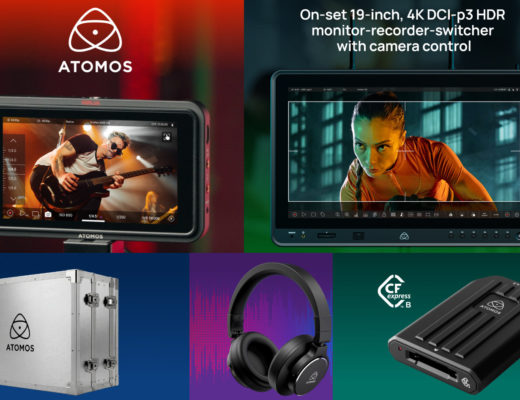
Atomos has unveiled the latest additions to their lineup of robust, high-performance camera monitors at IBC 2026, including a better-than-ever Shogun AV-19, upgraded and refreshed with IP-based functionality, and a monitor that the company touts as their “brightest Shinobi yet.”
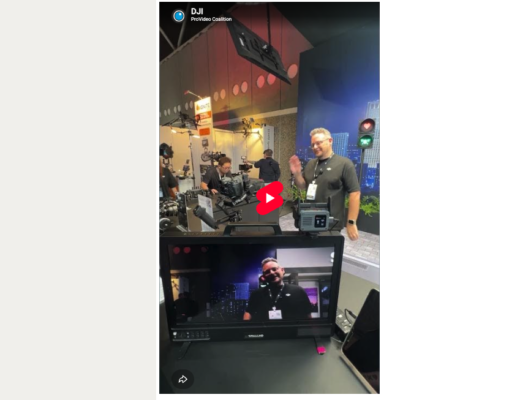
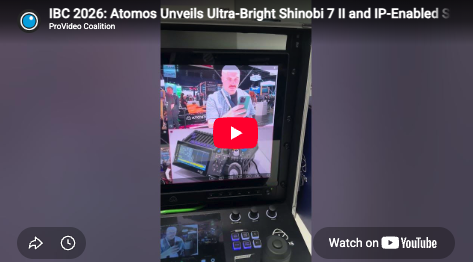
ProVideo Coalition took to the IBC show floor to get an up-close demonstration of the tech.
Shinobi 7 II
The new Shinobi 7 II takes the company’s established Shinobi monitoring platform and scales it up into a 7-inch form factor, while pushing brightness to 2800 nits, making it the brightest display in the Shinobi family. Its HDR-capable touchscreen supports Log, HLG and PQ workflows, with more than 10 stops of dynamic range available for monitoring. The result is a monitor designed to remain useful when production moves outside controlled studio environments, particularly when operators, camera crews, or directors need to make critical exposure and focus decisions in challenging daylight.
The Shinobi 7 II incorporates the monitoring tools that have become central to Atomos’ on-camera displays, including EL Zone, false color, waveform, vectorscope, focus peaking, zebras, RGB parade, frame guides and anamorphic de-squeeze. It also supports 3D LUTs, allowing operators to evaluate a more finished representation of the image while retaining the analytical tools needed for exposure and focus.
The larger display also gives the Shinobi 7 II a different role from a conventional small on-camera monitor. It can serve as a camera-top display, but its size lends itself equally well to director or client monitoring and other situations where a larger image is valuable without stepping up to a dedicated production monitor.
Connectivity is centered around HDMI, with input and output supporting signals up to 4Kp30. USB-C adds another layer of functionality, providing camera control on compatible systems as well as power delivery and a connection for display calibration. The monitor can also be powered from Sony NP-F batteries or via an optional DC battery eliminator.
Camera control is an increasingly important part of the Shinobi proposition. With compatible cameras, operators can adjust settings such as aperture, shutter speed or angle, ISO and white balance directly from the monitor. Touch-to-focus and shutter release are also supported for compatible photography workflows.
Shogun AV-19M
The Shogun AV-19M is an 19-inch rackmount 4K HDR monitor that represents a novel approach to production monitoring.
While the original Shogun AV-19 set the groundwork in combining monitoring with recording and switching capabilities, the AV-19M is designed as a hybrid IP and video monitor. That is not to discredit the AV-19M’s predecessor, as Atomos lists the two models alongside one another as complementary members of the Shogun AV-19 family.
The AV-19M is built around a 19-inch 4K UHD touchscreen with a 1200-nit HDR display and DCI-P3 color gamut. Its rackmount form factor makes it particularly suited to control rooms, OB vehicles, video villages and other production environments where a large, permanently or semi-permanently installed confidence monitor is more appropriate than a conventional field display.
But it is the networking capability that gives the AV-19M its contemporary twist. Ethernet connectivity opens the monitor to IP-based workflows, including NDI HX3 input, while the platform also incorporates SDI and HDMI connectivity for more traditional production infrastructure. The AV-19M provides 12G-SDI and HDMI connectivity, with video support up to 4Kp60, alongside genlock and Ethernet.
That combination is significant as production facilities increasingly find themselves working across a mixture of baseband and network-based video. Rather than treating IP video as a separate monitoring ecosystem, Atomos is building it into a display that can still sit comfortably within an established SDI/HDMI infrastructure.
The AV-19M also brings audio connectivity into the equation, with XLR inputs and outputs, while its USB-C ports can be used for firmware updates, LUTs, camera control, external storage and other accessories.