

Filmtools
Filmmakers go-to destination for pre-production, production & post production equipment!
Shop NowUnderstanding the options around the cables powering your monitors and managing the signal

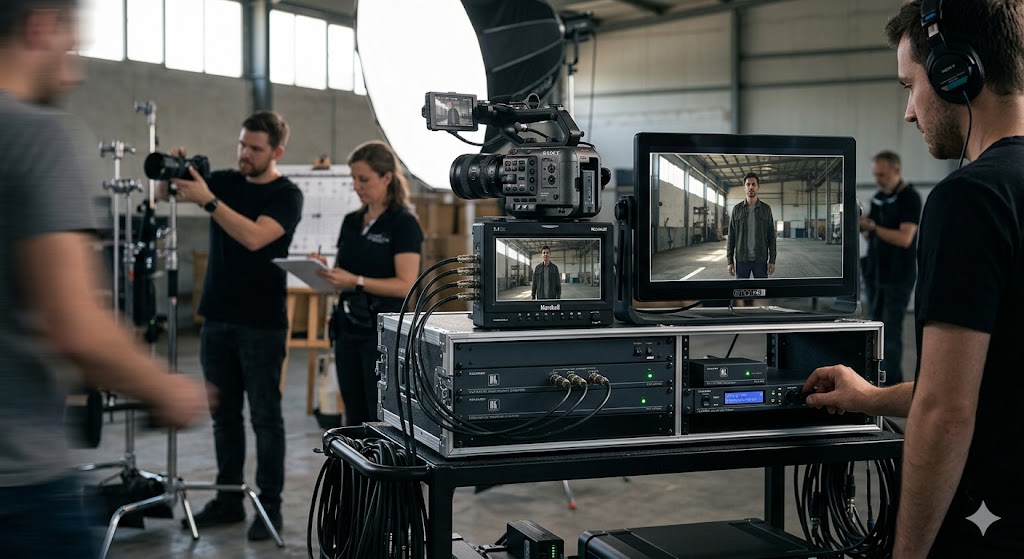
When you’re deeply focused on crafting the perfect shot, which means everything from obsessing over the lighting to directing the actors to deciding on best lens, the cables powering your monitors and managing the signal probably aren’t the first things you’re thinking about. It’s understandable. AV gear is often the invisible infrastructure, and you only notice it when it stops working.
However, neglecting this technical invisible layer can lead to problems that directly impact your creativity and schedule. Kramer Electronics offers tools that, while not glamorous, are essential for professional production.
Here’s a look at why this gear matters, outlined by the real problems filmmakers face when they don’t plan for it.
Signal Integrity: The Set-Killing Blackout
You’re right to not obsess over cables, but that ignores the physical reality of how a 4K, 12-bit raw video signal travels. Unlike a standard consumer HDMI signal, a massive professional video feed needs power to go the distance.
- The Reality Check: You can’t just plug a basic cable into your camera and expect it to drive a director’s monitor across a busy set. When you don’t have shielded, high-gauge distribution, the signal simply fades out.
- The Downside: The result is intermittent black screens or persistent signal noise. Using a high-quality Kramer HDMI Cable ensures your feed stays intact.
Audio Synchronization: The Pain of Lip Sync
When filming a dialogue scene with a dedicated sound recordist and a reference audio track, you might assume it’s perfectly in sync. But video processing takes time.
-
The Reality Check: Modern wireless transmitters, monitors, and scaling all take place after the audio has been recorded, adding microscopic video processing delays.
-
The Downside: If you don’t plan for this, your reference monitor audio will have a subtle but immersion-breaking lip-sync drift. Utilizing a Kramer 3.5mm Stereo Audio Cable for direct, low-latency analog monitoring or employing a dedicated delay unit ensures your audio and video arrive at the same time.
Connectivity: Modern Studio Workflows
In a modern studio, or even a mobile DIT cart, the move toward USB-C and high-speed data is undeniable, but it brings its own set of connection headaches.
-
The Reality Check: Standard cables aren’t always built for the rigors of a film set; they are often too short or lack the bandwidth for simultaneous 4K video and high-speed data.
-
The Downside: Using a flimsy cable can result in dropped frames during data offloads. Kramer’s USB 3.0 Wall Plate Inserts and high-speed data cables provide a secure, professional-grade physical connection that resists the wear and tear of daily production.
The Importance of Solving Onset Issues Before they Turn in Production Problems
We know this gear isn’t top of mind. But taking time to integrate these tools—which we sometimes call “the technical insurance policy”—means you avoid a specific class of technical disaster that can cost you time, budget, and image quality. These devices create value by ensuring that your primary creative tools work perfectly, 100% of the time, so that nothing comes between your vision and the monitor.