


Even the most exceptional residences and offices have windowless rooms, or terrible views, but that can change, thanks to LiquidView, a company that offers digital windows that turn any room, the company says, “into a sanctuary of beauty and tranquility.”
According to a study from Stanford University, participants exposed to LiquidView’s Digital Windows experienced a measurable change in their physiological and emotional state, indicating that the windows have the potential to induce relaxation and provide similar benefits to those experienced when exposed to a traditional window. According to one of the study’s principal researchers, Jamie Zeitzer, Ph.D., Professor of Psychiatry and Behavioral Sciences at Stanford University, “The initial results suggest that exposure to Liquid View Digital Windows improves mental health and well being.”

The ”windows” created by LiquidView are not just frames to a static view but 24-hour dynamic 8K views from around the world, aligning with your circadian rhythms— matching sunrise and sunset every day. These windows “trick the brain”—offering similar health benefits to actual windows, because what you see through (in) them is photographed by National Geographic level cinematographers with feature film motion picture cameras, over a 24 hour period, recording an entire day in stunning 8K video – a first.
It’s not a window repeating the same view over and over, though, because, LiquidView says, “to add to the unpredictability of looking out a window, views are augmented with photo realistic content that appears randomly throughout the day. The feature, Unexpected Events, comes with each View and can be turned on or off with a tap of a button, providing custom content matching the lighting for the time of day, adding to the unique patented features.”

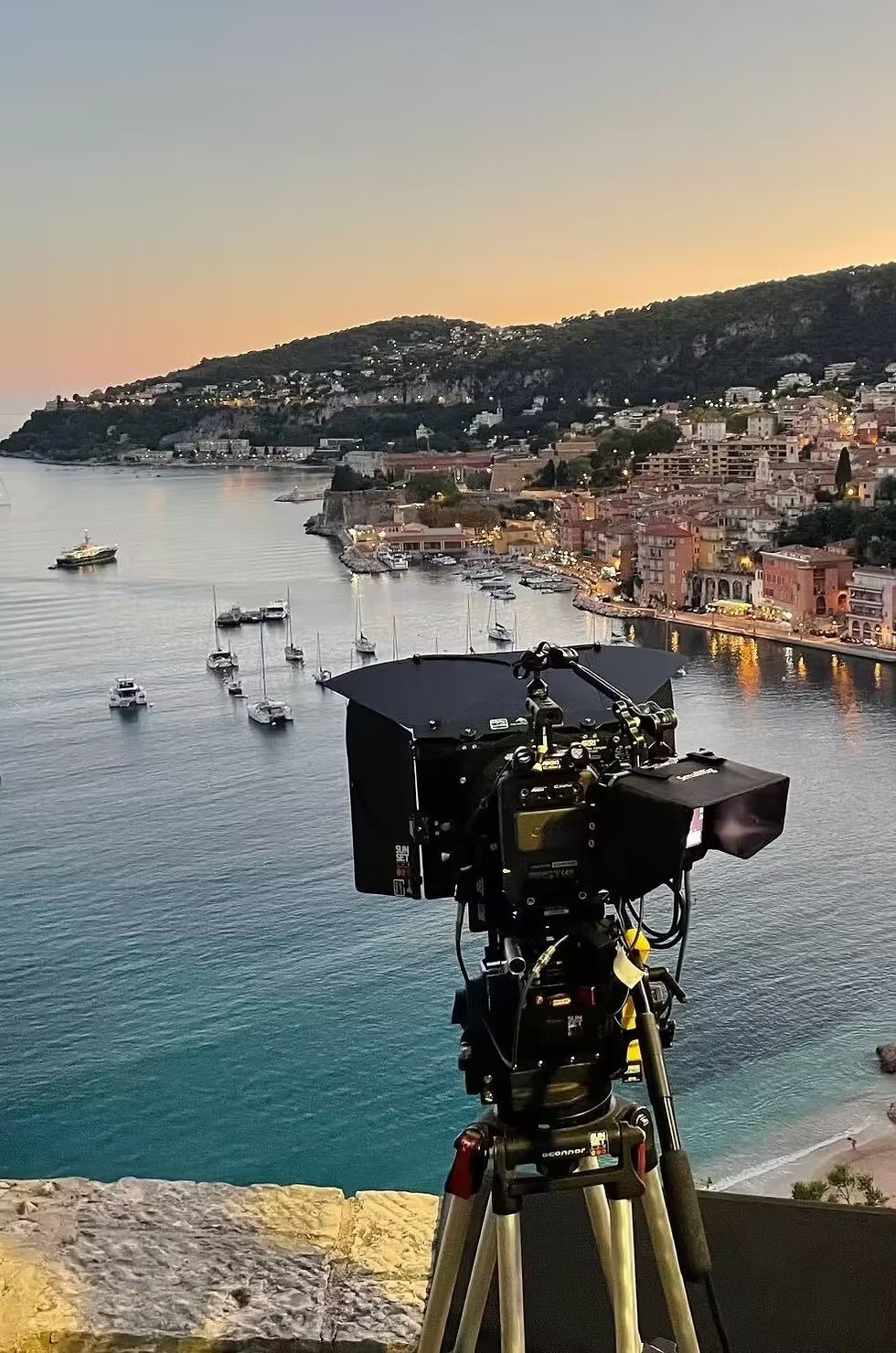
LiquidView film crews are traveling the world, capturing some of the most beautiful views for the company’s ever expanding view library. Users can enjoy the romantic canals of Venice, the vibrancy of Miami’s Brickell neighborhood, the serenity and opulence of Nice, France, and the lush Hawaii beaches– with many more iconic views being added as the library grows.

The virtual windows come in two formats, InWall and OnWall. The first is designed like most windows, recessed into the wall and matching your space. The InWall requires framing and a minimum wall depth of 6”-8” (8” recommended). This trim-ready option allows you to match existing trim in your space for an integrated appearance. The OnWall version offers a simpler installation, mounting directly onto an existing wall using a cleat and bracket system, with no need to go into the existing wall. The OnWall provides a sleek trim option without the need for any extensive modifications.
You’ll need a media player to make the system work, and that has a cost that starts at $2,299. The
Digital Window Experience itself starts at $9,999. Suzette Smith, Senior Architect at Skurman Architects, says that “With LiquidView, you can have your own beautiful view, no matter where you are. You don’t have to be on the top floor of an exclusive building.”
Mitch Braff, the founder and CEO of LiquidView, had the idea for virtual windows while working at his previous business, Liquid Canvas, where Braff, with a background in filmmaking and a stint in corporate communications, supported high-end video art for commercial clients. While visiting a client with a beautiful home that featured amazing views from the front and back of the house, but the views from the dining room were of the side of the neighbor’s home, inspiration struck: could a digital window be built on a wall to block the less than desirable view of a neighbor’s house and instead replicate the serenity of whatever backdrop or location a user desires? In that moment, LiquidView was born.

During Braff’s work with Liquid Canvas, he became familiar with Sony’s display technology, which was a natural choice as he designed his new company’s virtual windows. Sony’s vibrant Professional BRAVIA displays, including the BZ40L series featuring Deep Black Non-Glare technology, are used in the company’s Digital Windows to immerse viewers in the scene of their choice, converting a drab, closed-in space into a beautiful and serene atmosphere. The windows are outfitted with tempered glass for customers who want to mimic the slight reflection a window typically provides. Doing so is one of the ingredients that tricks the user’s brain into perceiving their Digital Windows as an actual glimpse outside.
Sony’s BZ40L series of 4K HDR professional displays come in 55, 65, 75 and 85-inch sizes and combine remarkable picture quality with broad compatibility, installation flexibility, and ease of use. The models feature a state-of-the-art Deep Black Non-Glare Coating that provides anti-glare and low reflection capabilities, while maintaining deep blacks and high contrast – even in bright lighting.
When discussing his selection of display technology, Braff noted, “I love the quality of Sony’s camera technology and from my perspective, Sony makes the best displays out there. And the quality between the cameras and displays is consistent.”


Additionally, views from around the world are captured on Sony’s VENICE 2 full-frame digital cinema camera in 8K during shoots taking over 30 hours. The content is edited into a 24-hour loop where color correction and stereo sound design are added. On location, over 60TB of storage is needed to record the ultra-high quality content. The content is stored locally on a media player where patented software synchronizes the content with the location the window is installed and date and time of day. This ensures sunrise, sunset, and everything in between are precise and match circadian rhythms. By delivering a true and accurate sensory experience, LiquidView’s virtual windows deliver real health benefits and are much more than just eye-candy.