


Sound professionals have a new advocacy alliance coalition formed to protect and combat unlicensed use of sound design and sound effects. 


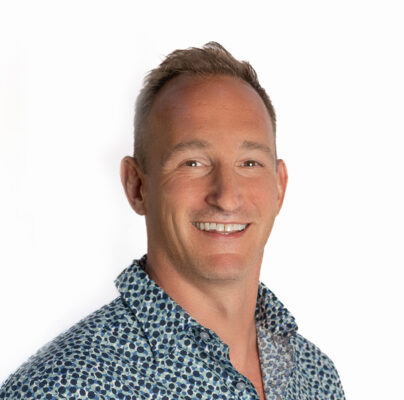
Douglas Price: “Music has its protectors. Voice has its protectors. Now sound will have protection of our own. If you’ve helped to shape this craft, add your name and stand with us. It’s time professional sound received the same respect and protection every other audio field has earned, for the lifetimes of work our industry has collectively built.”
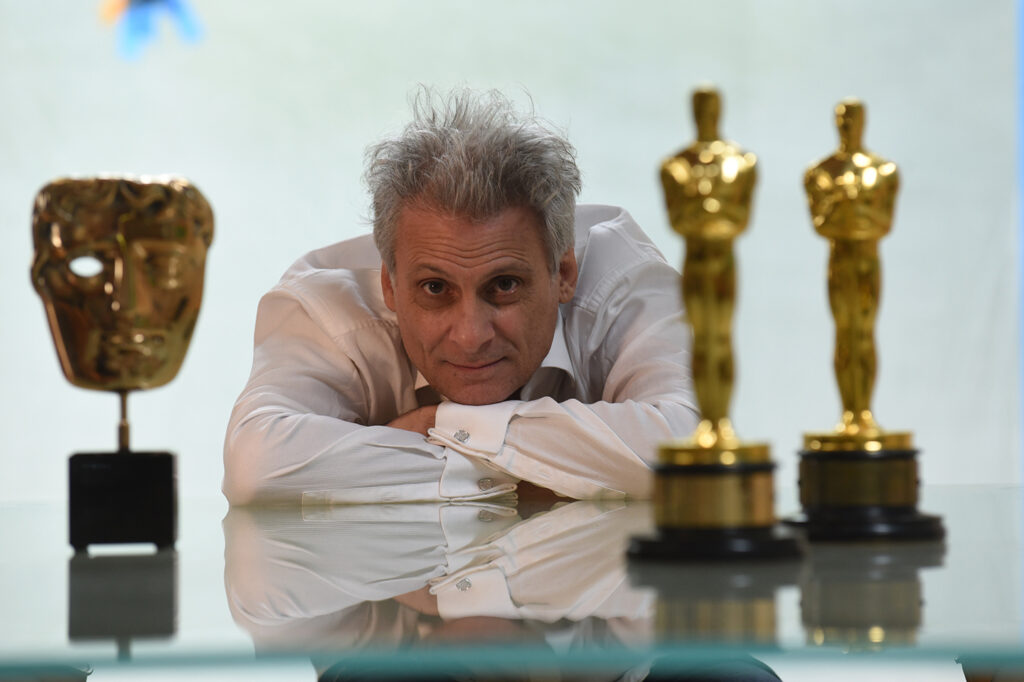
As well as Douglas Price, the PSA counts top Hollywood sound pros on their advisory council including Pierre Langer, CEO of Boom Library, Craig Nimens, Vice President of Sound Ideas, Karol Urban, Emmy-nominated Re-Recording Mixer and former Cinema Audio Society President, and Mark Mangini, two-time Academy Award®–winning and six-time nominated sound artist. Jeremy Siegel is the Professional Sound Alliance Coordinator.
Artificial intelligence and piracy have been a deep and continuing concern across the entire creative arts community, including music, film, and graphics, as well as sound effects.
Mark Mangini is a leading voice in this new alliance, whose career defining sound artistry can be heard in the first Dune film, and Mad Max: Fury Road, both of which earned him an Academy Award®. Imagine those films without the soundscapes that Mark helped create, blasting you into unfamiliar aural territory. The sonic impacts on these stories can’t be underestimated.
Mark Mangini: “There’s a lot of loud voices calling for some kind of justice with the AI companies that are inarguably stealing or scraping our intellectual property.
Nobody was talking about our community, the global sound community, which encompasses a vast array of people who work through the creation of, and recording of, sounds for entertainment.

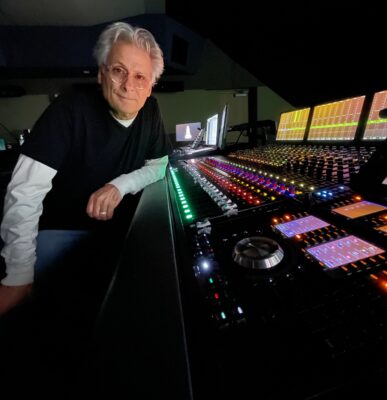
In my community, the word on everybody’s lips was AI, and how AI is not only going to steal our jobs but also steal our intellectual property. I told Doug that I wanted Pro Sound Effects to get ahead on this, I didn’t know how to do it. It was Doug’s idea to build the alliance.”
Price: “We wanted to start an alliance and be a voice for sound. Everybody, when they think of audio, they’re thinking music and voice. But then there’s everything else. If you take away this everything else – you’re left without context, without meaning, without emotion.
AI companies and media companies are using our work, stealing sound effects and libraries, to build out their technologies. It’s enough. We’ve worked our whole lifetimes, we put everything we’ve had into this; this is our livelihoods. Theft is having an impact. You know, enough is enough. So, we just said, let’s do this.”
Mangini: “Since we came forward it’s kind of rattled the cages of everybody in the community and we’ve gotten an extraordinarily warm reception from the entire community, including other sound effects libraries who want to be a part of this. That’s really encouraging, I didn’t expect that. I thought we were going to go on this on our own. I think everybody is feeling the heat with all this AI scraping that’s going on.”
Price: “The industry’s changed a lot over these years, but we’ve always had this idea to start something that brings the entire community together, including other sound effects libraries who, by the way, we’re all very friendly with. For the PSA we brought together Pierre at Boom and Craig at Sound Ideas and sound artists to unite and to advocate for the value of sounds.
That’s just been percolating in the background, talked loosely about it with many different people over the years. And then, as this whole AI piracy spectacle has come to a head, we’re looking at challenges of our own with our business and the audio post community.”

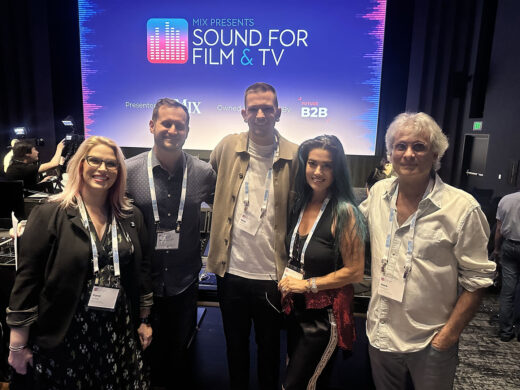
I think it’s an easy guess that most audiences have no real concept of what is involved with the creation of film and TV soundtracks. Many people think that a mic is dropped into a scene, and everything gets recorded there and then later just add some music and voila! – done. But of course, there is an array of crafts and an army of artists who work in sound, be it on location recording the filmed scenes, or in post-production, fulfilling a vast amount of recording, editing, and mixing needs to create a thrilling soundscape for filmmakers and their stories.
Mangini: “It begins with the sound recorded on set which can be a part of the intellectual property of a film and its sonic texture. They are not just capturing the dialogue, which is the focus of production sound. They’re capturing wild tracks and wild sound effects and unusual sounds that might be unique to the location, or equipment they’re using or vehicles or aircraft.
Field recordists go out in the field to capture and provide the missing sounds that couldn’t be captured during production. There’s this huge universe that is made up of people who are field recordists, some are working in entertainment, but some are trying to capture the world through sound much in the way those photo bureaus pay photographers for images. There are field recordists who are simply doing that for archival purposes so that we have an aural document of the world we inhabit or the world we used to inhabit. I just love that, that’s why I have such a large library of my own as I’ve been recording sounds my entire life.
Then there’s a vast array of other types of sound recording, for example Foley. Here’s a group of professionals dedicated to the capture of performed sound to picture in synchronization with an image. They either reproduce sounds that couldn’t be captured on set, to sounds that are imaginative that were never captured and need to be created in a live fashion.
Millions and millions of hours are recorded every year and that creates a part of the corpus if you will, of captured sound, of found sound, of field recorded sound, of production sound, all of which is the byproduct of artists and creative individuals that need some kind of protection for their work.

There are sound designers like you and I, people who either go out and record our own material and then come back into a studio and manipulate it into something else entirely. There’s that body of sound, of designed sounds, that don’t exist in the natural world but only exist in the imagination of the creator. That’s a huge body of intellectual property that either belongs to the sound designer or belongs to the studio that paid for that sound designer to create that work. All of that work ought to be protected as well.”
Price: “We work with some of the most skilled and talented, award-winning sound artists, field recordists, to capture sound in the natural world at the highest quality. And then bring that into our library development process. There’s editing, metadata, with 35 categories and subcategories. We have our own style guide and our curatorial process; we’re doing the QA and QC. Ultimately, we’re curating it into the Pro Sound Effects library. It’s really a collaboration between, us and the recordists out there who we’ve been partnered with for, most of them, for decades. We’re coming up on 10 years with Mark. We started working together in 2017.
I think when people experience sound on a consumer level, say, in a movie or they’re playing a game, it’s really taken for granted. What goes into recording a glass explosion? People think it’s just simple – you might just break a coke bottle in a Foley room for instance.
But the reality is Mark Mangini drove out to the desert at four in the morning and literally threw a lawnmower through a 30 by 30 foot paned glass and recorded it with state of the art mics. That’s the coolest thing ever! It’s barely even paid attention to, but that sound, the impact on story and engagement, is massive.

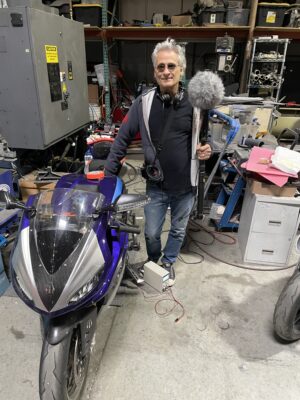
That’s the invisible part of the story of sound effects that might be lost on the typical audience. Artists like Mark have spent a lifetime creating sounds that get recorded, rerecorded, manipulated, processed, and layered into sonic landscapes that help filmmakers tell their stories. Companies like Boom Library, Sound Ideas, and many others collect, curate, edit and process all of these incredible sounds to create their libraries. And in return compensate the sound artist’s work. Pro Sound Effects alone has millions of sounds in their library.
The reality of AI scraping and stealing the countless hours of hard work, uncompensated, is just as real for sound artists as it is for graphic artists, music artists and anyone who commits their work to the digital realm.
The larger piece that all of us as creative artists fear is the sameness, the lack of soul, the blandness from a lack of the human touch. Filmmakers of every craft involved in their creation touch each frame of the films. This bespoke quality of film is what transforms these specialized crafts into art.

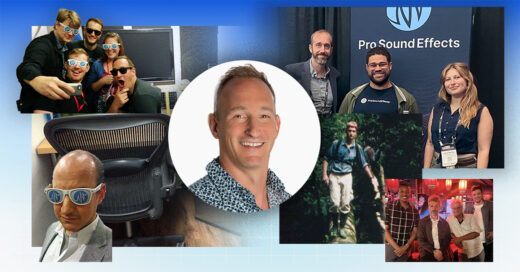
Price: “There’s a more existential thing. I want to say that I stood up for human rights in an AI world. That’s critical to who I am as a person. I don’t want to see a world where everything sounds the same. Where what is human – the creativity, the culture – the meaning that comes intrinsically from who we are as people is lost, and everybody is listening to the same thing. And everything sounds the same. And we’ve just lost all meaning, and the “artists” are actually these AIs that have trained on the entire history of human creativity. At the end of the day, if I’m going to sum up what I stand for, above the PSA and with Pro Sound Effects, I stand for human rights in the AI world. Period.”
It’s going to be a long and complicated battle with the exponential growth of AI. I think for those of us who’ve spent a lifetime and career in sound we welcome the PSA and its mission to protect our work. With serious professionals like Doug and Mark we know that we are being steered on the right course even as it changes daily.
You can read more about Doug and his fascinating journey into sound here on his blog, on the Pro Sound Effects website. Take a moment and dig deep on his site, there are a lot of great articles there.

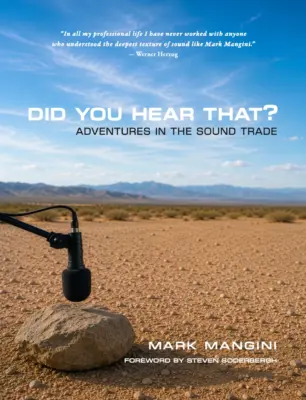
Mark has written a book that details his career and his lifelong fascination with sound. If you are a filmmaker of any craft, grab it, there is a lot to learn from one of the masters of the craft of sound for film. You can purchase “Did You Hear That?” here. He discusses not only the how of the creations of some of his signature sound work, but also examines the why of it.
If you are a filmmaker of any of the crafts, please sign the petition here. Let’s join in solidarity with our sound community.
This will likely be an ongoing battle for years to come. But, as a sound professional myself, I am enthusiastic about the Pro Sound Alliance and leaders like Doug Price and Mark Mangini to help protect the sound community and its intellectual property.
Woody Woodhall, CAS is a Supervising Sound Editor and Rerecording Mixer. You can follow him on Bluesky at wwsm.bsky.social