

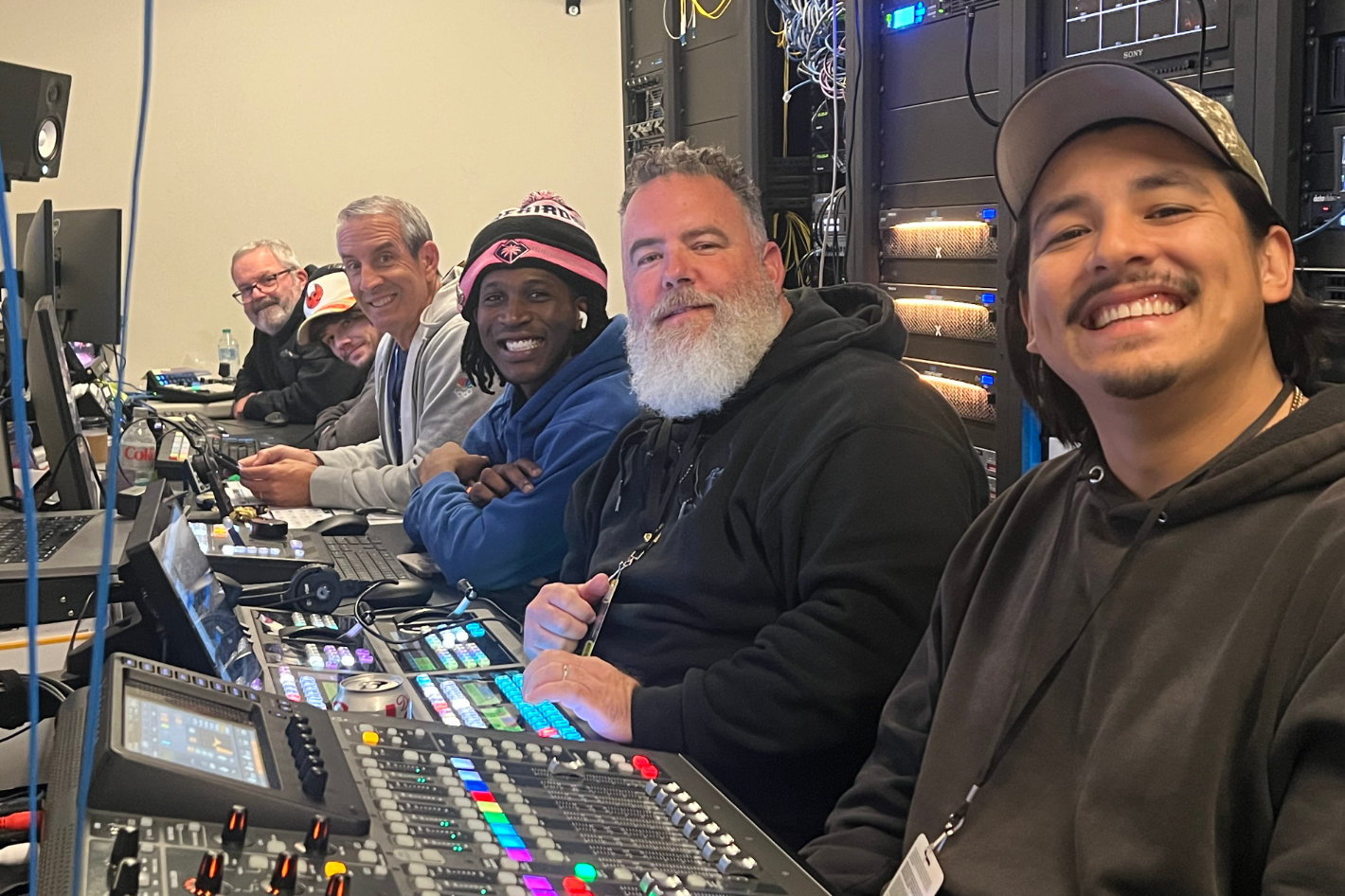

From track and field to pickleball, niche sports are finding dedicated online followings. For the production professionals behind these events, the challenges mirror those of larger sports broadcasts, such as transporting video and audio signals over long distance to and from the production truck, commentator booth, and in-venue displays.
The story now shared by AJA focus on the experience of Steve Banta, founder of California-based Bantaray Mobile Sports Production, and Jeff Highbaugh, a freelance camera operator who works with Bantaray, who have built a mobile production pipeline to support increasing demand for production services for niche sporting events.
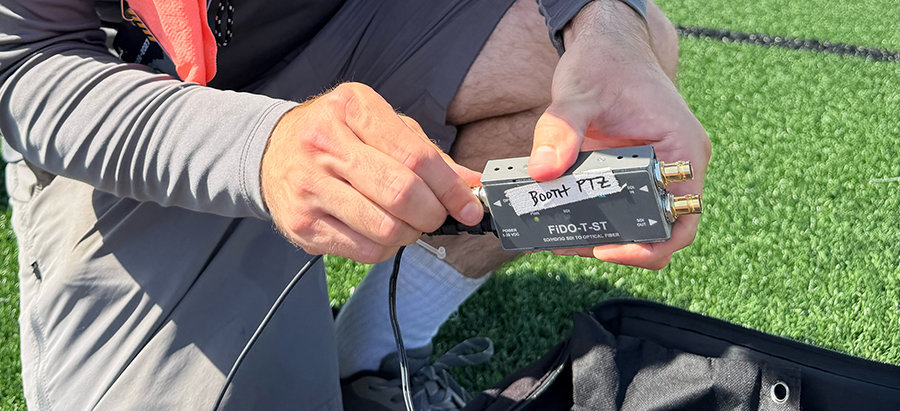

“Every event is different, and each venue presents unique challenges,” noted Banta. “Sending signals across long distances is almost always a hurdle. We have to find simple ways to get reporter feeds back to the truck, send program feeds to in-venue LED displays, and route audio and video signals safely across the venue. Our AJA FiDO Mini-Converters support these needs and have been incredibly dependable through rain, extreme heat, and constant travel – they just keep working.”
Here is the whole story, a good weekend read that may help others to find their own solution:
Mobilizing for any venue
Since the company was founded in 2009, Bantaray has continuously refined its mobile production pipeline for live sports. Today, its team leverages that workflow to produce high school sports for Spectrum in Orange County and Riverside, support Coachella Valley Firebirds event productions, and cover other niche sports broadcasts. Rarely given the luxury of scouting a location beforehand, they tap into Google Earth to preview the space before arriving, determine where the OB truck will park, and plan cable runs.
“That’s the beauty of fiber; the truck can be parked anywhere on site, and we can still quickly deploy audio and video using our FiDOs and daisy chain as much length as we need,” explained Highbaugh. “The setup is so fast, and we can run four cameras down one fiber line.”
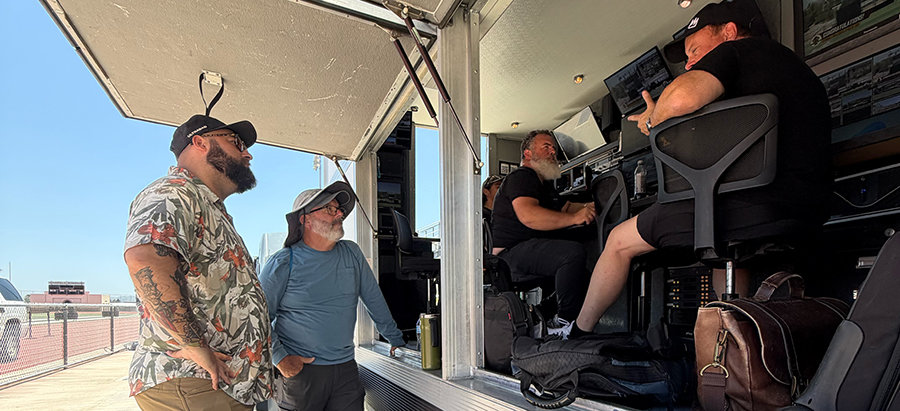
Bantaray owns 24 AJA FiDO Mini-Converters, including –single, dual, and four channel models, which its team mounts inside a portable booth kit containing an I/O panel and audio gear. Multiple cameras positioned around the commentator booth feed SDI signals into Bantaray’s booth kit, which converts them to fiber using FiDOs and sends them back to the production truck over a four-pair tactical fiber optic cable capable of carrying four signals.
“Each production typically involves a production truck, a commentator booth, which has the most signal paths going to it, and sometimes a video scoreboard, so we need to be able to move video and audio signals across long distances without power limitations,” said Banta. “Our longest fiber reel is a thousand feet, and we often use Dante for audio. Fiber lets us barrel as many of those fiber reels together if we have a FiDO on each end.”
Beyond the FiDOs, Bantaray also relies on AJA Mini-Converters to convert SDI feeds to HDMI for monitoring, distribution amplifiers for signal management, and AJA Ki Pro recorders for capture. “We don’t have a giant crew, and everyone is wearing multiple hats,” added Highbaugh. “So, we need gear that is reliable, consistent, and easy to use. Our AJA FiDO Mini-Converters provide reliable conversion between SDI and fiber, giving us additional flexibility to convert signals on the fly or extend them much farther than traditional SDI allows.”
Achieving steadfast reliability
Whatever the production, equipment failure isn’t an option for Bantaray, who rests easy with AJA. The gear has seamlessly supported dozens of its broadcast productions for Spectrum and over a hundred remote baseball productions without issue. “Reliability is everything in live production,” Banta said. “When crews see professional gear like AJA on site, they know you’re top-notch. It’s better to invest in reliable equipment once than to frequently have to troubleshoot cheaper alternatives.”
Echoing this sentiment, Highbaugh added, “We’ve put our FiDOs through just about every weather condition imaginable, and they’ve never let us down. That reliability gives everyone confidence because we know the gear will simply do its job.”
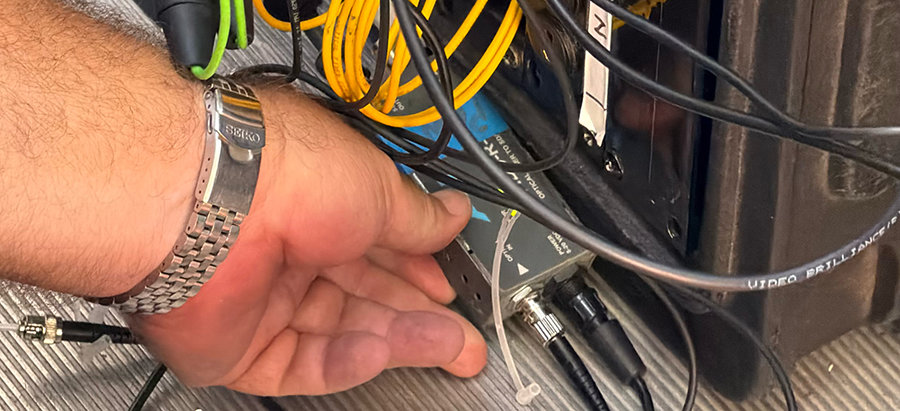
As niche sports continue to find dedicated audiences through streaming platforms, Bantaray sees growing opportunities ahead. The company is currently building out the in-house entertainment and concert broadcast production setup for Acrisure Arena in Thousand Palms, California, while also keeping an eye on remote workflow evolution and IP production technologies like SMPTE ST 2110.
“While many are focused on AI right now, we’re more interested in where remote workflows are heading,” said Banta. “The pandemic accelerated the industry’s adoption of them, and they’ve just kept evolving since.”
Focused on expanding further into the multicamera space, Highbaugh concluded, “Streaming continues to grow, so I’m looking at technology that can help me send high-quality, low-latency signals efficiently. Whether we’re working with limited bandwidth or remote locations, finding reliable ways to get content on the air remains a major priority.”