

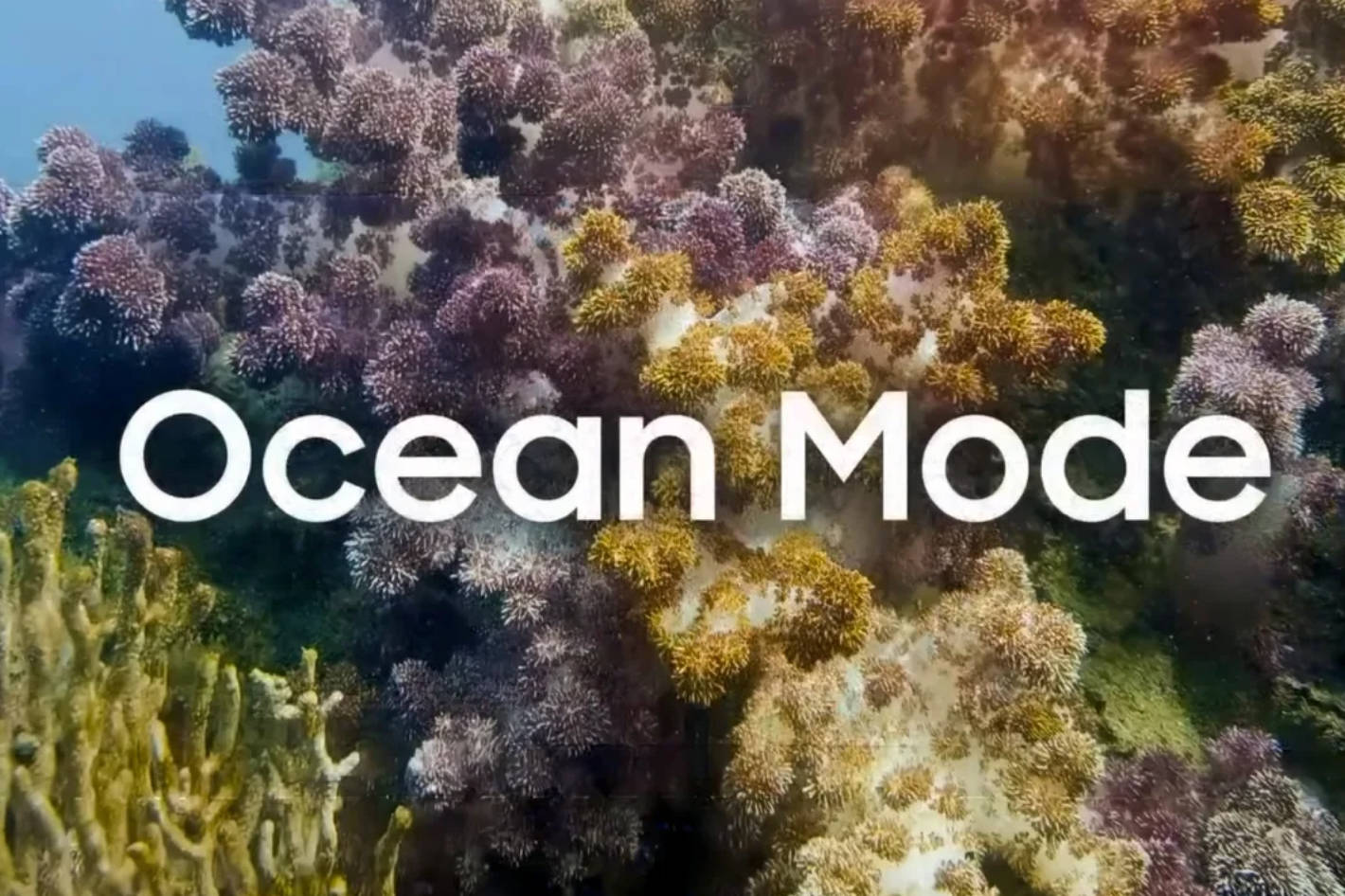

Although coral reefs cover less than 1% of the world’s oceans, they provide a home to nearly 25% of all marine species, making them one of the most diverse ecosystems on Earth. Yet coral reefs are highly vulnerable to climate change. According to the “Status of Coral Reefs of the World: 2020” report, from the United Nations Environment Programme (UNEP), “if current trends continue, an estimated 70 to 90 percent could vanish by 2050.”
That’s why global action is urgently needed to protect coral reefs. Samsung Electronics partnered with Seatrees, a non-profit committed to restoring marine ecosystems, and the Scripps Institution of Oceanography at UC San Diego to explore better ways to restore coral reefs. The film resulting from that cooperation premiered at the United Nations Ocean Conference 2025 (UNOC) in Nice, held to mark World Oceans Day on June 8. “Coral in Focus” is a documentary that brings the global coral crisis into sharp relief. The event, held at Ocean House, featured a screening of the film followed by a panel discussion with leading voices in marine science, conservation and technology.

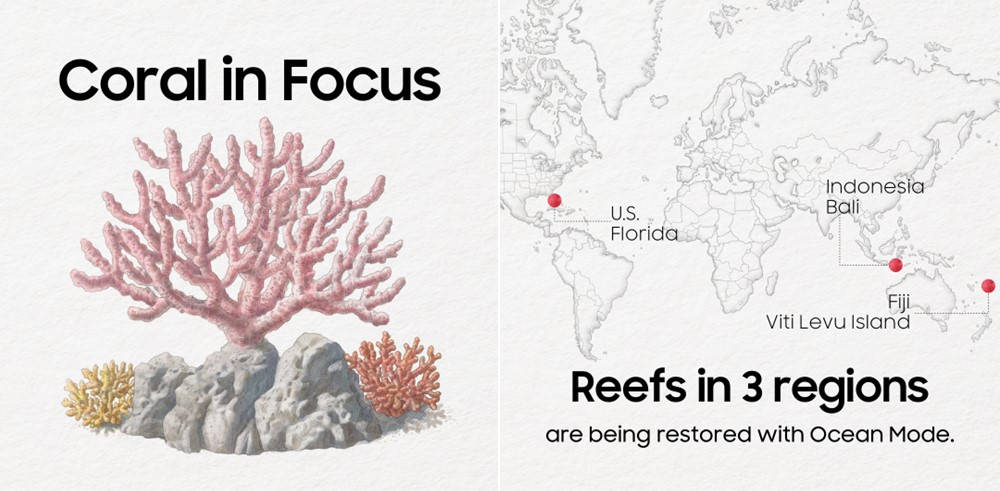
Directed by award-winning filmmaker Quentin van den Bossche, “Coral in Focus” follows scientists, engineers and local conservationists as they confront the urgent threats facing coral reefs — ecosystems that support up to a billion people and a quarter of all marine life. This work is part of a broader effort announced at Galaxy Unpacked in January 2025, where Samsung unveiled its partnership with Seatrees to support the restoration of coastal ecosystems with communities in Fiji, Indonesia and the United States, leveraging Galaxy camera technology to document and aid in the recovery of marine environments.
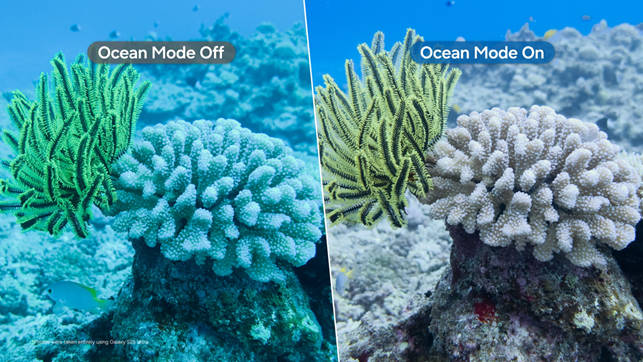

Monitoring and researching coral reefs requires careful observation and documentation. This involves creating 3D models that capture the shape and condition of underwater reefs. The models are created by stitching together thousands of underwater photos and processing them using specialized software. However, capturing these images underwater is far more challenging than it appears. Water movement can blur images, while light refraction and absorption make it difficult to capture vivid detail. It’s much like trying to photograph moving objects on a foggy night from a moving car.
To address this, Samsung Electronics developed Ocean Mode, a feature specifically designed for underwater photography. The images captured are used to build 3D models that help oceanographers constantly monitor and analyze coral reefs. Based on these findings, local partner organizations carry out on-site restoration efforts to bring the reefs back to life.

Ocean Mode is a specialized camera feature created specifically for this partnership that was developed, introduced and validated in real-world conditions in Indonesia and Fiji. This process has created, Samsung says, ” a credible foundation for broader scientific use while improving the overall accessibility of this new technology.”
By enabling more scientists, conservationists and even citizen scientists with the ability to photograph, map and monitor reefs, Ocean Mode can help restoration efforts scale, and make it possible for anyone to protect more reefs, in more places, with greater impact.

The camera adjusts shutter speed and leverages multi-frame image processing to reduce motion blur caused by water movement or diver activity, ensuring sharp, detailed images. With its interval shooting capability, the device can automatically capture thousands of images in a single dive, dramatically improving both efficiency and consistency. These images can then be used to generate 3D models of coral reefs using technology known as photogrammetry, giving researchers a powerful way to visualize and study the drivers of the structure and health of reefs over time.

Since its start in 2024, the project has delivered extraordinary results. With these coral restoration initiatives, Samsung adds, “17 3D models of coral reefs have been made with the help of scientists and Samsung to analyze the impact of coral restoration efforts and validate the precision of Galaxy devices for photogrammetry. In total, Seatrees project partners planted more than 14,046 coral fragments to restore 10,705 square meters of coral reef habitat.”
“Ocean Mode became its own character in the documentary,” said Quentin van den Bossche, director of “Coral in Focus.” “This helped us illustrate some of the complex, specific challenges that reef conservationists encounter. And showing the difference between photos taken with and without Ocean Mode helped ground the technology in something visual and even emotional. This is where the impact of partnerships among companies, research institutes and nonprofits truly comes to life.”

Now available through Expert RAW, (in the compatible models) Ocean Mode extends these capabilities to select Galaxy devices, making advanced underwater imaging available to more people while reducing reliance on expensive, heavy DSLR equipment. This increased accessibility is critical to scaling coral reef monitoring efforts, particularly in regions where resources and technical infrastructure may be limited.
One note if you want to try this: Samsung phones are IP-rated for fresh water based on lab test conditions for submersion in up to 1.5 meters of fresh water for up to 30 minutes. No ingress of dust; complete protection against contact (dust-tight). Water and dust resistance of device is not permanent and may diminish over time because of normal wear and tear. Salt water and chlorine water can deteriorate the watertight seals and lower a device’s water resistance without the use of a water resistant phone case (sold separately).
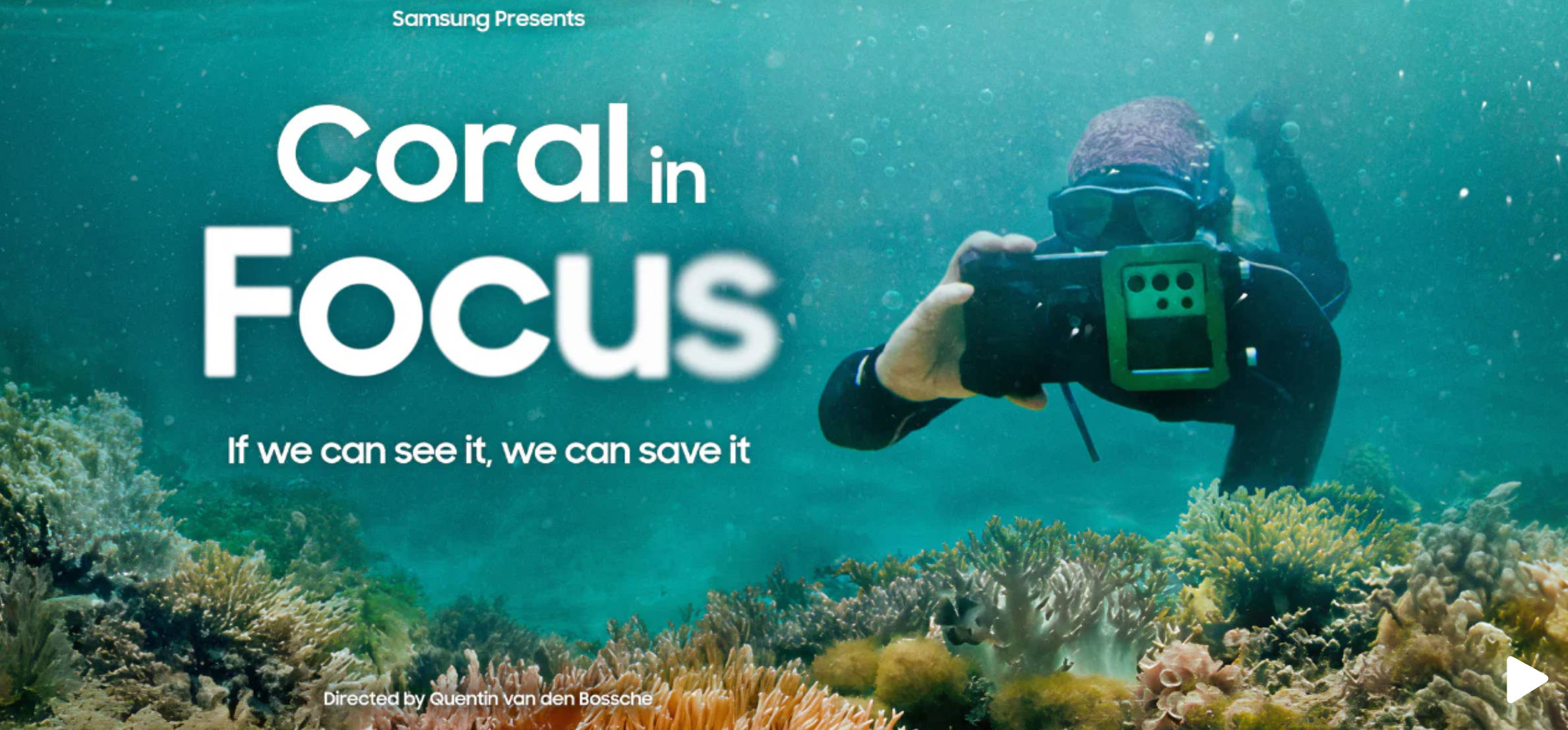

Additionally, “Coral in Focus,” a documentary tied to the initiative, received the Coastal and Island Culture Award at the 23rd International Ocean Film Festival. Samsung was separately named to Fast Company’s 2026 Most Innovative Companies list for its work advancing mobile innovation in environmental research.
These recognitions reflect the impact of Samsung’s efforts to reverse the decline of coral reefs in partnership with Seatrees, a U.S.-based nonprofit organization, and the Scripps Institution of Oceanography at the University of California San Diego. By bringing together Galaxy’s advanced image capturing capabilities, Seatrees’ community-driven restoration model, and Scripps’ knowledge on marine science, Samsung is transforming Galaxy mobile phones into powerful tools for ocean conservation.