

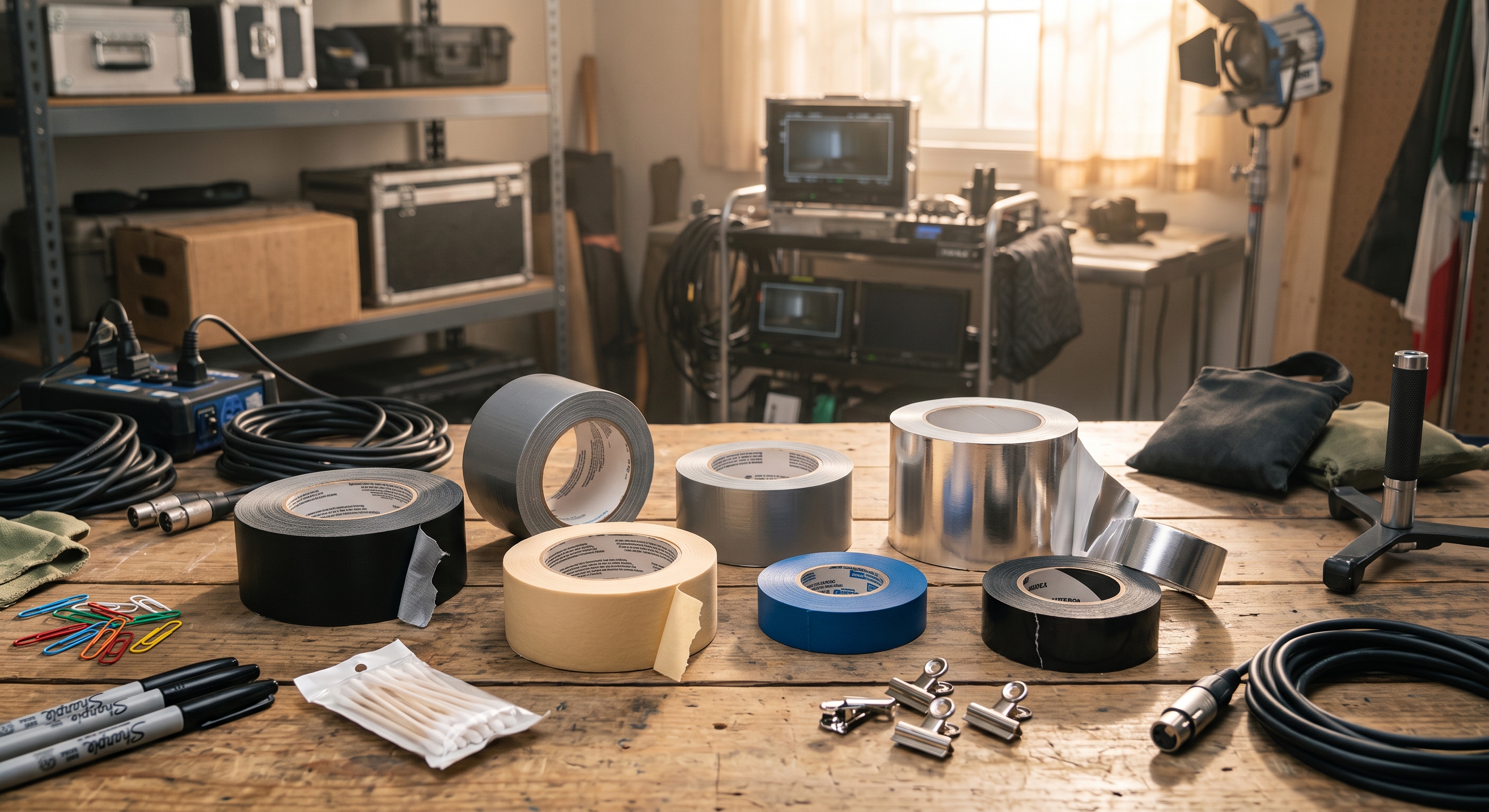

I affectionately call PacRad the “filmmaker’s hardware store.” Browsing the website is very much like walking into a brick-and-mortar Lowes, finding yourself overwhelmed with product lineups covering all sorts of niches. Beyond its selection of cables, adapters, and connectors, there’s a lot of variety to be found.
Did you know PacRad sells cotton swabs and paperclips?
All this to say, PacRad positions itself as a one-stop-shop for anyone working in media production, and its inventory reflects the needs of its patrons. In the case of the aforementioned cotton swabs, a camera operator may need a packet to safely dust off the delicate sensors of a high-performance camera, or help clear away built-up gunk and debris from a well-used dolly track. These minor inconveniences happen all the time during a busy set, so why not offer some more “household” solutions alongside the more robust equipment? Not every problem can be solved with a dedicated crimping tool or replacement cable.
So where does tape fit into this conversation?
PacRad offers tape as part of their selection of expendables: inexpensive products that have a one-time use, or otherwise are expected to only last for so long before running out. That includes the paperclips and cotton swabs, but it also applies to lubricant, earplugs, and, of course, tape.
Lots of tape.
More tape than anyone can reasonably use. It more or less monopolizes this section of the website, coming in a seemingly endless variety of colors, textures, adhesive strength, and use-cases.
Masking Tape
Crepe paper tape – or masking tape – is frequently used on set for temporary tasks: labeling for gear cases, floor marks for actor and camera placement, and quick-on-the-draw maintenance for set design. Walk onto almost any set and you’ll likely find rolls of masking tape covered in handwritten notes. Camera assistants use it to label batteries, media cards, and charging stations. The art department marks props and storage bins. Grip and electric crews identify cables, power distribution, and equipment cases. Short pieces are placed on the floor to indicate where an actor should hit their mark, where a tripod should be positioned for a repeat setup, or where furniture belongs after a reset. Because the tape removes cleanly from most hard surfaces, these reference points can be updated throughout the day without damaging the location or leaving behind a mess.
It’s worth recognizing, however, that masking tape has its limits. Its adhesive softens under heat, moisture, and prolonged exposure, making it a poor choice for securing heavy cables or mounting equipment overhead. In those situations, stronger options like gaffer tape are better suited for the job.
Gaffers Tape
Gaffers tape also prides itself on easy, residue-free removal, but that is where most of the similarities with masking tape end. Built with a durable cloth backing and a much stronger adhesive, it is designed to withstand the demanding conditions of a production set while still peeling away cleanly once the job is done. It conforms well to uneven surfaces, tears cleanly by hand, and resists the wear of foot traffic, changing weather, and the repeated movement of cables and equipment. The matte finish is another defining characteristic, minimizing reflections that could otherwise catch the eye of a camera or interfere with lighting setups.
It’s routinely used to secure cables along floors, fasten temporary rigging, bundle equipment, reinforce props, and perform countless quick repairs throughout the day. While no tape should ever substitute for proper safety hardware or permanent fastening methods, gaffer’s tape excels at the temporary solutions that productions depend on every day.
It’s also one of the few expendables that crew members rarely think twice about reaching for. Whether the task is preventing a trip hazard, keeping a loose panel from rattling during a take, or holding together a hastily assembled camera cart, a roll of gaffer’s tape is almost always within arm’s reach. That versatility has made it less of a specialty product and more of a universal problem-solver across nearly every department.
Duct Tape
Circling back to more commonplace adhesives, duct tape is ubiquitous with iron-clad toughness, proudly declaring itself “heavy duty.” Unlike masking tape or even gaffer’s tape, duct tape prioritizes sheer holding power over clean removal. Its polyethylene-coated cloth backing is highly resistant to tearing, while its aggressive rubber-based adhesive forms a durable bond with wood, metal, plastic, concrete, and countless other materials.
That durability makes duct tape an invaluable emergency repair material on production sets. It can reinforce cracked equipment cases, patch damaged set pieces, temporarily secure loose trim on production vehicles, seal road cases during transport, or hold together props that need to survive just one more take. In the audiovisual world, it is equally at home reinforcing speaker covers, bundling hardware for shipping, or weatherproofing temporary cable runs and outdoor equipment. The same qualities that make duct tape so dependable also make it less suitable for delicate applications. Its powerful adhesive often leaves behind residue when removed and can damage painted finishes, fabrics, and rental equipment if left in place for extended periods. For that reason, crews generally reserve duct tape for situations where strength outweighs aesthetics or easy cleanup.
When something absolutely has to stay put, especially in a backstage, workshop, or transportation setting, duct tape is often the first roll within reach. On an active film or live event production, however, it is best viewed as a heavy-duty repair tape rather than an all-purpose solution.
Electrical Tape
However, duct tape isn’t suited for every repair task. If you need an insulating material for low-voltage wiring, temporary cable organization, or color-coding electrical connections, electrical tape fills a niche that few other adhesives can.
Made from flexible vinyl, electrical tape is engineered to stretch, conform, and maintain an insulating barrier around wires and connectors. Unlike paper or cloth tapes, it resists moisture, abrasion, and many common chemicals while remaining pliable across a wide range of temperatures. These properties make it a natural companion for electricians, broadcast engineers, and AV technicians working around power distribution and signal infrastructure.
On a film or live event production, electrical tape is commonly used to identify cables by color, bundle small wire looms, protect connector backshells from dust and moisture, and add an extra layer of insulation around approved wire splices or terminals. Its elasticity allows it to wrap tightly around irregular shapes, creating a snug seal that stays in place even as cables are flexed or transported between locations.
That said, electrical tape is not a cure-all for damaged wiring. If a power cable has a cut jacket or exposed conductors, the safest course of action is to remove it from service until it can be properly repaired or replaced. Electrical tape works best as a protective and organizational aid. If you require safe electrical maintenance, call your gaffer.
Mylar Tape
Not every tape on a production cart is designed to hold something together. Sometimes, the goal is to reflect, shield, or even to simply decorate. Mylar tape is constructed from a thin polyester film with a metallic finish. The result is a lightweight tape that is smooth, dimensionally stable, and highly reflective, giving it a distinctive chrome-like appearance. Depending on the application, it can serve as both a decorative finish and a practical reflective barrier.
Mylar polyester films are valued in industrial settings for their strength, electrical insulation properties, and resistance to moisture and chemicals, making them suitable for a wide range of specialty applications. On film and live event productions, Mylar tape often finds its way into the lighting and art departments. It can be used to restore the reflective interior of practical light fixtures, repair or reinforce reflective surfaces inside soft goods, create metallic scenic accents, or provide a clean, polished finish to props and set dressing. AV technicians may also use it for color-coded identification or cosmetic finishing on equipment where a metallic appearance is desired without the weight or permanence of sheet metal.
Its reflective surface does come with tradeoffs. Unlike the matte finish of gaffer’s tape, Mylar tape readily catches and reflects light, making it a poor choice anywhere stray reflections could end up in front of a camera. Likewise, while it offers excellent adhesion and durability, it is intended for specialized applications rather than everyday cable management or temporary repairs.
Like many expendables, Mylar tape earns its keep by solving problems that other tapes cannot. It may not disappear from the shelf as quickly as masking or gaffer’s tape, but when a production calls for a reflective finish or a lightweight metallic barrier, it is often exactly the right tool for the job.
Ready for Anything On Set
As every filmmaker knows, every production brings its own set of unpredictable variables. That’s why having a well-stocked kit of essential expendables means you’re never caught off guard when a fast fix is needed. From cleanly marking stage floors to securing high-voltage power runs and building custom reflective accents, the right roll of tape can easily mean the difference between keeping a shoot on schedule or losing precious daylight to unexpected delays. Knowing which tape fits the job ensures you always have the exact tool required to keep your cast, crew, and equipment securely holding together.