


When most people hear the words “federal film tax credit,” their mind probably goes to Hollywood studios, movie stars and hundred million dollar productions getting a handout that they can use to buy their next mansion or their second yacht.
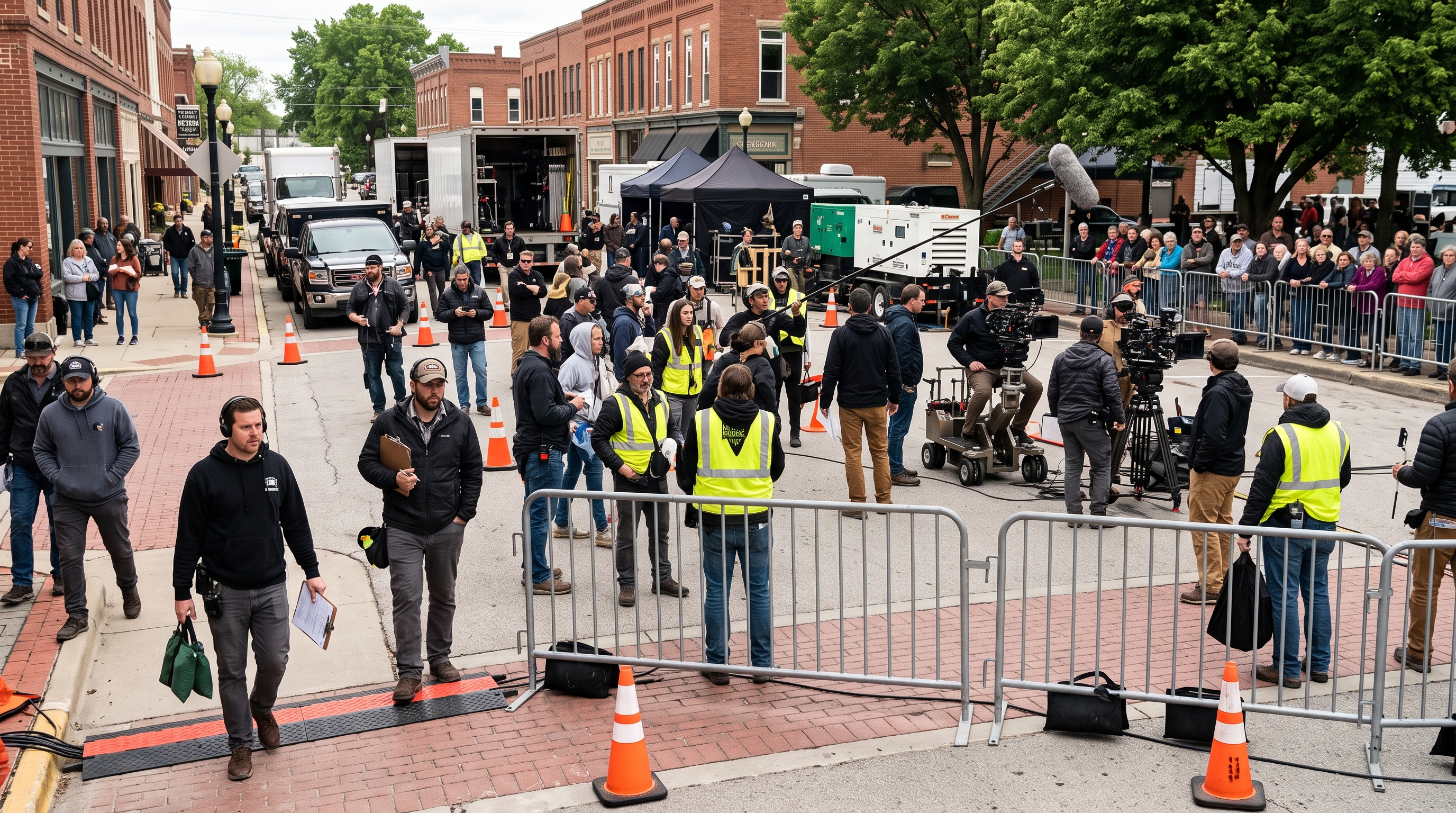
The reality is these kinds of credits are ensuring that camera assistants are around to purchase tape and cleaning supplies. They’re allowing sound mixers to replace a cable before tomorrow’s call time. They’re providing grips with the budget they need to purchase another cart full of expendables. They’re enabling owner-operators to finally replace a monitor that’s been hanging on for a few too many years.
Ultimately, these credits are going to people who’s names appear hundreds of lines below the stars as well as to the thousands of people who’s names and companies you have never heard of but support the broader industry as a whole.
Working at Filmtools, I’ve seen firsthand the difference these funds can make, as well as what’s at stake for an industry that people assume is all glamour, but has endured real hardship of late. These incentives directly support the hardworking crews and independent productions that need them most, and they have the absolute most to gain from a federal film and television tax credit.
What Is This Proposed Credit?
The idea behind the credit is fairly straightforward: make producing a movie or television show in the United States more economically competitive with producing it overseas.
Members of Congress are currently developing legislation that would establish a federal incentive for film and television production in the United States. The framework being discussed includes a base credit of roughly 20% on qualifying U.S. production labor, with additional incentives potentially bringing that figure as high as 30%. Importantly, the federal incentive could be used alongside existing state programs.
Though the legislation has not been finalized the potential impact of these credits are enormous.
We are currently living through a downward spiral with mounting evidence that productions are choosing international locations over the United States. The decline is becoming impossible to ignore.
FilmLA reported that Los Angeles-area on-location production finished 2025 at 19,694 shoot days, down 16.1% from 2024. The weakness has continued in 2026 with second-quarter 2026 production totaled 4,711 shoot days, another 12.7% decline year over year.
Those numbers sound abstract but when you operate a business that serves production workers every day, they aren’t.
How Broad Is the Entertainment Industry?
The production economy is much larger than the studio financing the project. Someone has to load the truck, build the set, run power, wire the talent, feed the crew.
Somebody, also, inevitably realizes at 6:30 in the morning that the production needs another roll of tape, battery, cable, adapter or piece of hardware.
That ecosystem is what places like Filmtools exist to support. When production slows down, the effect travels through that entire chain meaning less people working and the support structures grind to a halt.
There is an entire system of people and companies that support the broader creative economy. In Los Angeles County alone there are more than 300,000 workers who rely on the creative industry to survive.
These people are overwhelmingly not movie stars. They are working people whose livelihoods depend on productions actually happening.
We hear it every day, people are struggling to get by. I can’t even count the number of conversations I’ve had with creatives large and small who have had to take on second jobs, drive Uber or have made the hard decision to completely pivot to a new industry to support their families. A boost to the production industry helps to bring stability back to a sector that desperately needs some good news after so many years of doom and gloom.
What Is The Actual Expected Effect Of A New Credit?
Just this week, the Motion Picture Association released a study estimating that the proposed federal incentive could generate $125.3 billion in additional U.S. production spending through 2035 and eventually support more than 143,500 additional jobs. Now its important to take this with a grain of salt as there might be a little bit of bias in a study coming from an organization advocating for the incentive. Having said that the potential economic impact should not be dismissed.
$125.3 billion and 143,500 jobs leads to a rising tide raises all boats situations. People can pay their mortgage, buy a new car, go out to eat and, hopefully, spend a little more time at places like Filmtools to build out their kit or finally purchase that new camera they have been holding off on buying.
For us it means adding more people to the team, bringing in additional inventory, having more events and donating to local film related programs, an activity that has had to take a back seat as we’ve worked to keep ourselves afloat. All of those additional dollars multiply outside our small bubble.
This Isn’t Just A Los Angeles Conversation
Though we have a particular interest in the potential impact on Hollywood, this tax credit has the potential to expand way outside of Southern California.
Communities around the country in Georgia, New Mexico, Texas, Illinois and New York will also see the benefits of an expanded tax credit program. These communities have been built over decades to be nodes for outside of Hollywood production but have struggled mightily with the downturn in the industry and truly deserve to have some relief.
Bringing a federal tax credit to the table makes the US competitive against the world and helps to build out a struggling sector of the economy beyond the traditional hubs. Though we want as much production to happen in California as possible, the reality is that the creative professionals we service are no longer tied to Hollywood, which isn’t a bad thing! Hopefully this new program will bolster the community and allow for more great content to be produced in the USA.
So Who Does This Really Help?
I expect that, eventually, the conversation around this tax credit will lead to a concern that this is just big government giving a subsidy to the ultra-rich and famous faces that we see every day on screens big and small. It’s important that we collectively talk about the structure and costs of this credit and that real efforts are made to safeguard against “bad actors” taking advantage of the system for their own personal gain.
Having said that, it’s also important that we keep in mind that the entertainment industry isn’t just studio execs, agents & actors. Its hundreds of thousands of people who make a living because someone, somewhere decided to say:
“We’re shooting in the USA.”
This decision to keep productions in the United States has an impact that might be hard to quantify but can truly become a security deposit on a new apartment, a purchase of some rolls of gaff tape, a camera package rental and a meal out with friends and family.But that’s not the real story here.
The real story is someone rushing to their local production supply house, perhaps a place like Filmtools, to get a last minute cable or memory card because they’ve been tasked with keeping production on time and the project moving forward. That’s who this really helps, and that’s who has built the industry that we all know and love.
The Motion Picture, Television, and Entertainment Revitalization Act has a long name, but its impact will hopefully be just as long over the next few years and even decades. It connects our industry’s heritage with its next chapter by empowering the very workforce that built it. Reinvesting in that talent today is what guarantees we’ll remain the global gold standard for production tomorrow.
Editors Note: You can support the Motion Picture, Television, and Entertainment Revitalization Act by contacting your federal lawmakers and engaging with industry coalitions pushing for its passage in Congress