

When Nikon announced the Nikon ZR, it felt like one of those moments when two worlds finally collided. Nikon’s long-standing camera engineering meets RED Digital Cinema’s color science and workflow DNA. Can this combination bring together two imaging giants and set a new course?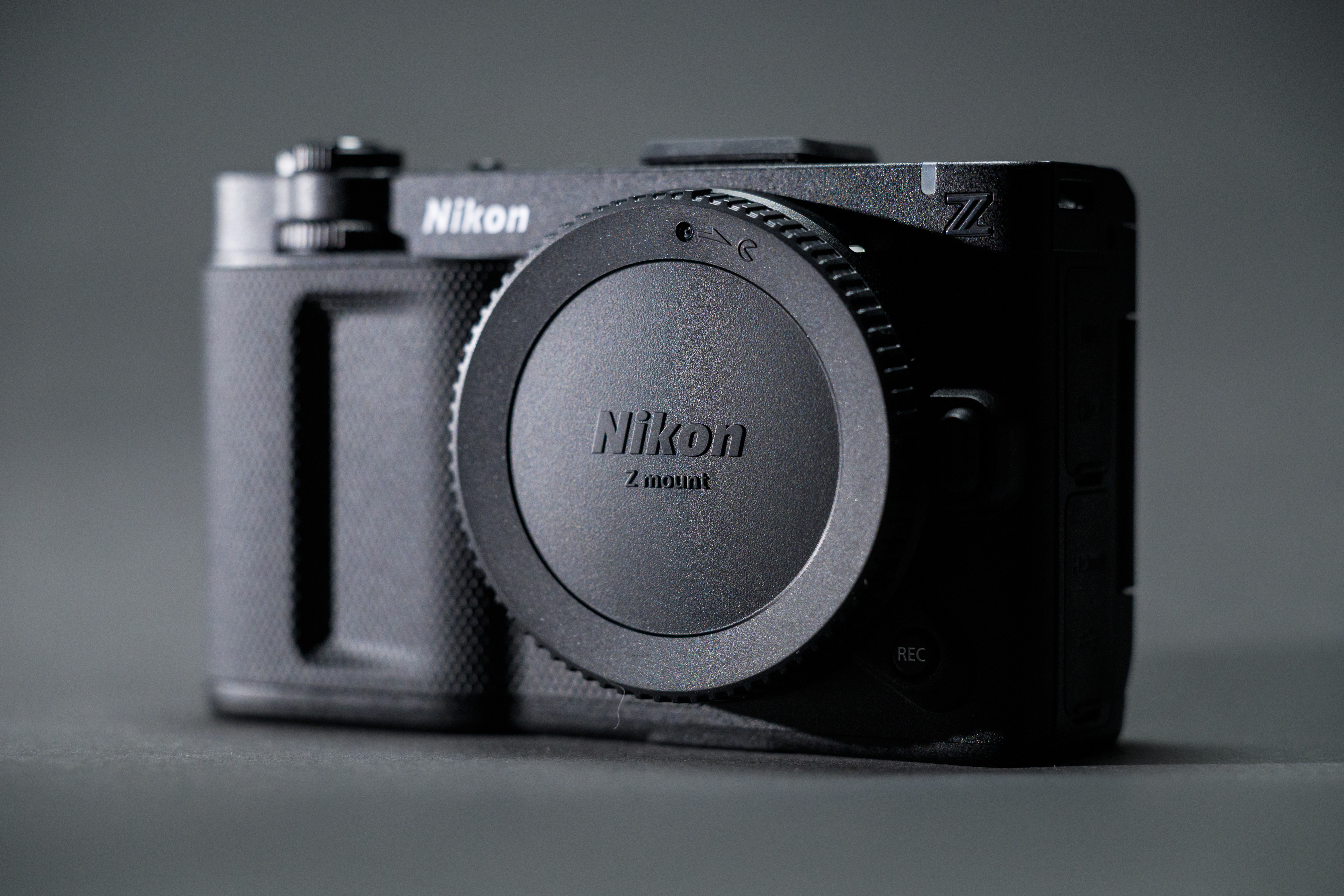
I have been covering the camera market for a while now. One thing I’ve learned is that Nikon makes thoughtful, deliberate choices that can feel slower than the market wants. Yet, when Nikon innovates, the outcome is usually very good. I will say, though, their much-needed 2.0 firmware took a little too long to get to the market. It’ll be released to the public November 24th – that’s the rumor, at least.
RED, on the other hand, can be brash and hard-charging, getting the best camera into the hands of the best filmmakers. Who can deny the revolutionary impact of the OG RED ONE? That one camera changed digital filmmaking forever.
On paper, the two very different camera companies working together looked almost too good: a small full-frame cinema camera shooting RED-style RAW for a fraction of the price of traditional cinema bodies. After spending real time with it, I can say the ZR is a fascinating camera — and in many ways, a very smart one. Yes, I’ve been using the Nikon ZR for a while, and since Christmas is right around the corner, I think showing my daughter Avedon opening gifts from last Christmas. Otherwise, go check out the “Avedon” Netflix Documentary by Ron Howard to understand where we got her name.
First Impressions: Small, Light, and Clearly Built for Video
The first thing that stood out to me is the size. The ZR is surprisingly compact for a cinema-oriented camera, weighing just over a pound. This camera is more of a mirrorless hybrid than a traditional cinema body. You see, the Nikon ZR has to be its own thing without stepping on the toes of either Nikon’s or RED’s currently available cameras, yet offer something different from each.
There’s no viewfinder, which immediately tells you what Nikon intended here: a video-centric camera. Instead, you get a nice large 4-inch LCD that’s bright and easy to see outdoors. If you’re building a rig, the screen works well as a quick framing monitor. If you’re running lightweight on either a gimbal or handheld, the rotatable 4-inch LCD is more than usable. But unlike the Sony FX5, you can actually take photos with the Nikon ZR.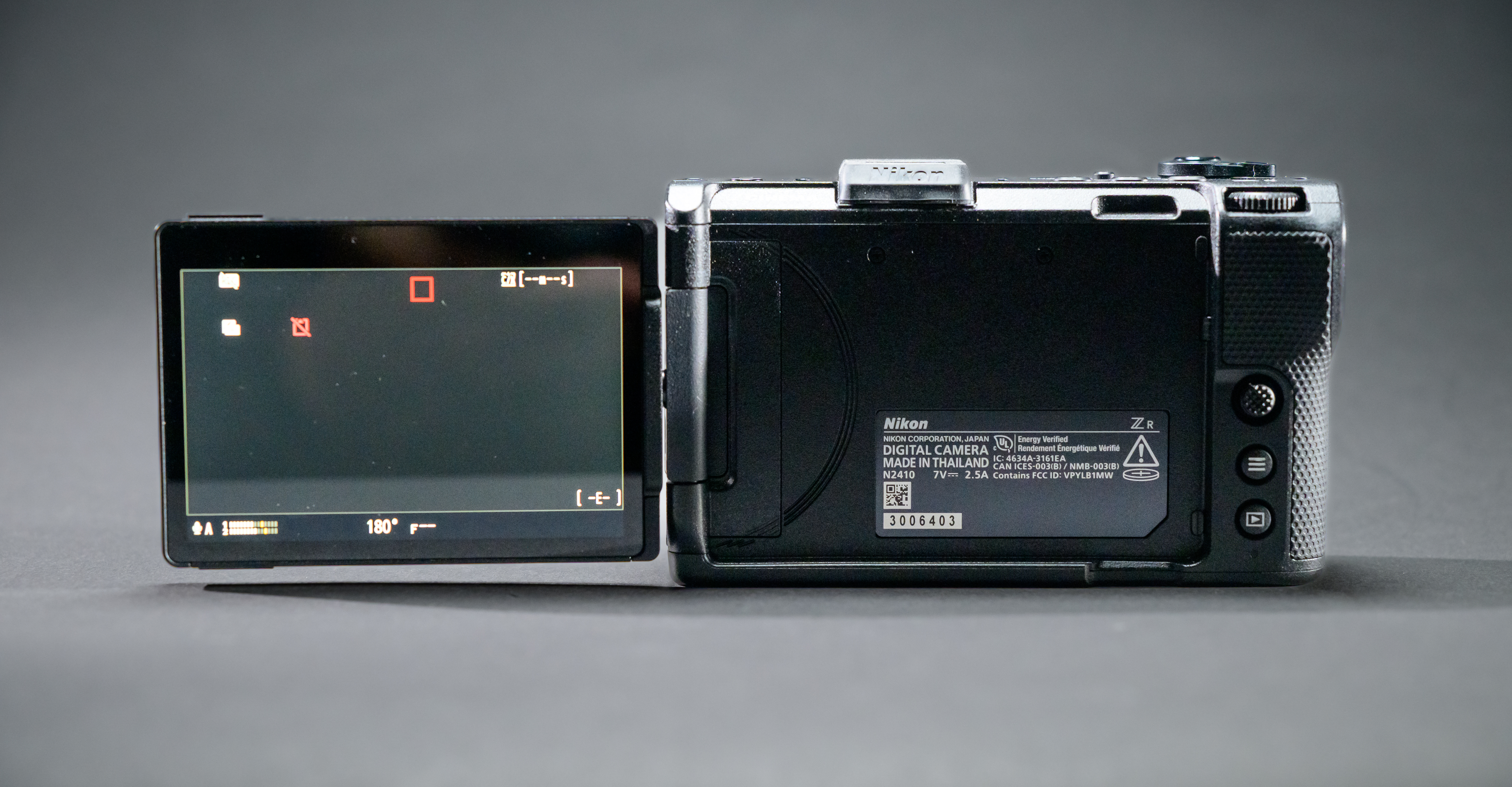
For a camera the size of the Nikon ZR, the whole point is to keep the camera package small, in my opinion. Yes, there are days when filmmakers will need to equip their Nikon ZRs with monitors, transmitters, and cages, and everything else that makes filming some set-ups easier, but I like to keep the camera simple. I see the Nikon ZR as the kind of camera you have a few with you to cover whatever project you’re facing. I work in documentary shorts. I could use the Nikon ZR for my kind of work just as easily as a Sony FX3 or FX5.
What Nikon gets very right with the Nikon ZR is that the camera is as easy to use as any of their other cameras. Photography-centric camera makers, I’ve noticed, have an ethos about the camera being an extension of the eye. Nikon gets the intuitive use right – as do Canon and Sony. Higher-end camera manufacturers, like RED, build cameras to be rigged, built up, torn down, and fit for just about anything tossed its way. Real-World production can be hard on gear. The Nikon seems built for solo filmmakers and crews of two or three working together.
The Big Deal: Internal RED RAW
This single feature is WHY. The Nikon ZR is R3D NE RAW recording with Nikon’s design and autofocus. Anything less may have had “forgettable” written all over it. With R3D NE RAW, users get internal 12-bit 6K recording up to 60p, along with more traditional formats like N-RAW and ProRes RAW, depending on the user’s workflow. For me, I was R3D NE RAW all the way.
What’s interesting here is that Nikon didn’t just borrow the codec. They also adopted the RED pipeline for Log3G10 and REDWideGamutRGB, making it surprisingly easy to match with RED cameras in post-production.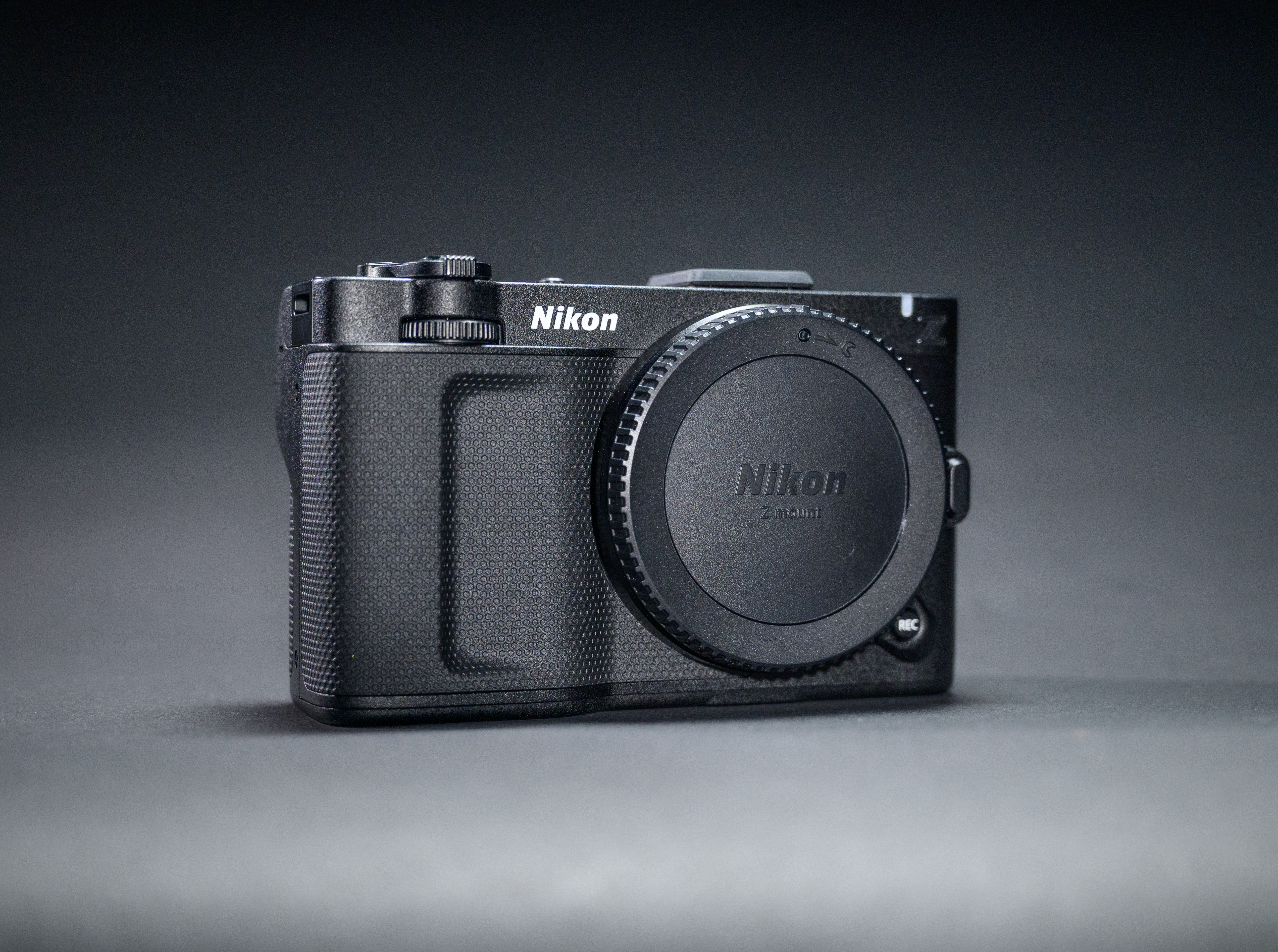
Know that when you record R3D NE RAW, you are committing yourself to large files. I don’t see this as a problem since I think most users are pretty used to large files and the need for ever-increasing media. Keeping the Nikon ZR a 6K camera, and not an 8K camera, should alleviate some concerns, I hope. I am seeing 6K as a nice sweet spot.
Nikon ZR’s Other Codecs
Yes, the other codecs are available as options. Philip Bloom famously pointed out the not-so-great noise reduction in the compressed codecs. That was a bit of a sore point for me too. Thankfully, Nikon addressed many concerns and released Firmware 2.0, which included H.265 Log3G10 and REDWideGamutRGB. This is a huge addition for those who are not interested in shooting R3D NE RAW but want the dynamic range it offers in H.265.
Nikon ZR’s Low-Light
The new 2.0 Firmware also updated the low-light processing for low-light filming. The update helps suppress frame-by-frame black-level fluctuations and reduce low-light flicker. Additionally, the new firmware adjusts high ISO noise reduction levels for Log3G10 and N-Log in H.265 to help preserve detail and image rendering.
When I filmed in R3D NE RAW, I found the Nikon ZR to be very good at low-light capture. The noise I found at 3200 and 6400 was manageable.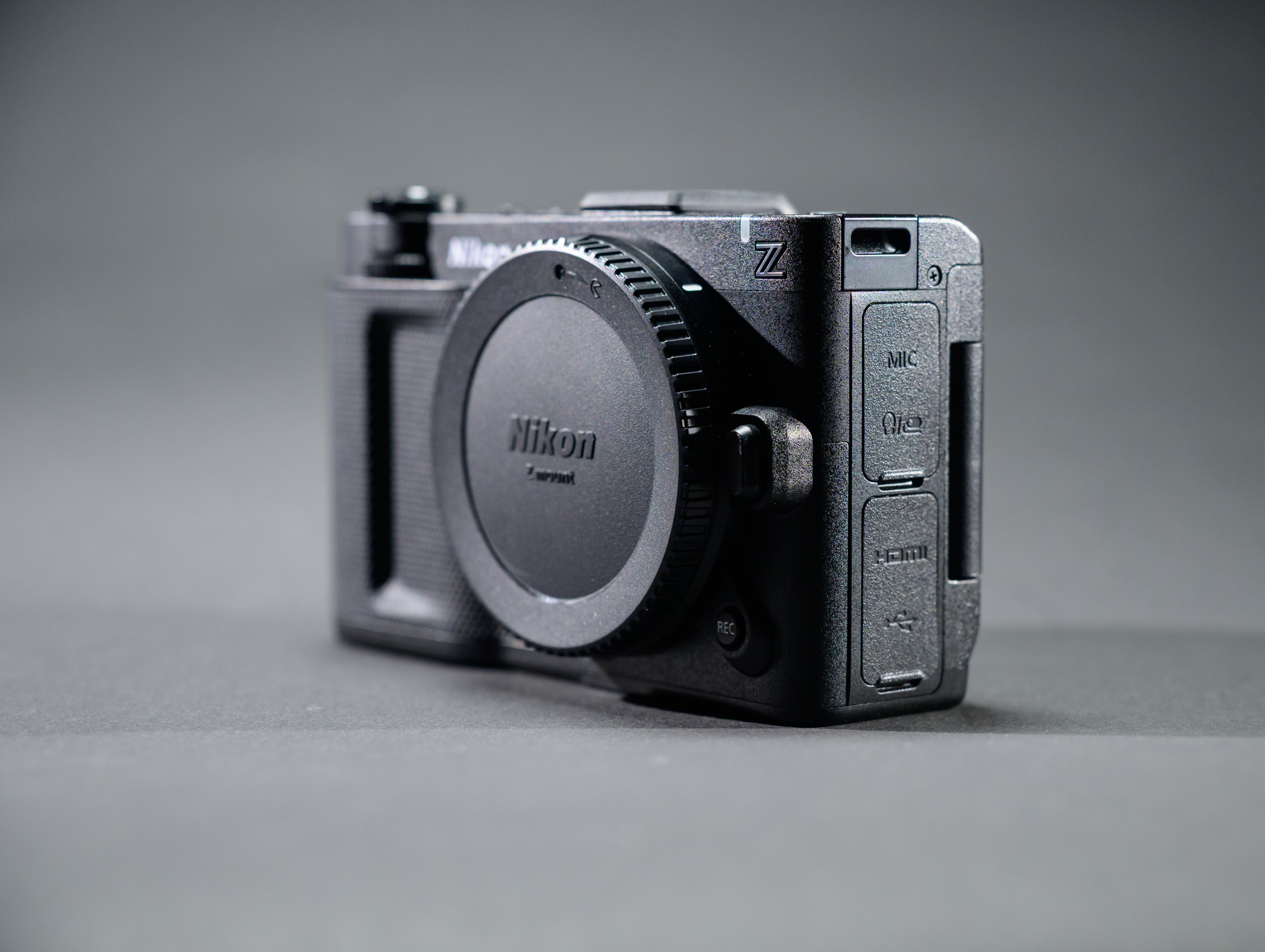
Image Quality
I measured the image quality from the R3D NE RAW. I found myself committed to filming in R3D NE RAW because, frankly, I focused on what I’d most likely film 100% of my work in if I had this camera. For those who don’t know, I typically have a Canon C300 Mark III, and I film in its RAW codec all the time. I’m just down for 12-bit. So, I approached the Nikon ZR in the same way.
With the Nikon ZR, when recording R3D NE RAW, you get over 15 stops of dynamic range, giving you plenty of room in high-contrast environments.
Skin tones are natural, and the color science leans cinematic without feeling baked in. The camera even includes a “Cinematic Video” mode that automatically sets an 180-degree shutter and a 24fps workflow.
The rolling shutter is controlled well enough that handheld shooting doesn’t feel compromised.
Nikon has a visual flavor that is all its own. To me, the Nikon ZR shows the “Nikon Look” more than the RED look. I prefer the Nikon look. Hell, the company has a LONG history of making photography look sensational, and I feel like you can see the decades of that development in this camera.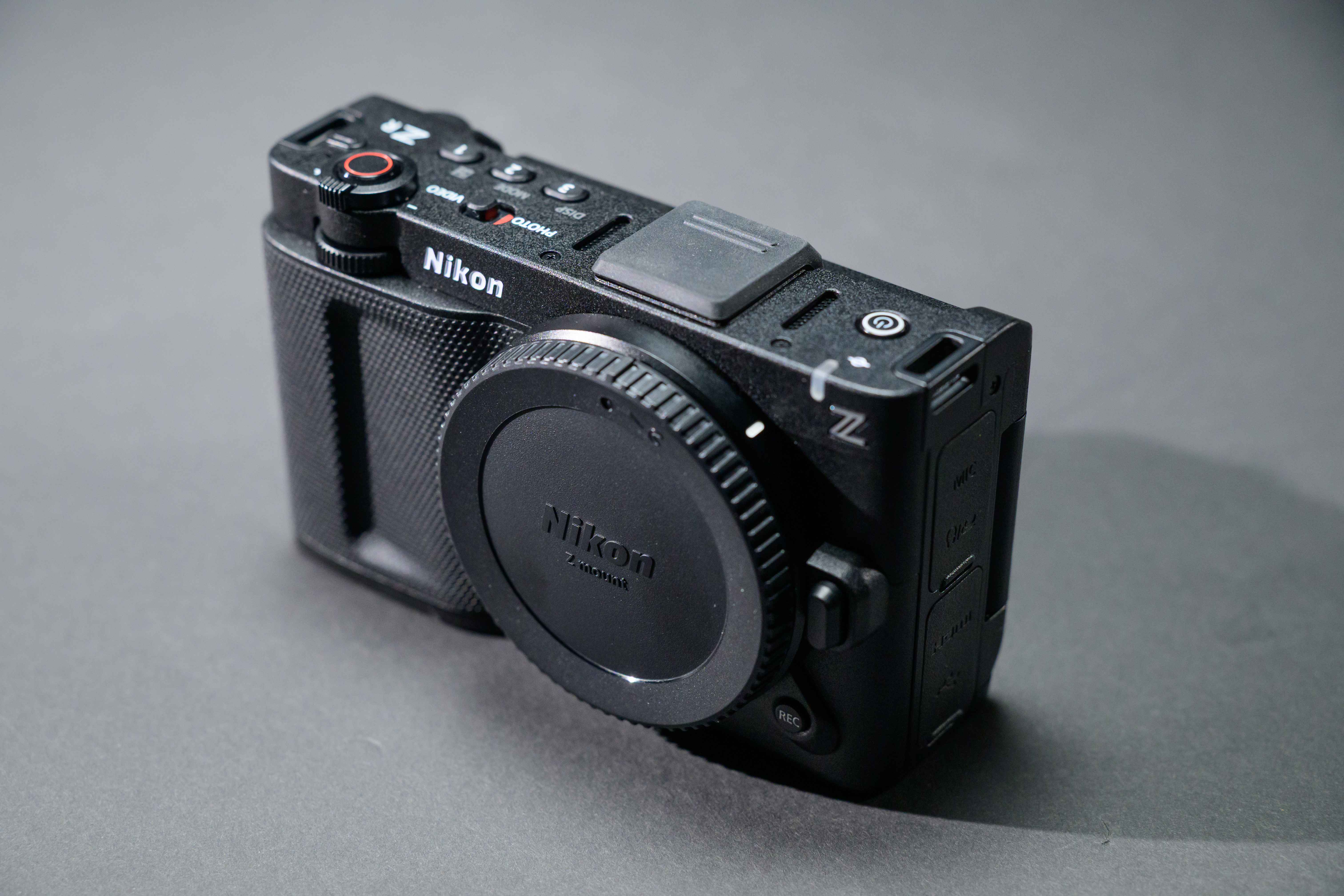
The Audio Surprise
One of the more interesting features is the 32-bit float audio recording directly in the camera. That is essentially recording raw audio, meaning you can worry less about setting the gain. Record quiet dialogue, record a screaming concert, and adjust levels later in post without clipping. As long as the mic isn’t clipping.
For documentary or solo operators, of which I am both, that’s an enormous workflow improvement. I expect to see this feature in future cameras soon.
Autofocus and Stabilization
Autofocus is classic modern Nikon: fast and reliable. It recognizes multiple subject types, including people, animals, and vehicles.
Combined with the in-body stabilization, the camera works surprisingly well for handheld shooting or gimbal work.
Nikon ZR as a Photography Camera
If it can take pictures, then I’m going to use it for photography. Yes, the Nikon ZR doesn’t have an EVF, but it does have a large LCD screen that is more than good enough. In fact, as an older creative who grew up on film and learned 16mm filmmaking in college, I find it kind of funny to see younger photographers using only the LCD screen when taking photos. Just wait until you need readers, my young photographers; then you’ll wish you had an EVF.
Without the EVF, the Nikon ZR is almost like a camera when you hold it at your torso and look down into the LCD. Like my old twin reflex, I walked around with the Nikon ZR and captured a ton of photos. I enjoyed using the camera this way. Plus, the photos turned out great. Don’t turn up your nose at the Nikon ZR; it is a more-than-capable camera for photography.
The Nikon ZR was so easy to use for photography that my then 8-year-old helped me capture footage for a Christmas tree lighting ceremony. She loved the tap-to-focus feature and had a blast “working with Dad.”
Where The Nikon ZR Falls Short
No camera is perfect. And these are small hiccups that were likely design choices to keep the camera’s cost down or for other practical reasons.
* The Micro HDMI port feels like a weak point on an otherwise professional camera. I really dislike using Micro HDMI ports. For the love of cameras, put in a full-size HDMI Port.
* The lack of built-in mounting points means most people will want a cage quickly. That adds weight.
None of these are dealbreakers, but they’re worth noting. Look, we are in the times of great cameras. If you can’t overcome the simplest shortcomings of a camera, or you must pixel-peep so deeply that you, and only you, see the differences between one and the other – let it go and go out and capture a moment that brings joy to your heart.
I daresay there really isn’t a camera that’s not worthy of any one of us picking up and using. I can look back at all my camera reviews. You know what I find when I look back? Those cameras I was less thrilled about sometimes made the best images because I worked within the limitations. We should have fun while we capture moments, and the Nikon ZR makes it easy.
The Bottom Line
The Nikon ZR is a very clever camera. It bridges the two worlds of Nikon and RED. I’m excited about this camera and what the two will create in the future. The Nikon ZR is small, so small crews or solo filmmakers can toss a handful of Nikon ZRs into a hard case with lenses and go capture the world without lugging around a ton of gear.
The Nikon ZR doesn’t try to compete directly with traditional cinema bodies. Instead, it opens up a new middle ground between mirrorless hybrids and full cinema cameras.
For filmmakers already invested in the Nikon Z mount, it’s a compelling upgrade. For anyone curious about the RED workflow without the RED price tag, it’s probably the most accessible entry point yet.