

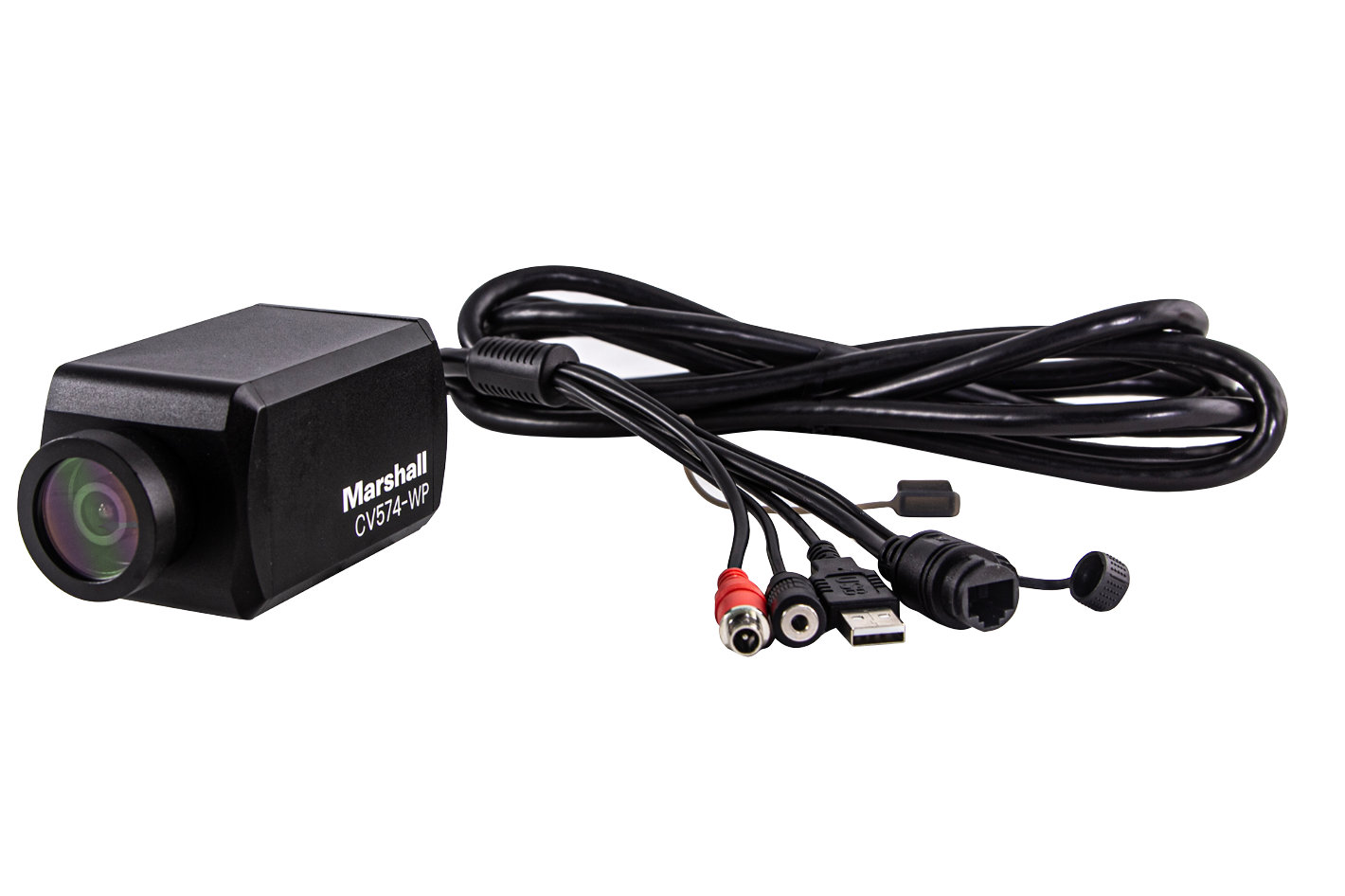

Built for the elements, the CV574-WP, based on the original miniature UHD camera CV574, supports NDI|HX, providing ultra-efficient, low-latency video transport over standard Ethernet networks. Adding the IP67-rated weatherproof design for reliable outdoor operations makes this camera the perfect addition to any REMI workflow.
Weather is not a factor for the new camera. Chiseled from a block of aluminum alloy making it extremely durable in a discreet miniature size, the CV574-WP is the first 4k, all-IP, all-weather NDI|HX3 POV camera from Marshall.
The CV574-WP POV camera features an interchangeable M12 lens mount that includes a high-quality 4.0mm lens with a 77° horizontal angle of view. In addition to an 8.46 Megapixel 1/2.8” 4K UHD sensor at up to UHD 3840x2160p60 video output over IP, the CV574-WP offers up to 1080p50/60 for NDI|HX and supports multiple streaming protocols, such as NDI|HX3, NDI|HX2, RTSP and RTMP. Its IP-centric design ensures efficient H.264 and HEVC encoding support and secure SRT streaming over Ethernet.
The CV574-WP reflects a shift toward fully network-based video acquisition by combining ultra-high-definition imaging, advanced compression and IP transport into a single, compact device. One of its key advancements is the integration of NDI|HX3, which enables low-latency video transmission with significantly reduced bandwidth consumption compared to traditional full-bandwidth streams. This allows high-resolution signals to move efficiently across standard network infrastructure without requiring dedicated video cabling.
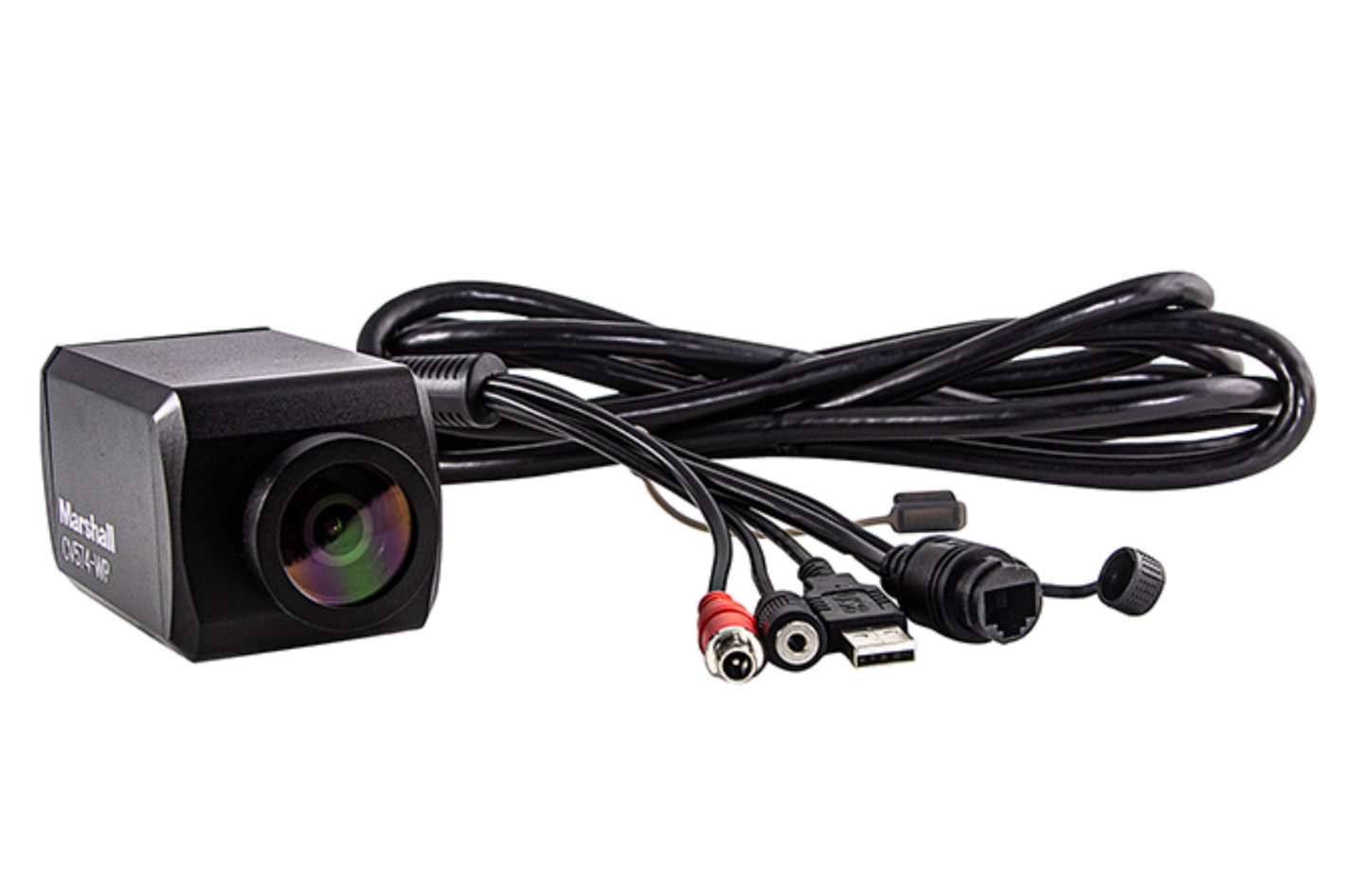
An industrial-standard 1/4”-20 mount hole ensures simple and secure mounting in a variety of setups, from fixed-position installs to creative POV angles. This adaptability ensures that the camera can be seamlessly integrated into both new builds and retrofit projects.
The camera addresses the growing demand for reliable, high-quality video capture in environments where traditional camera systems are difficult to deploy or maintain. As live production increasingly shifts towards REMI and decentralized workflows, there is a clear need for cameras that can operate unattended, transmit efficiently over networks and withstand environmental challenges.