


A few decades ago, it was typical to converse about either bi-standard or multistandard monitors or TV sets. (We even applied those terms to certain video tape recorders and players too, but that goes outside the scope of this article, although I have covered them in others.) Nowadays, we talk about bi-rate and multirate monitors and TV sets much more frequently. What changed? In the past, a bi-standard or multistandard monitor had to do much more than just handling different framerates and refresh rates: They also had to handle the difference in spatial resolution between 525 analog scanlines (with NTSC and PAL-M), as opposed to 625 analog scanlines with SECAM and all other types of PAL. In addition to that, a bi-standard or multistandard monitor or TV had do deal with how color was encoded with different standards of composite video and Y/C (aka S-Video), let alone (in the case of a TV set) with a TV tuner which dealt with different analog over-the-air channels and how they were broadcast. (That still exists with DTV (over-the-air digital television), aka digital TV sets and their tuners, but these standards are a completely different list which is also outside the scope of this article.)
Nowadays, it is much more popular to discuss bi-rate or multirate monitors since many or most of our sources have only two or three spatial resolutions and often arrive already as digital.
Bi-rate
Among the bi-rate ones are those that accept 50Hz/60Hz with a tolerance for 59.94 Hz. where the panel can really operate natively at those rates. Some can also accept 23.976 Hz (fps), but must do a reverse telecine to make it become 59.94 Hz, which does not retain the original cadence. They may also accept 25 fps and repeat each frame to display at 50 Hz, maintaining the original cadence, or accept 29.97 fps and repeat each frame to display at 59.94 Hz, also maintaining the original cadence.
Mulitirate
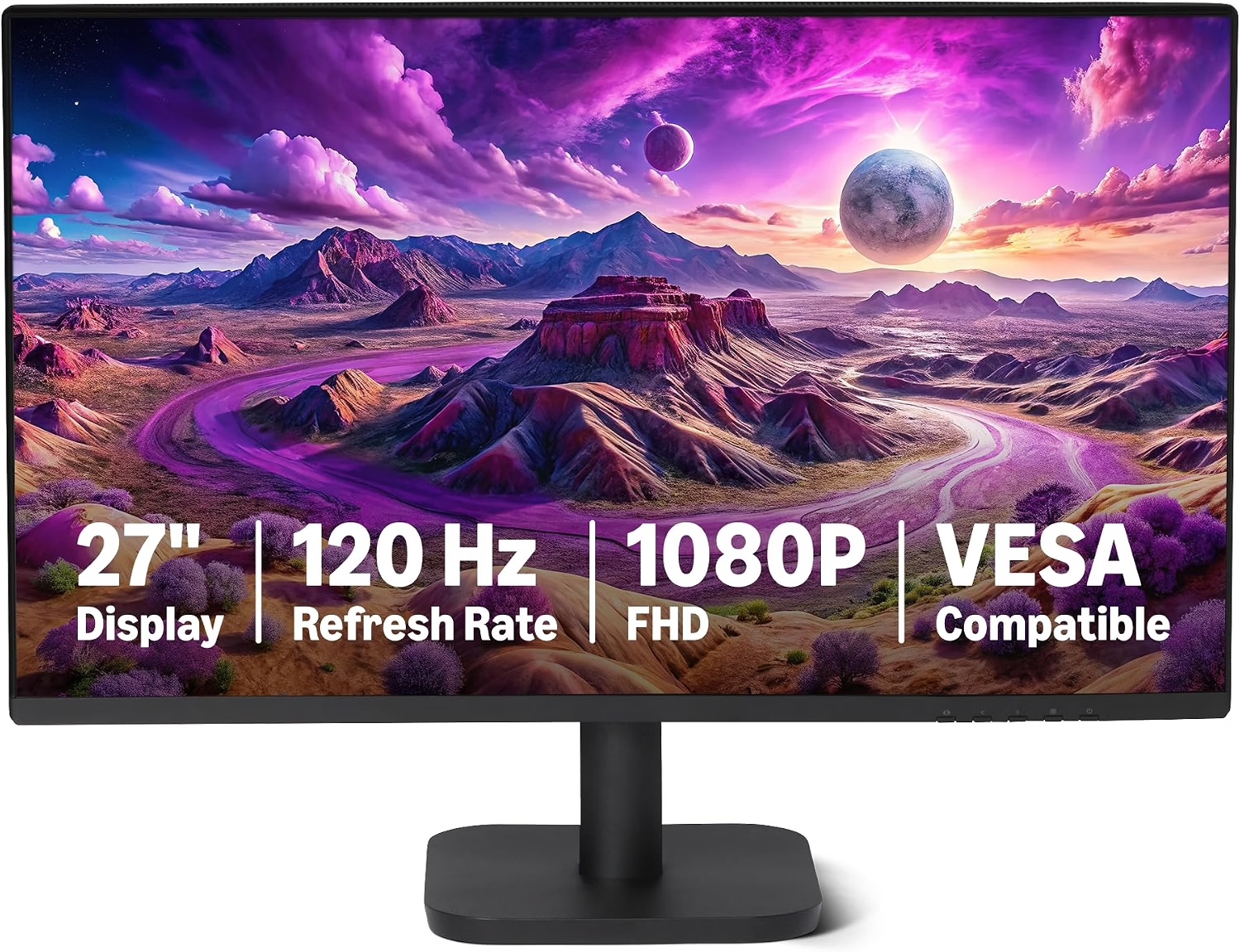
The most popular multirate monitors nowadays are the ones marketed as 120 Hz. Generally speaking, they can accept all desired rates and display them as an even multiple, For example:
- 23.976 fps can be multiplied by 5 and displayed as 119.88 Hz
- 24 fps can be multiplied by 5 and be displayed at 120 Hz
- 25 fps can be multiplied by 4 and be displayed at 100 Hz
- 29.97 fps can be multiplied by 4 and be displayed as 119.88 Hz
- 50 fps can be multiplied by 2 and be displayed at 100 Hz
- 59.94 fps can be multiplied by 2 and be displayed at 119.88 Hz
You should always verify that the 120 Hz model you are considering really covers all of these framerate options.
In all cases, the original cadence can be retained, just as when films shot at 24 fps on celluloid are (or were) projected 2x with a special double shutter projector at 48 Hz, repeating each frame. Some monitors and TV sets offer to smooth out the experience by calculating the in-between frames, but that is not what we are requesting when we want the original cadence, so we should deactivate those options. In fact, that is one of the goals of the Filmmaker Mode, although this can certainly be achieved with some monitors which don’t bear that moniker.
Related articles
- How to select/acquire the best DVD & Blu-ray discs for framerate purists who own a multiregion player + a multirate display device
- Review: modified multiregion Panasonic DP-UB150 4K Blu-ray/DVD player for framerate purists
- Filmmaker Mode in newer UHD TV sets/monitors guarantees matching cadence/framerate and more
- Framerate Malpractice in cameras, video devices, software & services
Lee este artículo en buen castellano
Cómo evolucionamos desde monitores binorma-multinorma a los biifrecuenciales-multifrecuenciales
(Re-)Subscribe for upcoming articles, reviews, radio shows, books and seminars/webinars
Stand by for upcoming articles, reviews, books and courses by subscribing to my bulletins.
In English:
- Email bulletins, bulletins.AllanTepper.com
- In Telegram, t.me/TecnoTurBulletins
- Twitter (bilingual), AllanLTepper
En castellano:
- Boletines por correo electrónico, boletines.AllanTepper.com
- En Telegram, t.me/boletinesdeAllan
- Twitter (bilingüe), AllanLTepper
Most of my current books are at books.AllanTepper.com, and also visit AllanTepper.com and radio.AllanTepper.com.
FTC disclosure
None of the listed individuals or companies mentioned above has paid for this article. Some of the manufacturers listed above have contracted Tépper and/or TecnoTur LLC to carry out consulting and/or translations/localizations/transcreations. So far, none of the manufacturers listed above is/are sponsors of the TecnoTur, BeyondPodcasting, CapicúaFM or TuSaludSecreta programs, although they are welcome to do so, and some are, may be (or may have been) sponsors of ProVideo Coalition magazine. Some links to third parties listed in this article and/or on this web page may indirectly benefit TecnoTur LLC via affiliate programs. Allan Tépper’s opinions are his own. Allan Tépper is not liable for misuse or misunderstanding of information he shares.