


Territory Studio is a design-led creative studio specializing in visual effects, screen graphics, title design, advertising, gaming, and experiential content. Known for its recent Oscar-winning work on Dune: Prophecy, as well as cinematic VR in gaming projects such as Batman: Arkham Shadow, Territory blends storytelling with cutting-edge design to create compelling experiences.
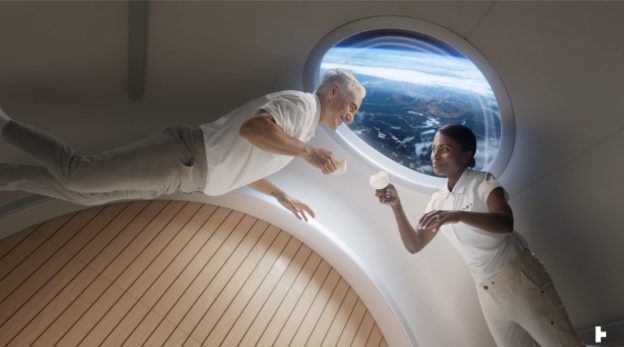
The studio recently began working with Vast Space, a company developing the world’s first commercial space station, tasked to create visualizations for the company’s Haven-1 platform.
We sat down with Russ Gautier, Creative Director at Territory Studio, to discuss how he uses Adobe Premiere Pro, After Effects, Photoshop and Illustrator to craft visual elements for his projects.
For his first collaboration with Vast, Gautier’s focus was on the “people element” to create an emotional connection to the idea of living and working in space. To bring these human-centric concepts to life, Gautier used layered 3D renders in After Effects to explore a range of design variations.
Read on to discover how Gautier and the Territory Studio team crafted compelling visuals for Vast Space, and how their design-driven approach extends across other visionary projects.
How did you first get into VFX design? What drew you to it?
I didn’t originally plan to get into motion design, but it turned out to be the perfect intersection of everything I was passionate about. I took a few years off between high school and college to figure out my path, and during that time, I started experimenting with Flash. I’d always been drawn to animation, and Flash made it accessible.
Once I got to college, I fell in love with graphic design and typography. Motion design brought all of those interests together… and everything just clicked.
What do you draw inspiration from when creating your work? What are you trying to achieve?
People always say to find inspiration outside your field, and I’ve found that to be true in my own experience. I spend a lot of time looking at art, being in nature, and stepping away from the screen. I love solving problems and working with people, two things I get to do regularly.
Some of my biggest sources of inspiration come from collaboration and communication with clients and colleagues. The work I’m most proud of always comes from open-minded, creative partnerships.
What Adobe tools do you use? What goes into your process when selecting tools?
After Effects has been a core part of my 3D and design workflow for years. Those who know me know that I love using After Effects to explore design variations through layered 3D renders. I often use Photoshop and Illustrator in my design work and have been incorporating Premiere Pro into my toolkit lately as well. For me, choosing the right tools always comes down to the team I’m working with and what will help us get the job done most efficiently. Adobe Creative Cloud has always been my go-to for that reason.
How do you typically begin a project? How do you work with other collaborators (directors, editors, etc.)?
I always start with an honest conversation. Beyond the business goals or the language in the brief, I want to understand what the client truly wants the audience to feel, or what key takeaway they want to leave behind. Sometimes I’ll share visuals, references, or previous work, but more often it’s just a conversation to uncover what’s driving the brief. That’s usually where the most meaningful, human connections emerge. That’s the part I find most inspiring.
What’s a favorite recent project you’ve worked on? How did it come together and how did you achieve it?
Working with the team at Vast has led to some of the most rewarding work I’ve been a part of in recent memory. I’ve always been a bit of a space nerd, but I never imagined I’d get the chance to collaborate with people who are actually building the future of space travel. Our first project with them focused on creating a series of human-centered lifestyle and research moments that showcase the thought and care behind the design of their station.
Vast really wants to highlight people and to have an emotional connection to the idea of living and working in space, which is incredibly rare in the aerospace world. It was a fun problem to solve!
What were some specific challenges you faced? How did you go about solving them?
The biggest problem was making people look convincingly weightless. We knew we could shoot greenscreen and create realistic CG environments, but capturing an authentic sense of being in microgravity was very tricky.
Ultimately, we brought in a stunt team, shot the talent on wires, simulated hair movement and in some cases replaced entire bodies to get the motion just right. It was all about making the experience feel believable.
If you could share one tip about any or multiple Adobe tools you used, what would it be?
Not so much a “hack,” but more of a productivity workflow: don’t sweat trying to nail the look in 3D. Instead, get really proficient with After Effects and fold that into your process early on. It allows you to create a wider variety of looks much faster, and it’s a lifesaver when 3D renders don’t come out quite right or when those inevitable last-minute client changes roll in.
What’s the toughest thing you’ve had to face in your career and how did you overcome it? What advice do you have for people aspiring to get into the VFX space?
Work/life balance has always been a challenge for me. It’s far too easy to get caught up in the grind, spending endless hours in front of the screen. I know that about myself. But once I made the decision to prioritize my physical and mental health, everything started to shift for the better in all aspects of my life, including my career.
My advice is the same for people wanting to get into any career path: you are more than your job/career. Work hard, sure, but don’t grind all your best years away and forget to live your life.