


As early as 2013, LG Display successfully mass-produced the world’s first large-sized OLED TV panels, establishing the foundation for the concept of stacked emission layers. The company’s journey of OLED innovation has been defined by continuous breakthroughs that push beyond structural limitations, and led to Tandem OLED, a technology that elevates brightness, lifespan, and power efficiency to a new level.
Tandem OLED vertically stacks multiple emission layers, dispersing the energy applied to the OLED device and delivering superior durability — including higher brightness and longer lifespan—compared to conventional single-layer structures. Over the past several years, Tandem OLED has continuously evolved while expanding rapidly across product categories.

The journey began in 2019 with the world’s first commercialized Tandem-based automotive OLED. Tandem OLEDs were first applied to automotive OLEDs, which have particularly high-quality standards, to disperse energy and allow them to operate more reliably for longer periods of time. They are also considered optimal for IT products that require a relatively high amount of screen time, such as laptops, monitors, and tablets.
In 2023, LG Display mass-produced the world’s first 17-inch foldable laptop panel using a Tandem structure. This was followed in 2024 by the first application of Tandem OLED to mainstream laptop displays. Tailored for laptop use, it can deliver double the lifespan and triple the brightness of a conventional single-layer OLED display, while reducing power consumption by up to 40%, making it ideal for high-performance IT devices like AI laptops as well as regular laptops.

Two monitors from LG’s range are a good example of the versatility of the LG Display OLED technology. The LG UltraGear OLED Gaming Monitor GX9 (45GX950A) is built for immersion on a whole new scale. LG says that “with world-first 45-inch 5K2K (5120×2160) screen and dramatic 800R curvature, it surrounds gamers with an incredible field of view. Its Dual-Mode feature offers the versatility to switch between the breathtaking detail of 5K2K at 165Hz for graphic-rich worlds and the blistering speed of WFHD at 330Hz for competitive action.W

For creators, that same 21:9 screen provides 50 percent more space than a standard 32:9 monitor, while its 125 PPI ensures razor-sharp text clarity. With 98.5 percent DCI-P3 color coverage and DisplayHDR True Black 400 certification, the monitor delivers the cinematic color and deep blacks needed for high-fidelity creative work – making it a massive digital canvas perfect for laying out long video timelines or managing multiple applications.


The two monitors mentioned here explain why the readers at Digital Trends voted LG as the Best Monitor Brand of 2025. In the world of high-performance displays, two tribes have long stood apart. On one side, the elite gamers, for whom victory is measured in milliseconds and every frame counts. On the other, the creative professionals, for whom color is not a preference but a science. For a long time, the idea that a single brand could truly master both disciplines seemed unlikely. Apparently, LG does!
Highlighting the brand’s long-standing philosophy, Digital Trends wrote, “Take the LG 27GN950, a monitor from several years ago. It’s a 4K gaming monitor… but more than that, its color accuracy is so on-point that it will serve professionals well in day-to-day work.” This core strength – engineering a gaming monitor with technology so excellent that it also meets professional standards – is the foundation for LG’s latest innovations.
“If you’re editing video, tweaking an image or anything else that requires you to be able to spot even the slightest shade variances in an image,” Digital Trends concluded, “LG is the brand for you.”
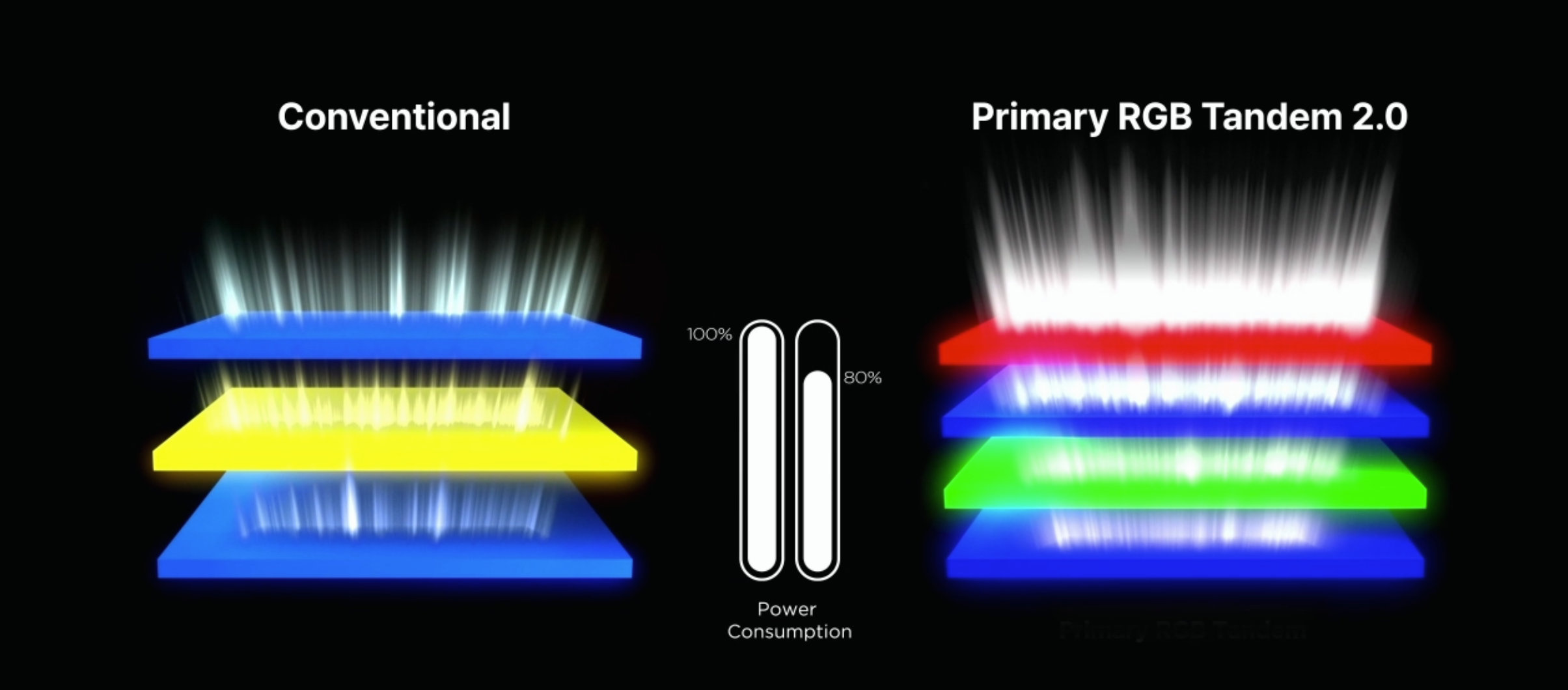

Now LG Display announces a rebranding of its Tandem technology as it also teases that new monitors and improvements (Tandem 2.0 is mentioned in one of the videos) will be revealed at CES 2026. LG Display has now clearly differentiated its large-sized and small- to medium-sized OLED technologies to communicate their respective strengths more intuitively. The brand name Tandem WOLED has been designated for large-sized OLED technologies used in TVs and monitors, while Tandem OLED represents small- and medium-sized RGB OLED technologies for applications such as automotive displays, tablets, and laptops.


By adding the “W” in Tandem WOLED, the company is drawing attention to the white light source that is one of the defining characteristics of its OLED technology. The Tandem WOLED brand marks a significant landmark since LG Display became the world’s first company to mass produce large-sized OLED products in 2013. Meanwhile, Tandem OLED highlights the technological advantage of stacking two RGB layers. Together, these brands point to the infinite potential and scalability at the heart of OLED technology.
Through this renewed brand architecture, LG Display aims, the company adds, “to more clearly convey the differentiated customer value and unique competitiveness of its OLED technologies, while strengthening brand trust in the global market.”