

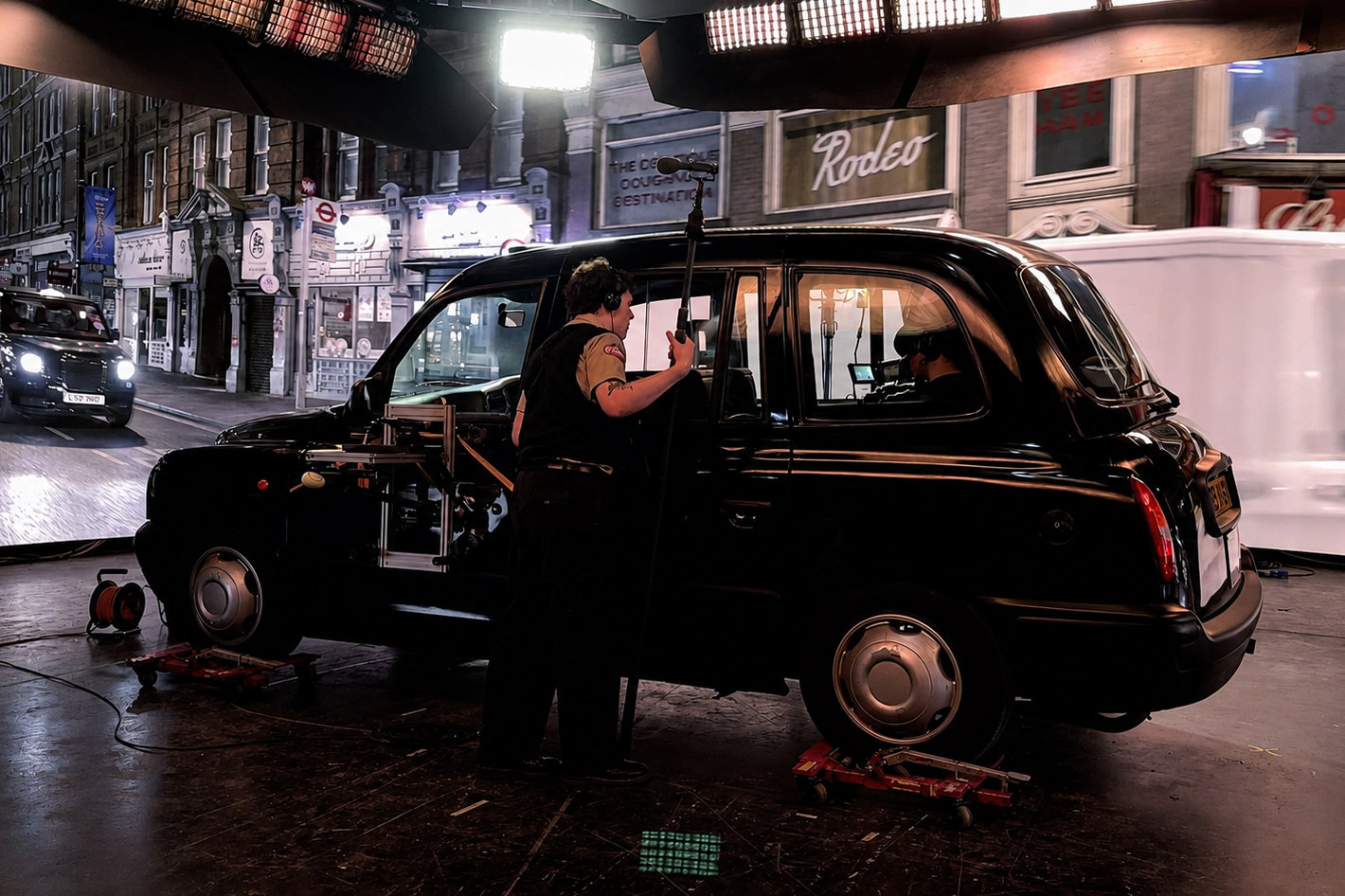

Written by BAFTA and RTS-winning screenwriter Jeff Pope and directed by Julia Ford, the series stars Aimée-Ffion Edwards (from Slow Horses), Miriam Petche (Industry) and Aasiya Shah (Raised by Wolves), with Daniel Mays (Pearl Harbour, Line of Duty) portraying John Worboys, a British convicted serial sex offender, known as the Black Cab Rapist.
With a significant proportion of the drama taking place inside a black cab travelling through London at night, virtual production specialist fivefold studios developed a controlled LED workflow that could support the story’s demanding creative, technical and performance requirements. The production used a 30m-wide by 4m-high ROE Visual BP2V2 LED wall driven by four Brompton 4K Tessera SX40 processors.

The production went on to resonate strongly with audiences. Following its May 2026 premiere, Believe Me became ITVX’s most-watched drama of the month, generating 16 million streams and demonstrating how the carefully controlled technical workflow supported an ambitious and compelling final production. Brompton shared the whole story behind the production, so without further ado, dive into it.
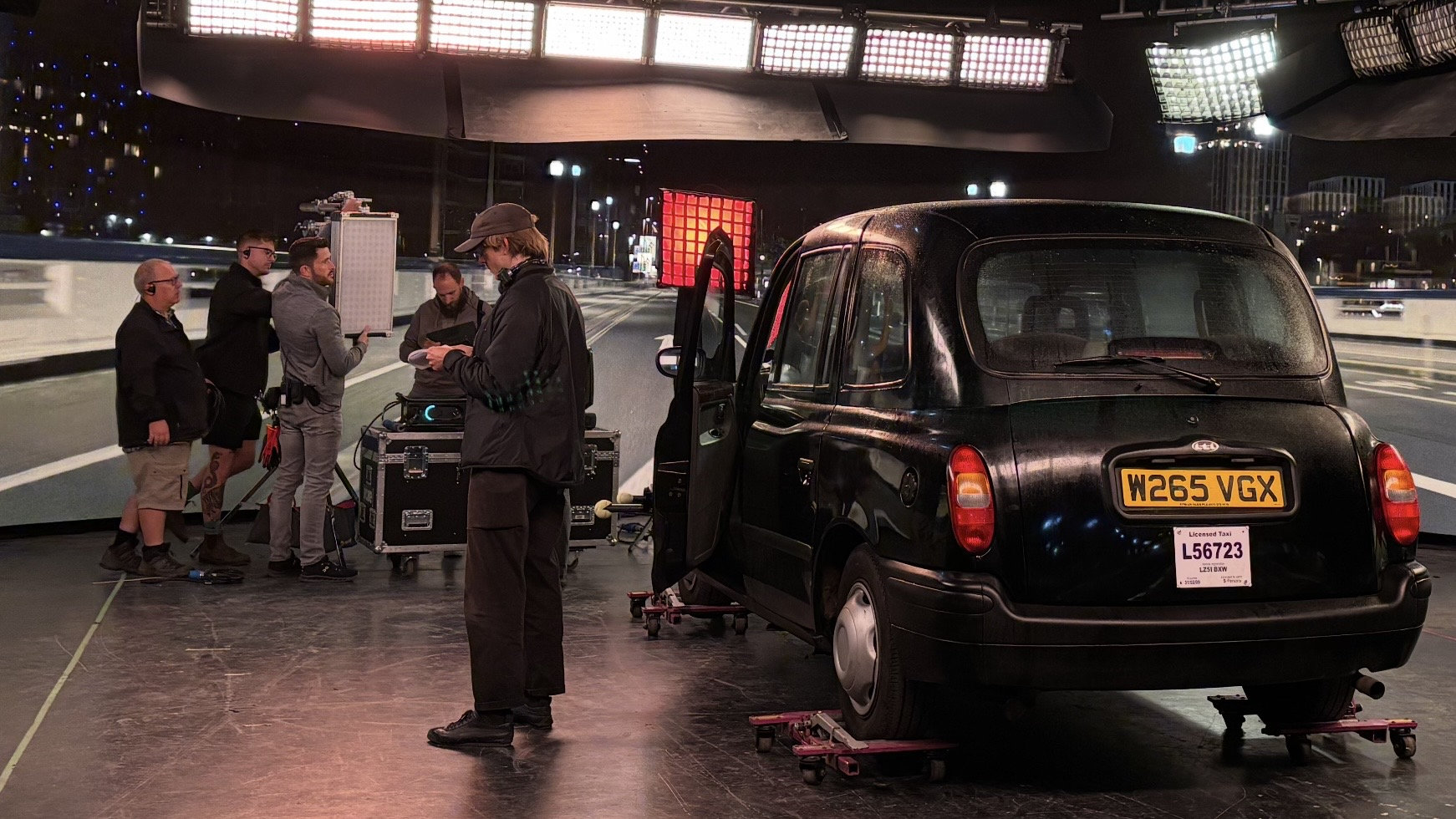

Filming the scenes conventionally on a low-loader would have required extensive night shoots on London streets and, according to the fivefold team, could have taken between three and five times longer. “The controlled environment also helped protect the performances from the practical pressures of shooting such disturbing material at night on the streets of London,” explains Tom Murphy, Head of Production at fivefold studios.

“Many of the key dramatic beats depended on traffic lights changing and the cab following specific routes. Being able to programme those events, trigger them on cue and repeat them accurately allowed us to remain faithful to the script in a way that would have been extremely difficult on a low-loader.”
fivefold became involved early in the process, with initial discussions beginning in early 2025. Three months before the shoot, the company worked with the production’s heads of department to test and validate the colour and image pipeline at its R&D Hub. The facility replicates the complete production workflow on a smaller scale, allowing technical questions to be resolved and creative approaches tested before the full-scale stage and crew were required.
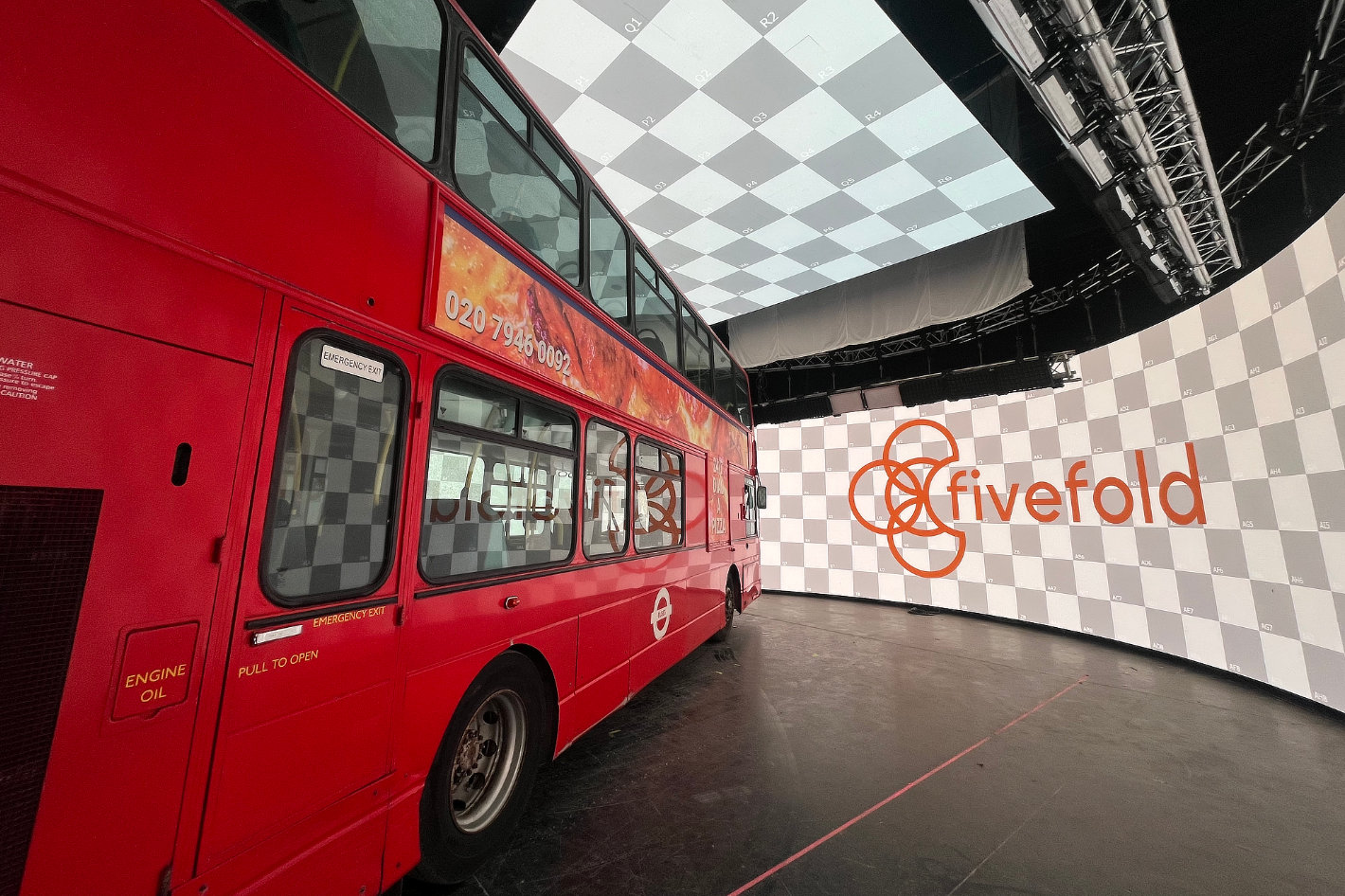
“Brompton was central to giving us confidence in the image pipeline for Believe Me,” continues Murphy. “Having access to the same Brompton workflow in our R&D Lab meant we could test, refine and validate colour, image transforms and display accuracy before anyone arrived on set. That level of control made a real difference to the production, giving the team a reliable reference for the displayed image and creating a far more predictable virtual production workflow.”
fivefold has used Brompton processing across the majority of its productions to date, while several members of its team have worked with the technology since 2020. The combination of established workflows, consistent processing and support from the Brompton team gave the production confidence as it introduced virtual production to executives and crew members who had not previously worked in this way.
Working closely with cinematographer Bryan Gavigan, the gaffer and the DIT, fivefold aligned the LED imagery with the physical lighting and camera requirements. “Our main job was to ensure that the background never took the audience out of the moment or the performance,” Murphy notes. “That meant getting the brightness, contrast, colour, perspective and scale right, while maintaining a detailed record of every setup so that the production always had a faithful reference.”
Lighting fixtures could also be driven by the video playback, enabling synchronised effects to be mapped to specific areas of the content and reproduced consistently between takes. Detailed records were maintained for every setup, scene and take, providing the crew and production with an accurate reference should a sequence need to be revisited.
An iPad-based interface allowed the virtual production supervisor to remain alongside Ford and trigger events, reset the sequence to its starting position and reproduce cues efficiently. For the actors, the real-time environment provided visible movement and lighting to respond to naturally, reducing the need for additional direction and helping performances remain synchronised with the world outside the vehicle.
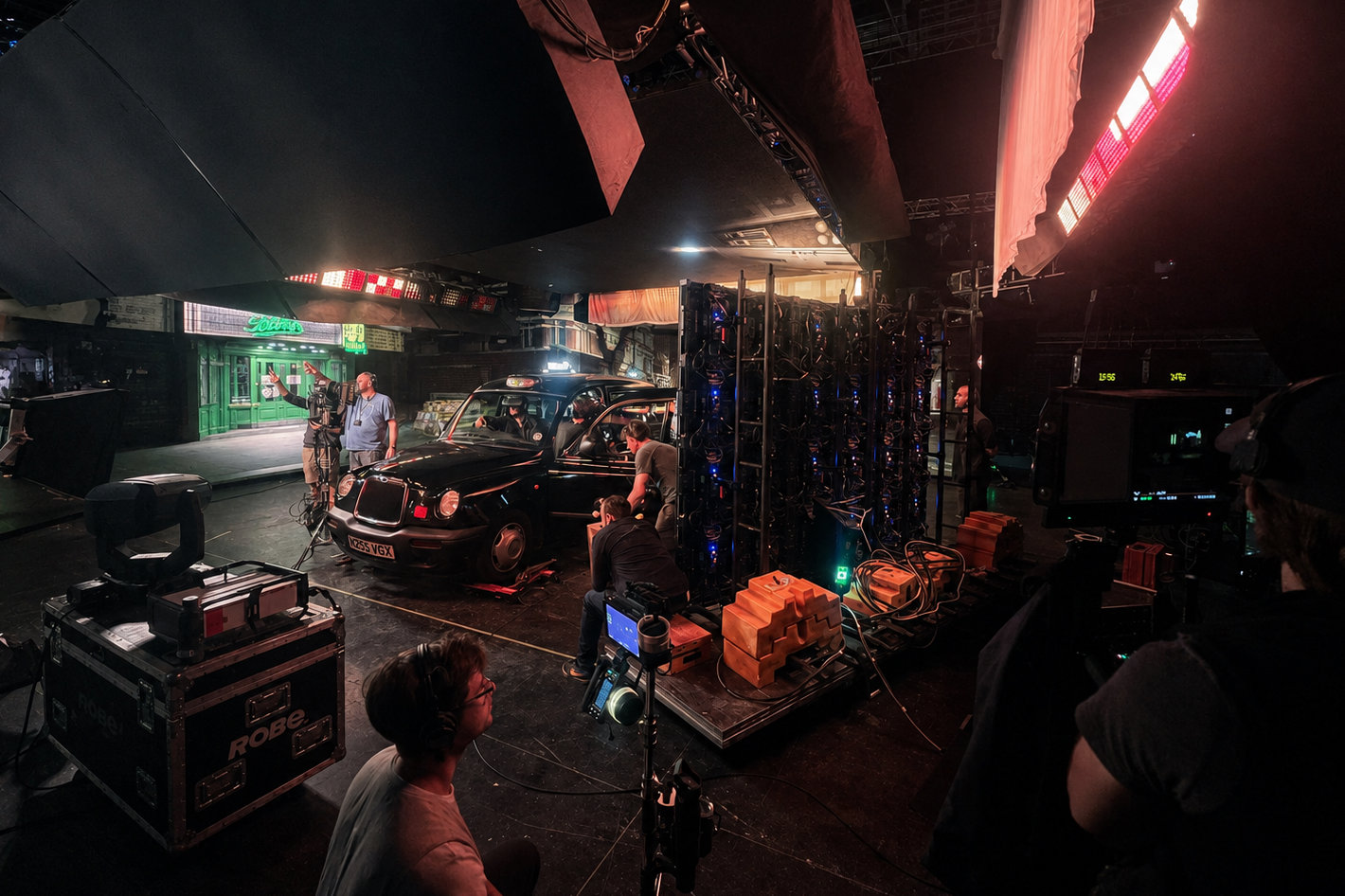
“Believe Me demonstrates the value of treating virtual production as a complete image pipeline rather than simply a screen on set,” concludes Patrick Goodden, Technical Sales Manager (UK and Ireland) at Brompton Technology. “By using the same Tessera workflow during pre-production and principal photography, fivefold studios was able to validate the pipeline in advance, maintain a dependable visual reference and give the creative team precise, repeatable control on the day. We are proud that Brompton processing helped remove technical uncertainty from such a demanding production, allowing the team to focus on performance, continuity and storytelling.”