


I have always appreciated the incalculable power of a dialog—as opposed to a monolog—in audiovisual productions. Back in the late eighties, I recorded and produced my very first audio production where I chose to use two different professional voice talent: one female and another male. That was the voiceover soundtrack for a video promo I created for a local access cable TV station in Connecticut: WUBC-TV (a blessed memory). Ever since, I have continued to include dialog with many pre-recorded openings, commercial spots, with two or more voices. Whenever they have been only two voices, I have always favored the combination of an alternating female and male voice, since I find it to be «caffeine for the ears». Although I have already lost count as to how many audiobooks I have produced in Castilian, English and Italian (both with human voice talent and cloned ones), only recently, I produced the first audiobook with actual dialog (instead of just having a different voice for the opening credits, a single chapter or the foreword, prolog or epilog, which I had done before). This most recent audiobook required six different voices to cover the narrator plus five other characters. The client-author did not have budget to hire even one human voiceover talent, let alone six. Given that budgetary reality, I am impressed how audible emotion is now available with ElevenLabs’ Pro plan and its cloned voices. The gap between human professional voiceover talent and cloned professional voiceover talent still exists, but it is narrower than ever before.

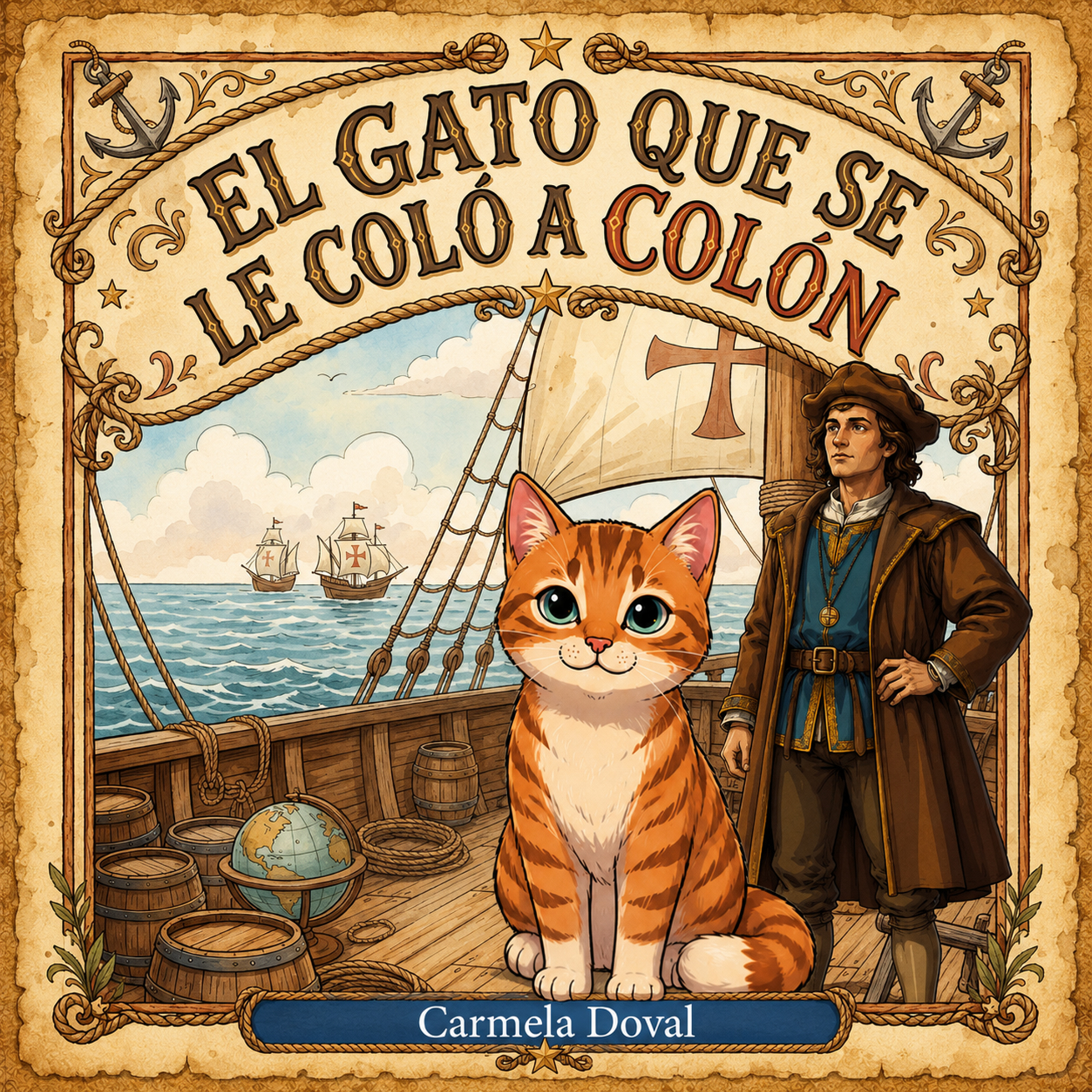
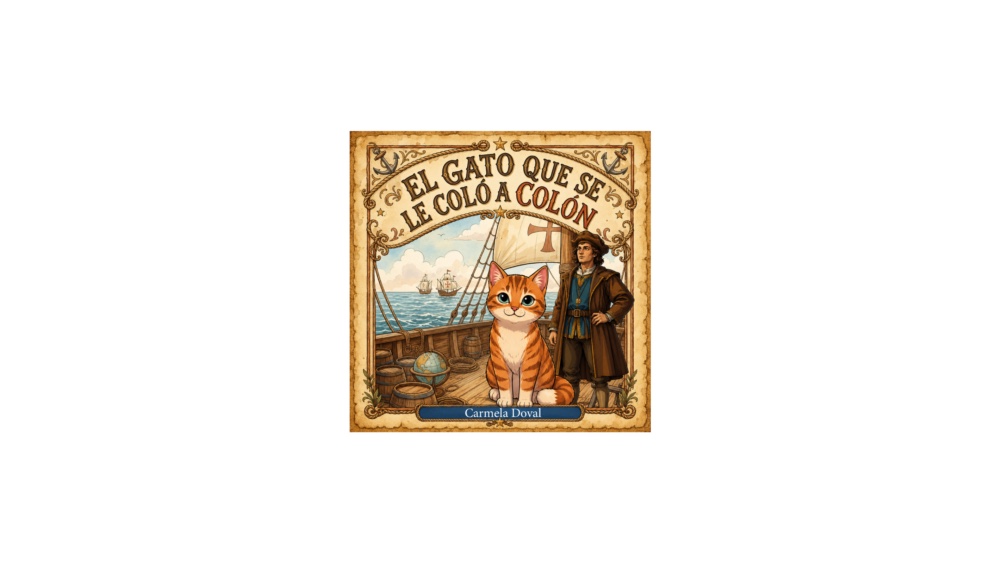
The audiobook I’m describing is the audio rendition of a children’s book called El gato que se le coló a Colón, by Carmela Doval (aka Carmen L. Bofill). The required voices included:
- The female narrator (which coincides with the gender of the author and is intentionally Latin American and seseante, by request of the author. For a deep dive in English into the differences between the three categories: ceceante, seseante and distinguishing pronunciations in the language of Cervantes, listen to episode 1 of Speak Castilian.)
- The protagonist, who is a Spaniard male cat named Paquito (which is the diminutive of Paco, which in itself is one of the different diminutives of Francisco).
- Cloti, the feline Spaniard girlfriend of Paquito.
- Cristóbal Colón (known in English as Christopher Columbus and in Italian as Cristoforo Colombo)
- The unnamed crew spokesperson.
- Rodrigo, a Spaniard who owns boats.
You can hear some of the audible emotion in the free sample available at its dedicated website at ElgatoqueselecolóaColón.com. The free sample only includes the narrator, the protagonist and the unnamed crew spokesperson. The actual audiobook reveals more emotion from those and the other characters too.
The cloned voice we used for Paquito works very well for the role, but has a quirk since his Castilian pronunciation is intermittent, alternating between distinguishing and seseante, depending upon the particular word or sentence. That is something that some people might not notice, but I do.
As I have covered in prior articles, I am impressed how ElevenLabs has increasingly general quality and more natural emotions, in addition to automatically scanning a manuscript to ask the producer about any unknown word or proper name where it’s not sure how to pronounce it. Each one has a play button to listen to its best guess, as well as a field to type the same one phonetically (when necessary) so it knows how to pronounce that name or word throughout the document. In the original Castilian manuscript of El gato que se le coló a Colón, only one name required me to type it phonetically: Dade (as in Miami Dade County), which (by its initial guess) was pronouncing it like «Dah-Day» in English phonetics. As soon as I typed the Castilian phonetic for it (deid), it pronounced it correctly. In case you were wondering, this name only appears in the About the Author section, not in the story itself.
About the book, its versions and distribution
The most important common virtue between all versions (audiobook, ePUB, PDF and paperback) of El gato que se le coló a Colón is the engaging story written by its author. Beyond the story, the other strength of the audiobook are the six voices and their collaboration, while the strength of the print and PDF versions are the beautiful illustrations by Andreína Ascanio Toro.
In order to get the highest possible royalty, the author is currently selling the audiobook and the PDF version exlusively from the book’s website at El gato que se le coló a Colón. The author is distributing the print book three ways (with TecnoTur’s help): with Amazon, IngramSpark (for independent bookstores) and—most recently—with TecnoTur’s extended distribution, which now includes many Latin American countries and additional independent bookstores in Spain, as we covered in a recent episode of CapicúaFM: Editorial TecnoTur expande la distribución de libros físicos a Latinoamérica y más allá.
Lee este artículo en buen castellano
Audiolibros con múltiples voces para los diálogos, con actores humanos o con ElevenLabs
(Re-)Subscribe for upcoming articles, reviews, radio shows, books and seminars/webinars
Stand by for upcoming articles, reviews, books and courses by subscribing to my bulletins.
In English:
- Email bulletins, bulletins.AllanTepper.com
- In Telegram, t.me/TecnoTurBulletins
- Twitter (bilingual), AllanLTepper
En castellano:
- Boletines por correo electrónico, boletines.AllanTepper.com
- En Telegram, t.me/boletinesdeAllan
- Twitter (bilingüe), AllanLTepper
Most of my current books are at books.AllanTepper.com, and also visit AllanTepper.com and radio.AllanTepper.com.
FTC disclosure
None of the listed individuals or companies mentioned above has paid for this article. So far at least, Allan Tépper has not received any special discount or NFR from ElevenLabs. So far, he has not received any special discount or NFR. Some of the manufacturers listed above have contracted Tépper and/or TecnoTur LLC to carry out consulting and/or translations/localizations/transcreations. So far, none of the manufacturers listed above is/are sponsors of the TecnoTur, BeyondPodcasting, CapicúaFM or TuSaludSecreta programs, although they are welcome to do so, and some are, may be (or may have been) sponsors of ProVideo Coalition magazine. Some links to third parties listed in this article and/or on this web page may indirectly benefit TecnoTur LLC via affiliate programs. Allan Tépper’s opinions are his own. Allan Tépper is not liable for misuse or misunderstanding of information he shares.